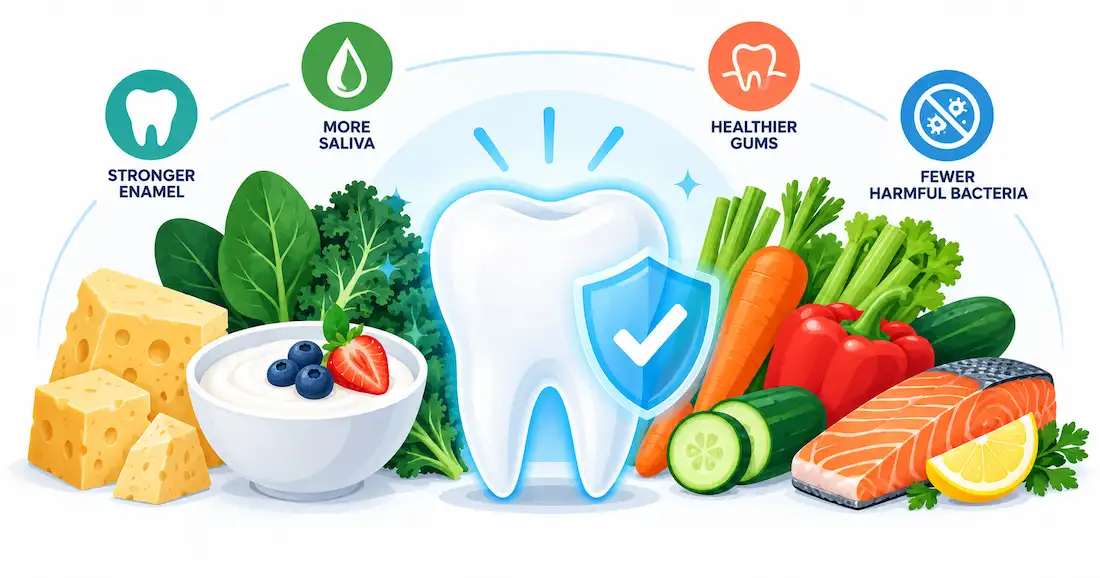
Your plate does a lot more for your smile than your toothbrush gets credit for. Most people focus on what not to eat when it comes to dental health, but the more practical conversation is about what to add to your diet. The right foods actively fortify your enamel, calm gum inflammation, and help your mouth fight off bacteria before problems even begin.
A bidirectional relationship exists between oral health and diet. Diet and nutrition affect the health of the tissues in the mouth, and the health of the mouth affects the nutrients you can consume. That connection makes your food choices one of the most direct levers you have for long-term dental wellness.
Below are eight foods that nutrition researchers and dental professionals consistently point to as standouts. They’re not exotic or expensive. You’ve probably got a few of them in your kitchen right now.
1. Hard Cheese
Cheese is one of those foods that earns its dental reputation on multiple levels. Aged cheeses like cheddar, Monterey Jack, and Swiss are thought to protect tooth enamel because they have the calcium and phosphorus needed to remineralize teeth, a natural process by which minerals are redeposited in tooth enamel after being removed by acids.
But that’s not the only reason to reach for a cheese cube. Hard cheeses like cheddar and Parmesan not only offer calcium but also stimulate saliva flow, which naturally neutralizes mouth acids. More saliva means a cleaner oral environment between brushing sessions.
Practically speaking, swapping your afternoon crackers for a small portion of aged hard cheese is one of the easiest dietary shifts you can make. Your enamel notices the difference.
2. Plain Yogurt
Yogurt brings a different set of tools to the table compared to hard cheese, even though both come from dairy. Fermented dairy like yogurt contains probiotics, or beneficial bacteria, and these probiotics can help crowd out the harmful bacteria responsible for cavities and periodontal disease.
Plain yogurt with no added sugar is rich in probiotics that benefit your gums and overall oral microbiome. The key word there is “plain.” Fruit-flavored yogurts often carry significant added sugar, which feeds the very bacteria you’re trying to displace.
A morning bowl of plain yogurt with a handful of berries gives you the probiotic benefit without loading your mouth with sugar. It’s a small swap with a real payoff.
3. Leafy Greens
Spinach, kale, and other dark leafy greens are a dental nutrition triple-threat. Spinach, kale, collard greens, and Swiss chard are high in calcium, folic acid, and magnesium. These nutrients support enamel development and help maintain gum health.
Leafy greens provide calcium, folate, and antioxidants that keep teeth and gums strong. Their low acidity makes them ideal for enamel protection. This matters because many “healthy” foods like citrus juice or kombucha can actually erode enamel if consumed frequently. Leafy greens carry zero acid risk.
If raw salads aren’t your thing, try blending a handful of spinach into a smoothie or stirring kale into soups. Adding greens to omelets, soups, or smoothies is an easy nutrient boost that benefits your teeth and overall health.
4. Crunchy Raw Vegetables
Carrots, celery, cucumbers, and bell peppers do something that most soft foods simply can’t: they physically clean your teeth as you eat them. Crunchy fruits and vegetables not only serve as nature’s toothbrushes but also stimulate saliva production, which is essential for neutralizing acids and washing away food particles. Their fibrous texture helps to clean the teeth surfaces and massage the gums, promoting oral health.
There’s nutritional value layered in too. Raw carrots are rich in vitamin A, which helps maintain healthy tooth enamel. Bell peppers and cucumbers offer similar benefits while providing vitamin C that strengthens gums.
Try keeping sliced crunchy vegetables ready in your refrigerator for quick, tooth-healthy snacks. When you have them prepped and visible, you actually eat them instead of reaching for something processed.
If you want to go deeper on how diet shapes your oral health on a clinical level, the American Dental Association’s nutrition and oral health resource is a solid place to start.
5. Fatty Fish
Salmon, sardines, and mackerel don’t usually top the list when people think about dental health, but they deserve a spot here. These fish are excellent sources of vitamin D, which allows your body to absorb and use calcium effectively. They also contain omega-3 fatty acids that support gum and bone health.
Vitamin D is the nutrient that makes calcium actually work. Vitamin D is important because it enhances calcium absorption and supports bone metabolism. You can eat all the calcium-rich food in the world, but without adequate vitamin D, your body’s ability to use it drops significantly. Fatty fish closes that gap efficiently.
A couple of salmon portions per week, or a can of sardines on whole grain crackers, is enough to meaningfully improve your vitamin D intake. Your jaw bone and your gums both benefit from that shift.
6. Nuts and Seeds
Almonds, walnuts, and sunflower seeds make for a tooth-friendly snack that most people overlook. Nuts and seeds are packed with phosphorus, a mineral that helps protect and rebuild tooth enamel. Almonds, walnuts, and sunflower seeds make excellent tooth-friendly snacks.
Phosphorus works alongside calcium in the remineralization process. Remineralization depends on minerals such as calcium and phosphate, which bond to enamel and strengthen its surface. Vitamin D helps your body absorb these minerals efficiently. Nuts deliver phosphorus in a convenient, shelf-stable package that travels well and doesn’t need refrigeration.
The mechanical act of chewing nuts also stimulates saliva production. Saliva acts as the body’s natural repair system because it neutralizes acids and supplies the minerals your teeth need. A balanced diet that supports saliva flow and delivers these nutrients can make a real difference in enamel health.
Keep a small container of almonds or mixed seeds in your bag or desk drawer. It makes snacking on something genuinely beneficial easier than defaulting to whatever’s closest.
7. Green Tea
Green tea sits in a category of its own because it acts more like an oral health intervention than a simple beverage. Green tea contains fluoride, which is known for its enamel-strengthening properties. Fluoride helps protect your teeth from decay and supports remineralization. Green tea is also rich in antioxidants, which help reduce inflammation in the gums and combat harmful bacteria that can damage enamel.
The catch is sugar and milk. Plain, unsweetened green tea delivers these benefits cleanly. The moment you load it with sugar or honey, you shift the equation and feed bacteria instead of fighting them.
For a deeper look at how dietary patterns connect to gum disease specifically, the peer-reviewed narrative review on diet and periodontal health from PMC is worth bookmarking. An increasing body of research underscores the interconnectedness of oral health and systemic nutrition. Dietary habits and the availability of nutrients significantly influence immune function, oxidative stress, metabolic balance, and the host’s capacity to combat periodontal pathogens.
Replacing one cup of coffee per day with plain green tea is a realistic starting point. You get a mild caffeine boost and meaningful oral health support at the same time.
8. Water (Especially Fluoridated Water)
Water might seem too obvious to include, but the way most people actually drink throughout the day makes it worth calling out. Water, while not technically a food, is perhaps the best drink for dental health.
Staying well hydrated keeps saliva production consistent, and saliva is the mouth’s built-in defense system. Adequate hydration and the consumption of fibrous foods aid in the natural cleansing of the oral cavity, promoting saliva production, which neutralizes acids and reduces bacterial growth.
Consumption of food and drinks that affect oral cavity acidity, such as soft drinks, sweetened coffee and tea, and candies, leads to teeth demineralization and causes tooth decay. Replacing even one or two sugary drinks per day with plain water has a measurable impact on your enamel over time.
The practical habit here is simple: drink a glass of water after meals and snacks. It rinses residual sugars and acids off your enamel before they can cause damage, and it supports the saliva flow that protects you between meals.
For comprehensive guidance on making dietary choices that support your smile, the MouthHealthy diet and dental health page from the ADA is a reliable and well-organized reference.
What to Watch Out For
Eating for dental health isn’t only about what you add. A few habits consistently undermine even a solid diet.
- Frequent snacking: Foods eaten as part of a meal cause less harm to teeth than eating lots of snacks throughout the day because more saliva is released during a meal. Saliva helps wash foods from the mouth and lessens the effects of acids.
- Acidic beverages: Even the healthiest diet cannot fully protect enamel if certain habits persist. Limit acidic beverages such as soda, energy drinks, and citrus juices.
- Brushing right after eating: Rinse your mouth with water and wait about 30 minutes before brushing so enamel can re-harden.
- Added sugars in “healthy” foods: Check labels on yogurts, granola bars, and juices. A diet rich in vitamins A, B, C, and calcium and zinc has been shown to help prevent gum disease. Many researchers believe gum disease progresses faster and may be more severe in people with poor nutrition.
Bring Your Diet and Your Dentist Together
No dietary change replaces professional care. The foods above support your enamel and gums between appointments, but they work best as part of a complete approach that includes regular checkups. A dentist can catch early signs of erosion or nutritional deficiency before they become costly problems.
If you’re in the Maple Ridge area, a dentist maple ridge can give you personalized guidance on how your specific diet and oral health history interact. General advice is useful, but treatment plans built around your individual needs go a lot further.
Nutrition education on oral and dental health plays a vital role in preventing oral diseases and related problems. It should be included in management plans for any dental or oral problems. It maintains good oral health, enhances treatment outcomes, and prevents further dental problems.
For a research-backed overview of exactly how nutrients interact with tooth and gum tissues at the cellular level, the cross-sectional study on nutrition and oral health from the NIH provides clear, accessible detail.
Your grocery list and your dental health are more connected than most people realize. Start with one or two of these foods, build the habit, and give your teeth the raw materials they need to stay strong well past your next checkup.