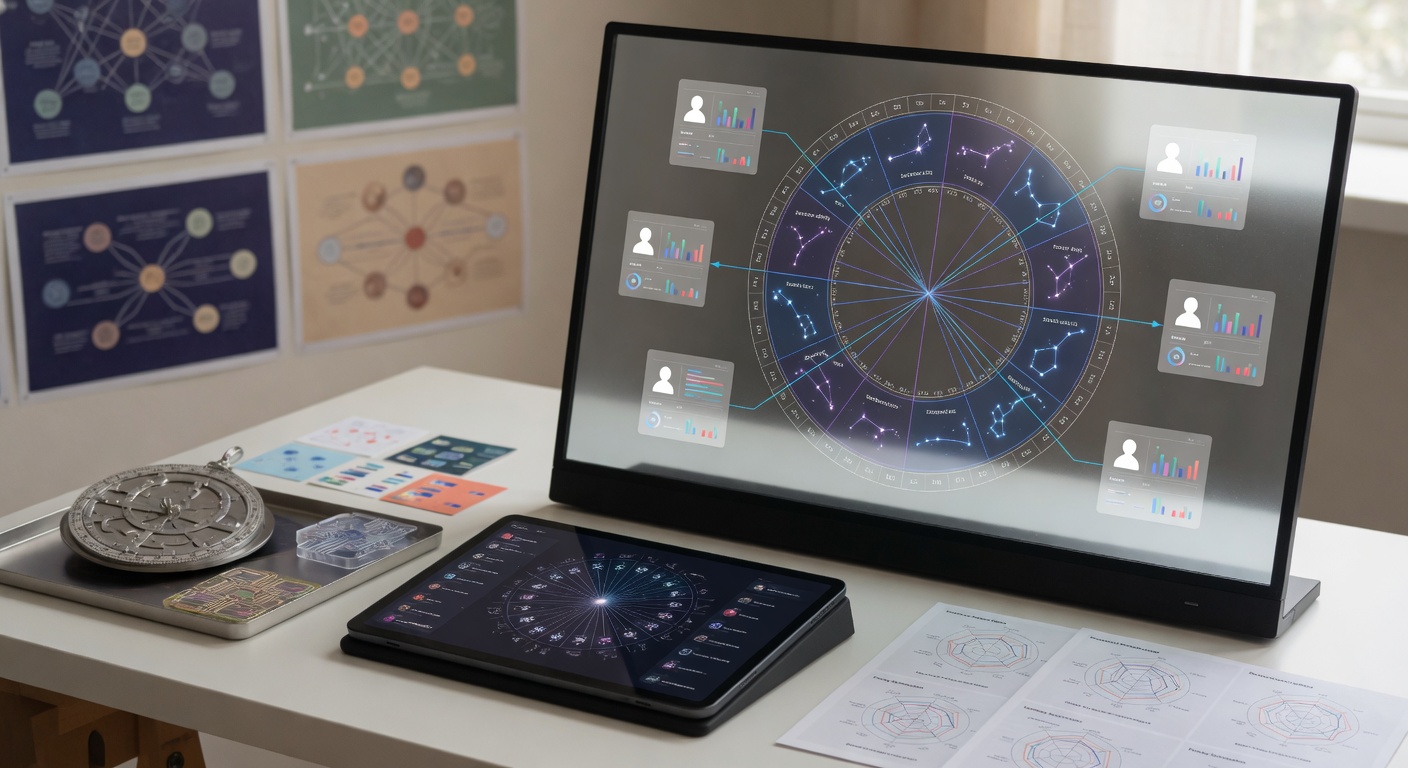
Introduction: Personalization as a Core Technology Principle
In modern technology ecosystems, personalization has evolved from a user-experience enhancement into a foundational system design principle. Whether in networking optimization, cybersecurity analytics, or SaaS platforms, data-driven personalization determines how systems adapt to individual behavior.
Interestingly, this principle is no longer limited to traditional tech domains. It is now being applied in unconventional areas such as AI-powered astrology platforms, where symbolic systems are transformed into structured, data-driven models.
One such example is HintApp, an AI astrology application that demonstrates how personalization and machine learning can be applied to deeply individual user experiences.
What is HintApp?
HintApp is an AI-driven astrology platform that generates personalized natal charts, horoscopes, and compatibility insights. It leverages artificial intelligence to interpret structured astrological data and produce individualized outputs.
You can explore real user discussion here: 👉 Hint App
Core functionalities include:
- AI-generated natal chart interpretation
- Personalized daily and weekly horoscope system
- Compatibility and relational pattern analysis
- Soulmate detection logic based on symbolic mapping
- Mobile-optimized user interface
From a systems perspective, HintApp functions as a personalization engine built on structured symbolic datasets.
AI Astrology Through a Data Science Lens
Although astrology is traditionally symbolic, AI implementations like HintApp can be analyzed using data science principles.
Key parallels include:
- Structured data input (birth information → dataset)
- Feature extraction (planetary positions → variables)
- Pattern recognition (astrological relationships → correlations)
- Natural language generation (interpretation output → text response)
This structure aligns closely with recommendation systems and predictive analytics models used in modern tech platforms.
System Architecture Overview of HintApp
HintApp can be conceptually broken into modular layers similar to modern software systems.
1. Input Layer
Users provide structured personal data such as birth date, time, and location.
2. Data Processing Layer
The system computes planetary positions and generates a structured natal chart.
3. AI Interpretation Layer
Machine learning models analyze symbolic relationships and generate insights.
4. Output Layer
Personalized horoscopes, compatibility results, and insights are delivered to the user.
Feature Mapping from a Technical Perspective
| Feature | Technical Analogy |
|---|---|
| Natal Chart Engine | Data transformation pipeline |
| AI Horoscope System | Natural language generation model |
| Compatibility Analysis | Pattern matching / similarity scoring |
| Soulmate Insights | Predictive correlation system |
| Mobile Interface | Frontend delivery layer |
Why AI Astrology Aligns with Modern Tech Trends
AI astrology platforms reflect several key trends in modern digital systems:
1. Hyper-Personalization
Systems adapt outputs based on individual user data.
2. Automated Content Generation
AI replaces manual interpretation with scalable generation models.
3. Behavioral Pattern Analysis
User data is processed to identify recurring patterns and insights.
4. Continuous Engagement Loops
Daily updates encourage repeated system interaction.
These principles are widely used in cybersecurity analytics, SaaS platforms, and recommendation engines.
Data Flow Model in HintApp
A simplified representation of how data moves through the system:
Step 1: Data Input
User provides birth-related information.
Step 2: Data Structuring
Information is converted into a standardized format.
Step 3: Computation Layer
Astrological calculations are performed.
Step 4: AI Processing
Machine learning models interpret symbolic relationships.
Step 5: Output Generation
User receives personalized textual insights.
User Engagement and System Behavior
HintApp demonstrates engagement patterns similar to modern digital platforms:
- Frequent daily interaction (horoscope checks)
- High personalization leading to increased retention
- Repetitive usage cycles driven by curiosity
- Emotional feedback loops encouraging re-engagement
These patterns mirror engagement systems found in social platforms and AI-driven SaaS tools.
Security and Data Considerations
From a cybersecurity and data perspective, AI astrology platforms introduce interesting considerations:
1. Personal Data Handling
Birth data is sensitive when combined with behavioral patterns.
2. Privacy Architecture
Systems must ensure secure storage and minimal data exposure.
3. AI Output Consistency
Generated insights must remain stable and non-conflicting.
4. Transparency Requirements
Users expect clarity on how data is processed and interpreted.
Expansion Potential in AI Systems
HintApp represents a foundation that could evolve using more advanced technologies:
Possible future enhancements:
- Integration with cloud-based AI personalization engines
- Federated learning models for privacy-preserving analysis
- Real-time adaptive recommendation systems
- Cross-platform synchronization across devices
- API-based personalization layers for third-party apps
These directions align with broader trends in SaaS and AI infrastructure development.
Behavioral Modeling in Compatibility Analysis
One of the most interesting components is compatibility analysis, which can be interpreted as a similarity-based model.
Conceptual structure:
- Input: user profiles
- Processing: relational pattern comparison
- Output: compatibility interpretation
This resembles clustering and similarity detection techniques used in machine learning systems.
Conclusion: Symbolic Systems in Modern Data Architecture
AI astrology platforms like HintApp demonstrate how unconventional domains can be transformed using modern data-driven architectures. By converting symbolic astrological systems into structured datasets and applying AI interpretation layers, these platforms mirror principles found in recommendation engines, predictive analytics, and personalization systems.
From a technology perspective, HintApp illustrates a broader trend: the expansion of AI beyond traditional enterprise applications into deeply personalized user experiences.
As digital systems continue to evolve, the boundary between symbolic interpretation and data science becomes increasingly blurred, opening new possibilities for personalization, engagement, and intelligent system design.