You’re lying on your garage floor, phone flashlight clenched between your teeth, trying to peer into a dark engine cavity to find the source of that mysterious oil leak. Sound familiar? Every DIY enthusiast has faced the frustration of inspecting spaces where eyes and fingers simply cannot reach—behind cylinder walls, inside exhaust manifolds, or deep within plumbing assemblies. This is exactly where an articulating borescope transforms your repair game. Unlike rigid inspection cameras, a borescope with an articulating head lets you steer the camera tip around corners and through narrow passages, delivering real-time visuals of otherwise invisible problems. This guide is designed to demystify articulating borescopes for beginners who want to level up their home vehicle maintenance without spending professional-shop money. We’ll walk through what these tools are, how to choose one that fits your budget, and exactly how to operate one effectively. Whether you’re diagnosing engine issues, checking for corrosion, or inspecting brake lines, you’ll find practical, actionable advice tailored to home DIYers seeking affordable, user-friendly inspection solutions.
What is an Articulating Borescope? A Basic Introduction
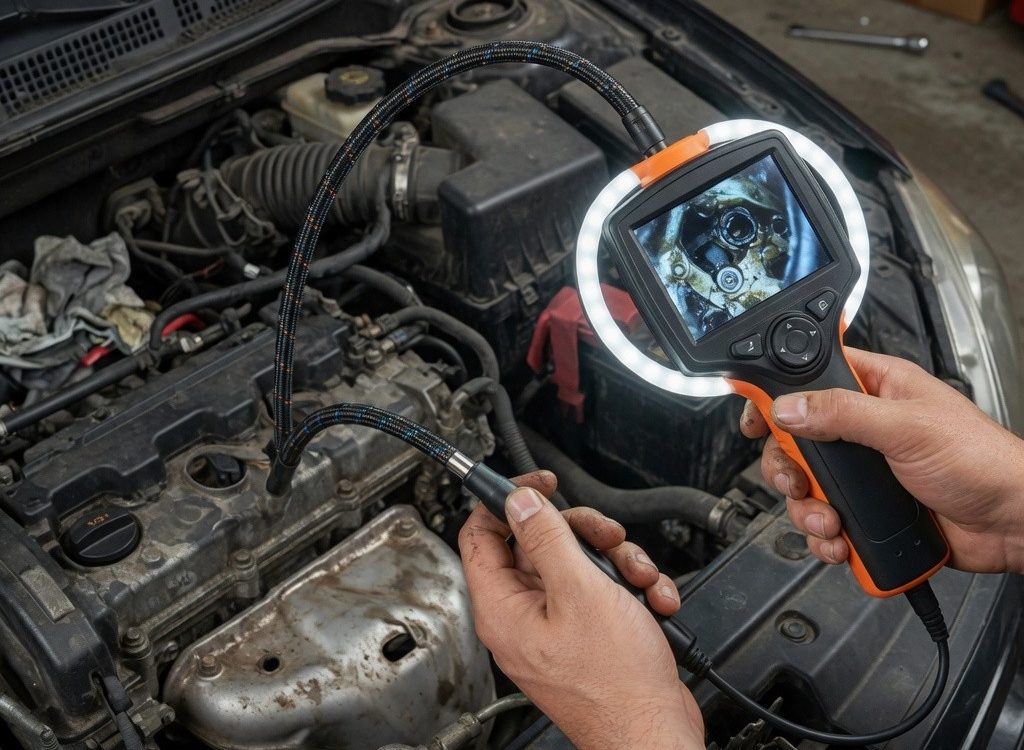
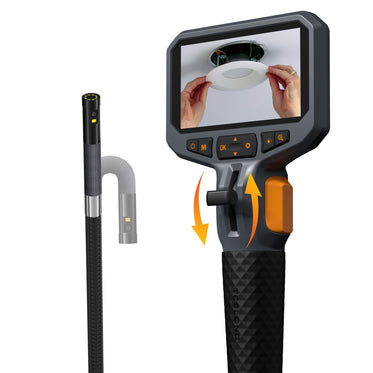
An articulating borescope is a flexible inspection camera designed to navigate confined spaces by allowing the user to remotely steer the camera tip in multiple directions. Unlike fixed or semi-rigid inspection cameras that only look straight ahead, the articulating head mechanism uses internal tension wires connected to a joystick or thumb lever on the handle. When you move the control, these wires pull the camera tip up, down, left, or right, giving you the ability to look around corners and examine surfaces from different angles without repositioning the entire probe.

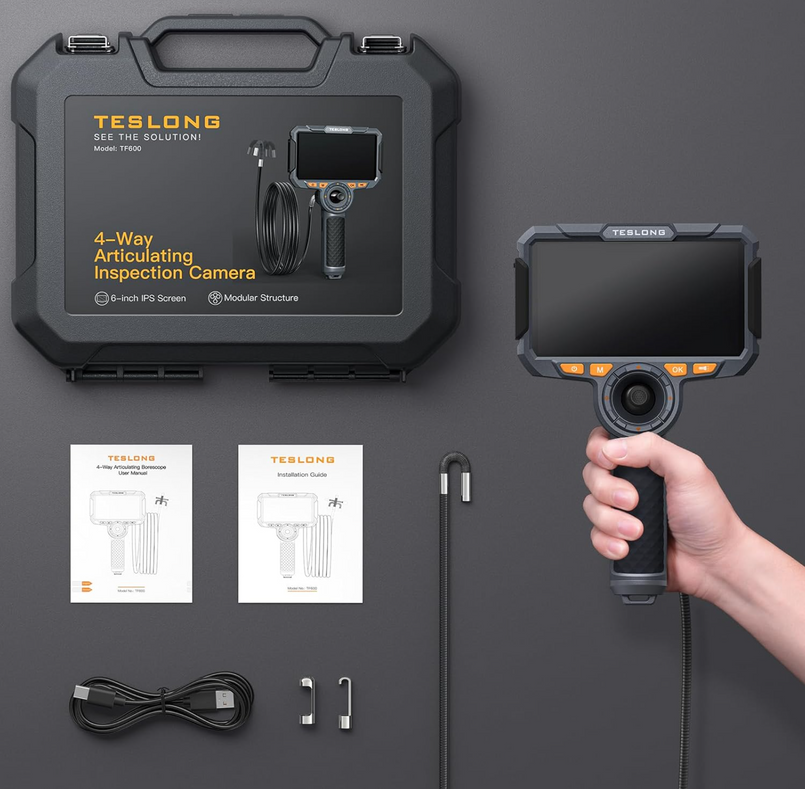
The core components include a miniature camera sensor mounted at the tip (typically 3.9mm to 8.5mm in diameter), built-in LED lights for illuminating dark cavities, a flexible insertion tube that protects the internal wiring, and either a dedicated display screen or a wireless connection to your smartphone or tablet. Some models also feature image capture and video recording capabilities, letting you document what you find for later reference or to show a mechanic.
For DIY enthusiasts, articulating borescopes deliver significant value. Instead of disassembling an engine block or tearing out drywall to visually confirm a suspected problem, you can thread the probe through an existing opening and confirm the issue in seconds. This translates directly into cost savings—fewer unnecessary teardowns, more accurate diagnoses, and the confidence to tackle repairs you might otherwise hand off to a professional shop.
Understanding 2-Way and 4-Way Control for Articulating Borescopes
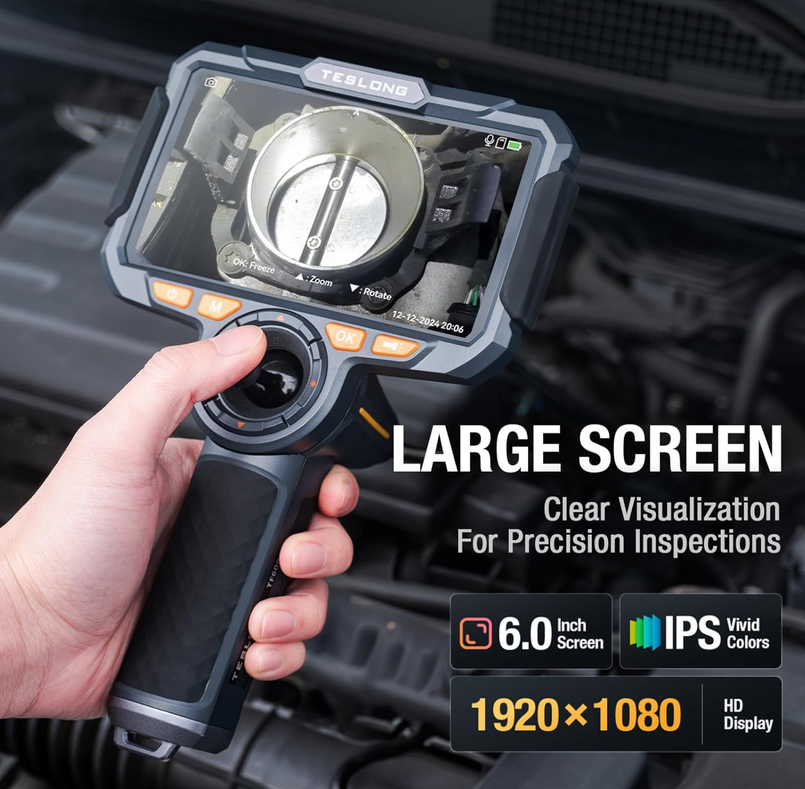
The control system on an articulating borescope determines how freely you can steer the camera tip, and this choice directly impacts how effectively you can inspect complex geometries. A 2-way control system moves the tip along a single plane—typically up and down. You rotate the entire insertion tube by hand to redirect the viewing angle left or right. This setup works well for straightforward inspections like peering down a cylinder bore or checking a straight pipe run, where the path is relatively linear and you mainly need to tilt the camera to examine walls or surfaces above and below.
A 4-way control system adds a second axis, letting you steer the tip up, down, left, and right independently using a joystick or dual thumb wheels. This makes navigation through branching passages, around tight bends, and into complex assemblies far more intuitive. If you’re threading through an intake manifold with multiple runners or tracing a wiring harness behind a dashboard, 4-way control eliminates the awkward hand-over-hand tube rotation that 2-way models require.
For most DIY vehicle maintenance tasks, 2-way control handles roughly 70% of common inspections adequately and comes at a lower price point. However, if you regularly work on engines with complex internal passages or inspect HVAC ducting with multiple turns, the precision of 4-way control justifies the investment. Beginners often find 2-way models easier to learn initially since there are fewer simultaneous inputs to manage, making them a solid starting point before upgrading as your skills and inspection demands grow.
How to Choose an Affordable and Effective Borescope for DIY
Selecting the right articulating borescope for DIY repairs comes down to balancing capability against budget. Start with image quality—look for a minimum resolution of 720p, though 1080p sensors have become common even in budget-friendly models. A clear image means you can distinguish between a hairline crack and a harmless casting mark, which directly affects your diagnostic accuracy. Probe diameter matters too: a 5.5mm tip fits through most spark plug holes and inspection ports on passenger vehicles, while 3.9mm probes access tighter spaces like fuel injector bores but may sacrifice some image brightness.
Durability should factor heavily into your decision. A semi-rigid insertion tube with a waterproof rating of at least IP67 ensures the probe survives contact with oil, coolant, and grime without failing mid-inspection. Check the articulation range as well—a tip that bends 180 degrees or more in each direction gives you enough flexibility to look back on itself inside a cavity. For connectivity, models with built-in screens offer immediate plug-and-play convenience, while Wi-Fi enabled units that stream to your phone keep costs lower and let you pinch-zoom on details. Manufacturers like Teslong have made articulating borescopes increasingly accessible to home users by offering models across various price points with features that once belonged exclusively to industrial-grade equipment.
Consider cable length relative to your typical tasks. For engine and transmission inspections, one meter of insertion tube usually suffices, but plumbing or HVAC work may demand two to three meters. Battery life should cover at least 90 minutes of continuous use so you aren’t recharging mid-job. Beginners doing routine vehicle maintenance should prioritize models that bundle accessories like mirror attachments, hook retrievers, and magnet tips—these extras expand what you can accomplish without buying separate kits. Focus on tools that feel intuitive in hand, because a borescope you find frustrating to operate will end up collecting dust instead of saving you repair costs.
Step-by-Step Guide to Using Articulating Borescopes for DIY Repairs
Pre-Inspection Preparation and Safety Tips
Before threading your borescope into any cavity, take five minutes to prepare properly. Fully charge the unit or confirm battery level sits above 50%. Clean the camera lens with a microfiber cloth—oil residue from a previous inspection creates blurry images that defeat the purpose. Ensure your vehicle engine is cool to avoid heat damage to the probe tip. Remove any loose jewelry or dangling sleeves that could snag on engine components. If you’re inspecting through a spark plug hole, disconnect the battery to eliminate any risk of accidental ignition. Finally, lay out your accessory attachments within arm’s reach so you aren’t fumbling mid-inspection.
Basic Operation: Inserting and Articulating the Borescope Head
Start by holding the insertion tube about six inches from the tip, guiding it gently into the opening rather than pushing from the handle end. Forcing the probe creates kinks and damages internal articulation wires over time. Once the tip enters the cavity, activate the LED lights and check your display for orientation—the image on screen should correspond logically to the direction you’re facing. With a 2-way control model, use your thumb lever to tilt the camera up or down while slowly rotating the insertion tube with your other hand to sweep left and right. For 4-way systems, use the joystick in small, deliberate movements; beginners tend to overcorrect, which whips the camera past the area of interest. Advance the probe in short increments of two to three centimeters, articulating at each pause to scan the surrounding surfaces. When navigating bends, ease the tip around corners by articulating first, then gently feeding cable through—never push against resistance.
Conducting Inspections and Identifying Issues
Work systematically rather than randomly sweeping the camera. For cylinder inspections, start at the top of the bore and spiral downward, examining the walls for scoring, carbon buildup, or unusual discoloration that signals overheating. Capture still images of anything suspicious—most units let you snap photos with a single button press, giving you reference material to compare against service manual specifications or to share on forums for second opinions. Record short video clips when inspecting moving or reflective surfaces, since a single frame can be misleading. Common problems to watch for include cracked gasket surfaces, corroded coolant passages, debris accumulation in intake runners, and worn valve seals showing as dark oily deposits. When you spot an anomaly, note the probe insertion depth and articulation angle so you can relocate the exact spot if needed during the actual repair.
Pro Tips for Smooth and User-Friendly Inspections
Getting reliable results from your articulating borescope comes down to developing good habits early. Start by practicing on accessible, well-lit spaces before tackling blind inspections inside an engine. Thread the probe through a piece of PVC pipe with a few elbow joints to build muscle memory for coordinating insertion speed with articulation inputs—this low-stakes rehearsal prevents costly mistakes when you’re working near delicate valve components or sensor wiring.
Adequate lighting makes or breaks your inspection quality. If the built-in LEDs seem insufficient, reduce their brightness slightly to cut glare on reflective metal surfaces, which often reveals details that washout obscures. Keep a small spray bottle of lens cleaner handy during longer sessions; oil and carbon deposits accumulate on the camera tip faster than you’d expect, gradually degrading clarity without an obvious moment of failure. After each use, gently wipe the entire insertion tube with a degreaser-dampened cloth and store the unit in its case with the probe loosely coiled—tight bends during storage weaken articulation wires over time. If your articulating borescope begins responding sluggishly to joystick inputs, inspect the tip for debris lodged around the articulation joint before assuming mechanical failure. Most DIY repairs benefit from patience over speed; advance the probe slowly, articulate deliberately, and you’ll extract more diagnostic value from every inspection session while extending the life of your tool significantly.
Start Diagnosing Smarter with an Articulating Borescope
Articulating borescopes bridge the gap between professional diagnostic capability and home garage accessibility. As we’ve covered, these tools use steerable camera tips controlled by tension wires to deliver real-time visuals inside spaces your eyes could never reach—saving you from unnecessary teardowns and expensive shop visits. Understanding the difference between 2-way and 4-way control helps you match the tool to your inspection complexity, with 2-way systems offering simplicity for straightforward tasks and 4-way providing full maneuverability for complex assemblies. When selecting your first unit, prioritize image clarity, appropriate probe diameter for your typical work, and durable waterproof construction over flashy features you won’t use. The operational fundamentals are straightforward: prepare thoroughly, insert gently, articulate deliberately, and document everything you find. Building good habits—practicing on simple geometries, maintaining your lens, storing the probe properly—ensures your investment keeps delivering value for years. Technology that once belonged exclusively to professional mechanics is now well within reach for home DIYers. Pick up an articulating borescope, spend an afternoon practicing, and you’ll wonder how you ever diagnosed problems without one.