
When shopping for your next vehicle, it’s easy to focus on one number above everything else: the monthly repayment. After all, that’s the figure you’ll see in advertisements, dealership promotions, and finance calculators. If the payment fits your budget, it can feel like you’ve found the perfect deal.
However, experienced buyers know that a low monthly repayment doesn’t always mean you’re spending less overall. Before comparing car loans in Australia, it’s worth understanding what sits behind those attractive repayment figures and how they can affect your finances long after you’ve driven away.
Looking beyond the monthly payment takes a little extra effort, but it can help you avoid unnecessary costs and make far more confident financial decisions. This guide breaks down exactly what to examine beyond that single number, so you can evaluate finance offers the way experienced buyers actually do.
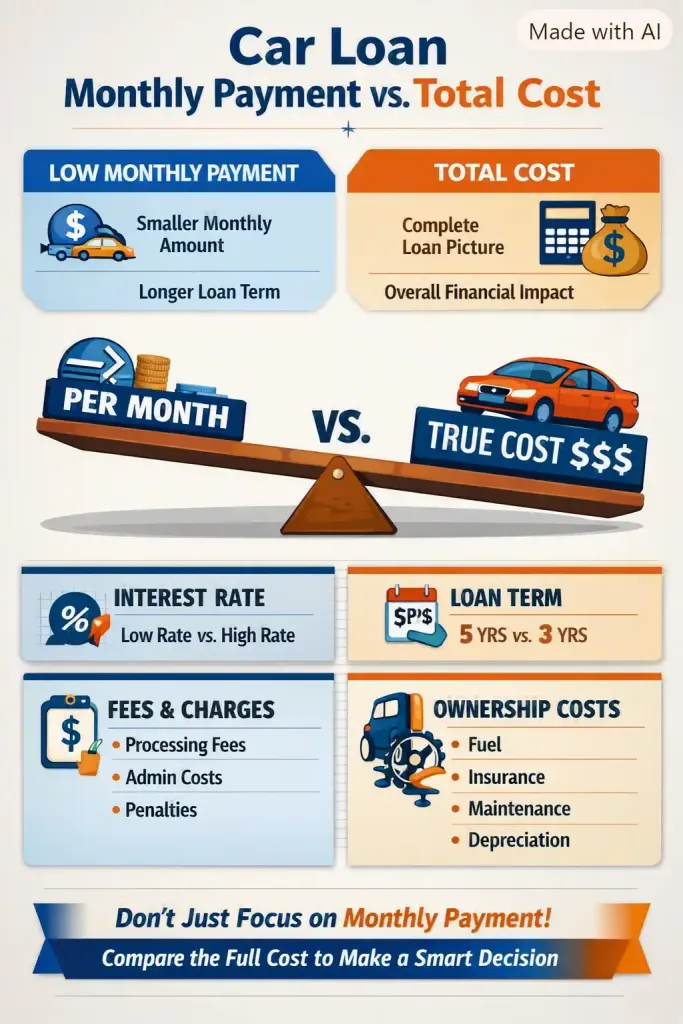
A Smaller Monthly Payment Can Cost More Overall
Lower repayments are often achieved by extending the length of the lon. While this may make repayments easier to manage on a month-to-month basis, it usually increases the amount of interest paid over the life of the agreement. Even a small difference each month can add up significantly once the full loan term is taken into account, a pattern common across most car loans in Australia.
Rather than asking, “Can I afford this payment?” ask, “How much will I repay altogether?” That simple shift in thinking can dramatically change which finance option represents the best value, since two loans with nearly identical monthly figures can differ enormously in total cost depending on their structure.
Why This Happens
Lenders calculate monthly repayments based on three core variables: the amount borrowed, the interest rate, and the loan term. Stretching the term across more months divides the total repayment amount into smaller individual payments, which looks more affordable on paper. What this calculation doesn’t show clearly is that a longer term also means interest accrues for a longer period, quietly increasing the total amount you’ll eventually pay back.
Pay Attention to the Loan Term
Loan length has a significant impact on overall affordability, often more than buyers initially realize when comparing offers side by side.
For example, two finance offers may have similar monthly repayments, yet one could require repayments for several years longer than the other. On the surface, both loans might look equally manageable. Once you calculate the total repayment amount across the full term, the difference can be substantial.
A shorter loan term may require slightly higher repayments, but it often allows you to:
- Pay less interest overall across the life of the loan
- Build equity in your vehicle sooner, reducing the risk of negative equity
- Become debt-free faster, freeing up your budget for other financial goals
- Reduce the risk of owing more than the car is worth if you need to sell or trade in early
Choosing a loan that balances affordability with long-term savings is usually the smarter approach, even if it means a somewhat higher monthly figure.
Comparing Loan Terms Side by Side
Seeing the car loans in Australia breakdown side by side makes the trade-off much clearer than looking at either number alone.
| Loan Term | Typical Monthly Repayment | Total Interest Paid | Best For |
| 3 years | Higher | Lowest overall | Buyers prioritizing minimal total cost |
| 5 years | Moderate | Moderate | Balanced affordability and cost |
| 7 years | Lowest | Highest overall | Buyers needing maximum monthly flexibility |
This kind of side-by-side comparison makes it much easier to see how the same borrowed amount can result in very different total costs depending purely on the term length chosen.
Fees Matter Too
Interest isn’t the only cost associated with vehicle finance. Depending on the lender, you may also encounter a range of additional charges that aren’t always obvious from the advertised repayment figure alone. This is especially true for car loans in Australia, where fee structures can vary significantly between banks, credit unions, and dealership financing.
Common fees to watch for include:
- Establishment fees charged when the loan is first set up
- Monthly account or service fees added throughout the loan term for home
- Early repayment charges if you want to pay off the loan ahead of schedule
- Late payment penalties applied if a repayment is missed or delayed
- Documentation fees covering paperwork and processing costs
Individually, these costs may appear relatively small, sometimes just a modest one-time or monthly charge. Together, however, they can increase the total cost of borrowing over the life of the loan. Always review the complete fee schedule before making a decision, rather than relying solely on the advertised interest rate or monthly payment figure.

Think About Future Expenses
It’s easy to calculate repayments today, but vehicle ownership brings ongoing costs that continue throughout the life of the loan, often well beyond what buyers initially budget for. Anyone comparing car loans in Australia should factor these ongoing costs in from the start, rather than evaluating the loan repayment in isolation.
These may include:
- Insurance premiums, which can vary significantly based on the vehicle and your driving history
- Fuel or charging costs, depending on whether the vehicle runs on petrol, diesel, or electricity
- Servicing and routine maintenance required to keep the vehicle running reliably
- Registration and licensing fees that renew annually
- Tyres and other wear-and-tear replacement parts
- Unexpected repairs that can arise at any point during ownership
A finance arrangement that feels comfortable now may become challenging if these expenses increase or your personal circumstances change, whether through a change in income, an unexpected repair bill, or rising insurance premiums. Leaving some flexibility in your budget helps reduce financial pressure later, rather than stretching every available dollar toward the loan repayment alone.
Don’t Borrow More Than You Need
Being approved for a larger amount doesn’t necessarily mean you should spend it. Loan approval reflects what a lender is willing to lend based on your financial profile, not necessarily what makes sense for your actual needs and long-term financial comfort. Lenders offering car loans in Australia typically assess borrowing capacity generously, which is exactly why self-discipline matters more than the approval limit itself.
It’s natural to be tempted by upgraded models or additional features once you know your borrowing limit, but every extra dollar borrowed increases both your repayments and the total interest you’ll pay over the life of the loan. Many buyers discover they’re just as satisfied with a slightly less expensive vehicle that comfortably meets their needs, without the added financial pressure of stretching toward the maximum approved amount.
A Practical Way to Decide
Before finalizing a purchase amount, it can help to separate “needs” from “wants” in a simple list. Reliable transportation, adequate safety features, and appropriate size for your household are typically needs. Premium trim packages, the latest technology upgrades, or a specific brand preference often fall into the “want” category. Prioritizing needs first, then evaluating whether remaining budget comfortably covers any additional wants, keeps borrowing decisions grounded in actual necessity rather than approval limits alone.
Compare the Complete Package
When evaluating finance offers, don’t stop at comparing interest rates or monthly repayments in isolation. A proper car loans in Australia comparison means looking at the complete package, including:
- Total repayment amount across the full life of the loan
- Loan term and how it affects both repayments and total interest
- Interest rate, and whether it’s fixed or variable
- Fees and charges, including any hidden or less obvious costs
- Flexibility for additional repayments without penalty
- Early payout options and any associated exit fees
Looking at every aspect helps you identify the option that genuinely delivers the best value, rather than the option that simply looks most attractive based on a single headline figure.
A Little Patience Can Save Money
Buying a vehicle is rarely something that needs to happen immediately, even when the process feels urgent in the moment. Taking an extra week or two to compare lenders, review finance terms, save a larger deposit, or negotiate a better purchase price can improve your long-term finances. With so many car loans in Australia available across banks, credit unions, and online lenders, a bit of patience during comparison shopping consistently pays off.
Good financial decisions are rarely rushed. Dealership environments and time-limited promotions can create a sense of urgency that pushes buyers toward faster decisions than necessary. Stepping back, even briefly, to compare multiple offers side by side often reveals better terms than the first option presented.

Think Long-Term, Not Just Month-to-Month
Monthly repayments are important because they affect your everyday budget, but they shouldn’t be the only number guiding your decision. Weighing car loans in Australia together, rather than focusing on just one side of that equation, gives a far more accurate picture of what a vehicle purchase will actually cost over time. A vehicle purchase typically represents one of the larger financial commitments a household makes outside of housing, which makes it worth the extra time to evaluate thoroughly rather than defaulting to whichever offer has the lowest advertised monthly figure.
Reviewing the total repayment amount, the loan term, associated fees, and your broader budget for ongoing ownership costs together gives a far more accurate picture of what a vehicle purchase will actually cost over time. This complete-picture approach, rather than a narrow focus on monthly affordability alone, is what separates confident, well-informed buyers from those who end up paying significantly more than necessary over the life of their loan. Taking the time upfront to compare offers thoroughly, rather than settling for the first convenient option, consistently pays off over the years that follow.
Fixed vs. Variable Interest Rates: What’s the Difference
Understanding how your interest rate is structured matters just as much as the rate itself. Fixed interest rates stay the same for the entire loan term, meaning your repayment amount remains predictable from the first payment to the last. Most car loans in Australia offer a choice between fixed and variable structures, and this predictability makes budgeting easier, since there are no surprises if broader interest rates rise during your loan term.
Variable interest rates, on the other hand, can move up or down over the life of the loan based on broader market conditions. This means your repayments could decrease if rates fall, but they could just as easily increase if rates rise, adding an element of uncertainty to long-term budgeting.
Neither option is universally better, the right choice depends on your tolerance for repayment fluctuation and your read on where interest rates are likely headed during your loan term. Buyers who prioritize predictable budgeting often lean toward fixed rates, while those comfortable with some variability, particularly if they expect rates to fall, may consider a variable option.
How Your Credit Score Affects Loan Terms
Your credit history plays a significant role in which loan terms you’re offered, often more than buyers realize when they start comparing lenders. A stronger credit score typically unlocks lower interest rates, better fee structures, and more flexible repayment terms, while a weaker credit history may result in higher rates or additional conditions attached to the loan. This holds true across most car loans in Australia, where credit assessment plays a central role in the final offer.
Before applying for vehicle finance, it’s worth checking your credit report for accuracy and addressing any outstanding issues where possible. Even a modest improvement in credit standing can translate into meaningfully better loan terms, potentially saving a significant amount over the life of the loan.
Steps to Strengthen Your Position Before Applying
- Review your credit report for errors and dispute any inaccuracies before applying
- Pay down existing debts where possible to improve your debt-to-income ratio
- Avoid applying for multiple new credit lines shortly before seeking vehicle finance
- Save a larger deposit to reduce the amount you need to borrow
- Maintain a stable employment and income history, which lenders often factor into approval decisions
Common Mistakes Buyers Make When Comparing Car Loans in Australia
Even careful buyers can fall into a few predictable traps when comparing finance offers. Being aware of these common mistakes helps avoid them.
- Focusing only on the advertised rate — promotional rates sometimes apply only under specific conditions or for a limited introductory period
- Ignoring the comparison rate — this figure, which includes most fees alongside the interest rate, often gives a more accurate picture of true cost than the headline rate alone
- Not accounting for trade-in value accurately — overestimating a trade-in’s worth can lead to borrowing more than actually necessary
- Skipping pre-approval — walking into a dealership without financing pre-arranged can leave buyers more vulnerable to accepting less favorable in-house financing under time pressure
- Overlooking balloon payments — some loans include a large lump sum due at the end of the term, which can catch buyers off guard if not clearly understood upfront
How to Negotiate Better Loan Terms
Loan terms aren’t always fixed once presented, and a bit of negotiation can sometimes improve the deal on offer. Obtaining pre-approval from an independent lender before visiting a dealership gives you a benchmark to compare against, and it can also serve as leverage if the dealership’s in-house financing team wants to compete for your business. Negotiating car loans in Australia this way often results in better terms than accepting the first offer presented.
Asking directly about fee waivers, particularly establishment or documentation fees, sometimes yields a reduction, especially if you’re a strong credit applicant. Similarly, requesting a breakdown of the total repayment amount rather than just the monthly figure signals to the lender that you’re comparing offers carefully, which can occasionally prompt a more competitive offer upfront.
Balancing Vehicle Finance with Your Broader Financial Picture
A vehicle loan doesn’t exist in isolation from the rest of your financial life. Before committing to a specific repayment amount, it’s worth reviewing how that commitment fits alongside other financial goals, whether that’s building an emergency fund, contributing to retirement savings, or managing existing debt obligations. This kind of holistic thinking applies to car loans in Australia just as much as any other major financial commitment.
A repayment that looks affordable in isolation might strain your broader budget once considered alongside these other priorities. Taking a holistic view of your finances, rather than evaluating the car loan as a standalone decision, tends to produce choices that hold up better over the full life of the loan rather than creating financial stress a few years in.
Conclusion
The monthly repayment figure will always be the number that catches your eye first, but as this guide has shown, it’s rarely the full story. From loan term and interest structure to fees, ongoing ownership costs, and your credit standing, several factors combine to determine what a vehicle purchase actually costs over time. Anyone comparing car loans in Australia stands to benefit by looking past the advertised monthly figure and requesting the total repayment amount, the comparison rate, and a full breakdown of fees before signing anything.
None of this requires specialized financial expertise, just a willingness to ask a few extra questions and compare offers side by side rather than accepting the first one presented. A little patience and a broader view of the numbers, rather than a narrow focus on monthly affordability, is what ultimately separates a good car loan decision from an expensive one.
Frequently Asked Questions
Does a longer loan term always mean I’ll pay more interest?
What’s a reasonable loan term for a vehicle purchase?
Are early repayment charges common on car loans?
Should I always choose the loan with the lowest interest rate?
How much should I budget for ongoing vehicle costs beyond the loan?
Disclaimer
This article is for general informational purposes only and does not constitute financial advice. Loan terms, interest rates, and fees vary by lender and individual circumstances. Readers should consult a licensed financial advisor or lender directly before making any borrowing or vehicle purchase decisions.