It always starts the same way. Someone in the neighbourhood, a trusted contact, or a convincing salesperson approaches with an offer that sounds reasonable. A chit fund. Monthly contributions. Regular returns. The early months go smoothly — payments come in on time, the scheme appears legitimate. More people join. Contributions grow.
And then one day the office is locked. The phone is switched off. The person running the scheme has disappeared — and with them, the money of dozens or hundreds of people who trusted them.
This is not a rare story. In February 2026 alone, a Pune-based scheme called Golden Future Chits collapsed with 2,300 subscribers losing Rs. 47 crore. The Rose Valley and Saradha scandals from earlier years still have victims waiting for recovery through court-supervised processes. Chit fund fraud is one of the most persistent financial crimes in India — and it specifically targets people who do not have large amounts to invest but cannot afford to lose what they have.
What most victims do not know — in the immediate shock of discovering the fraud — is that the law gives them real tools to pursue recovery. Not guaranteed recovery. But real, specific legal mechanisms that work when used quickly and correctly.
The First 72 Hours Decide More Than You Realise
Here is something that experienced Money Recovery Lawyers say consistently about chit fund fraud cases:
The victims who recover the most are almost always the ones who acted in the first three days. Not because the law stops working after that — but because the most powerful recovery tools in fraud cases are the ones designed to freeze assets before they move. Once money is transferred out of accessible accounts, converted, or shifted offshore, what can be recovered shrinks dramatically.
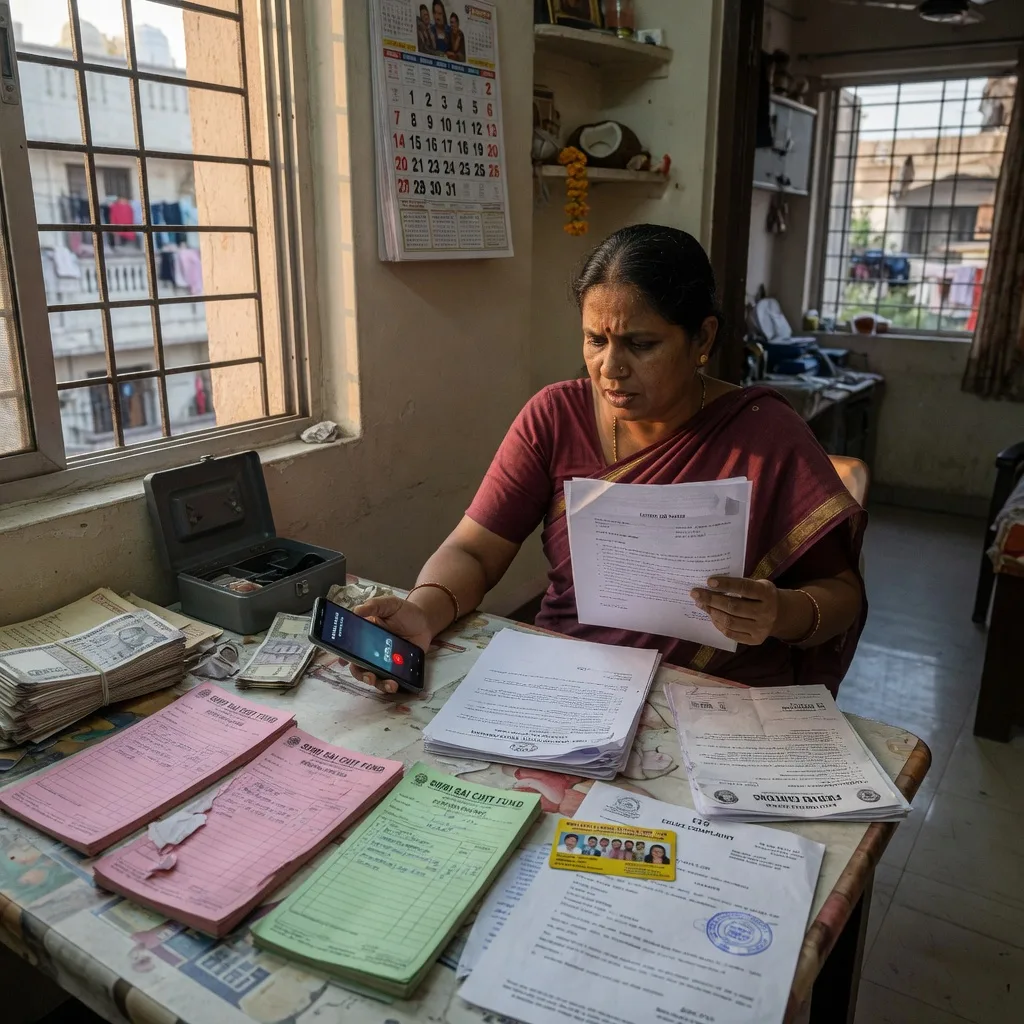
So before anything else — document everything immediately. The chit agreement or any document received when joining. Receipts for every contribution made. Bank transfer records showing payments. Any written communication — messages, emails, pamphlets — from the operators. The names, phone numbers, and addresses of the people who ran the scheme.
This documentation becomes the foundation of every legal step that follows.
The Laws That Apply to Chit Fund Fraud
Chit fund fraud is not just a civil dispute. Depending on how the scheme was run, multiple overlapping laws apply — and understanding this is what turns victims from people who lost money into complainants with real legal standing.
- The Chit Funds Act, 1982 governs legitimate chit funds in India. A chit fund operating without registration under this Act is operating illegally — and that illegality itself is a criminal offence under the Act. State governments appoint Registrars under this Act who have oversight powers. An unregistered scheme cannot legally collect money from the public.
- The Prize Chits and Money Circulation Schemes (Banning) Act, 1978 specifically bans prize chits and money circulation schemes. Many fraudulent chit funds fall under this definition — promising high returns for contributions in ways that resemble pyramid schemes. Operating such a scheme is a criminal offence under this Act.
- The Banning of Unregulated Deposit Schemes Act, 2019 (BUDS Act) is the most powerful modern tool against chit fund fraud. Enacted specifically to address fraudulent deposit-taking schemes, it prohibits any entity from accepting deposits without being registered with the relevant authority. It provides for attachment and realisation of assets and has mechanisms specifically designed to return money to depositors.
- The Bharatiya Nyaya Sanhita, 2023 — under Section 318 for cheating and Section 316 for criminal breach of trust — applies when operators induced people to invest through false representations with no genuine intention of returning the money. These are serious criminal offences carrying significant imprisonment.
- The Prevention of Money Laundering Act, 2002 (PMLA) applies in larger fraud cases where funds were laundered through the scheme. The Enforcement Directorate has powers under PMLA to attach properties and assets — as happened in the Rose Valley case, where asset attachments led to partial victim compensation through a Supreme Court supervised committee.
Where to File – Every Complaint in the Right Place
Filing the right complaint with the right authority is what produces actual investigation and asset action — not just an acknowledgement.
- File an FIR with the Economic Offences Wing (EOW)
Most state police forces have an Economic Offences Wing specifically for financial fraud cases. An FIR filed with the EOW under BNS Sections 316 and 318 — citing the Chit Funds Act, the Prize Chits Act, and the BUDS Act where applicable — reaches investigators who actually understand financial crimes and have powers to freeze bank accounts and attach assets.
The FIR should request a Lookout Circular if the operators are believed to be planning to flee, and should request immediate attachment of known properties and bank accounts under BNSS Sections 82 to 84.
- File a complaint with the State Registrar of Chit Funds
Every state has a Registrar responsible for overseeing registered chit funds. A complaint to the Registrar — with documentation that the scheme was operating without proper registration — triggers regulatory investigation and can result in protective orders on assets.
- File with SEBI if the scheme resembles a collective investment scheme
The Supreme Court has held in cases involving Rose Valley and Saradha that collective investment schemes operating without SEBI approval are illegal. If the chit fund was promising fixed returns on pooled investments rather than operating as a genuine chit, SEBI has jurisdiction. Complaints to SEBI can trigger investigations and asset freezing actions coordinated with ED.
- File on the National Cyber Crime Reporting Portal
Where the fraud operated through digital platforms — online registration, UPI collections, WhatsApp communication — cybercrime.gov.in accepts complaints. Financial fraud complaints filed here can trigger bank-level freezing actions if filed quickly enough.
- File before the Consumer Forum
Individual victims whose contributions do not exceed Rs. 50 lakh can approach the District Consumer Disputes Redressal Commission. The commission can direct refund of contributions with compensation and costs. This route runs alongside criminal complaints — not instead of them.
The Asset Attachment Step Nobody Thinks About
This is where most fraud victims make the costliest mistake — focusing entirely on the criminal complaint while the fraudster’s assets quietly move:
- Under the BNSS, courts can order provisional attachment of an accused’s assets during investigation. Money Recovery Lawyers file applications for interim attachment the moment a complaint is registered — targeting the known bank accounts, property holdings, and business assets of the operators.
- In cases where the BUDS Act applies, the Competent Authority has independent powers to attach assets without waiting for a criminal conviction. These attached assets form the pool from which victim compensation is eventually paid.
- This step has a window. Once the operators transfer assets to relatives, convert cash, or move funds offshore, attachment becomes harder. The Bengaluru Rs. 40 crore chit fund case in 2025 — involving over 260 investors — saw investigators work quickly to attach the Kerala-based couple’s properties before they could be liquidated. Acting fast enough to catch assets before they move is what makes the difference between a case with something to recover and one with only a conviction on paper.
Acting Collectively – Why It Matters
Individual victims of the same chit fund fraud are stronger together than separately.
Courts and investigating agencies respond differently to a collective complaint from 300 victims representing Rs. 47 crore than to a single complaint for Rs. 50,000. The BUDS Act specifically contemplates collective victim action. The Supreme Court has set up victim compensation committees in major fraud cases — Rose Valley, Saradha — to supervise collective recovery.
Organising with other victims, filing a combined complaint, and approaching court collectively — with Money Recovery Lawyers representing the group — creates the scale of legal action that moves enforcement agencies to prioritise the matter.
How Lawyer Advice Online Helps Chit Fund Victims
Chit fund fraud victims are often in smaller cities and towns where specialist legal help for financial fraud is not immediately accessible. They are also often dealing with the shock and shame of having been deceived — which delays the action that matters most.
Lawyer advice online removes both barriers. Victims can explain what happened from wherever they are, share the documentation they have, and get a clear picture of which complaints to file, in what order, and what urgent asset protection steps need to move immediately. Money Recovery Lawyers who handle these cases regularly know which authorities take these complaints seriously, how to frame the FIR to invoke the right provisions, and how to apply for attachment before assets disappear.
For something where the first 72 hours determine so much of what is recoverable — that immediate access to qualified guidance is not just useful. It is the difference between a case that leads somewhere and one that starts too late to catch anything.
Why Choose Vakilsearch
Vakilsearch connects chit fund fraud victims with experienced Money Recovery Lawyers who handle FIR filing with EOW, BUDS Act complaints, asset attachment applications, consumer forum complaints, and collective victim action. Every engagement begins with lawyer advice online that assesses the specific situation, identifies which complaints go where, and moves immediately on the asset protection steps that matter most in the earliest hours. From first consultation through recovery proceedings, Vakilsearch manages every stage so victims have the strongest possible chance of getting their money back.
Frequently Asked Questions
- What should a chit fund fraud victim do immediately after discovering the fraud?
Document everything immediately — the chit agreement, contribution receipts, bank transfer records, and all communications with the operators. Then get lawyer advice online from Money Recovery Lawyers the same day. The most powerful recovery tool in fraud cases — asset attachment under BNSS and the BUDS Act — works best when applied before the operators move their assets. Filing an FIR with the Economic Offences Wing quickly, requesting a Lookout Circular, and applying for interim attachment of known assets are the steps that happen in the first 72 hours. These determine how much is ultimately recoverable.
- What laws apply to chit fund fraud in India?
Multiple laws overlap in chit fund fraud cases. The Chit Funds Act, 1982 covers unregistered operations. The Prize Chits and Money Circulation Schemes (Banning) Act, 1978 applies to pyramid-style schemes. The BUDS Act, 2019 targets unregulated deposit collection with specific asset recovery mechanisms. BNS Sections 316 and 318 cover criminal breach of trust and cheating. The PMLA applies in larger cases where money was laundered. Money Recovery Lawyers identify which combination of provisions applies to the specific fraud and file complaints under all relevant laws simultaneously rather than one at a time.
- Can chit fund fraud victims recover their money if the operator has disappeared?
Sometimes — and the outcome depends heavily on how quickly asset attachment was applied for. When applications for provisional attachment of the operator’s bank accounts and property are filed immediately after the FIR, assets can be frozen before they are transferred. The BUDS Act’s Competent Authority has independent attachment powers. In cases involving the PMLA, the Enforcement Directorate attaches assets regardless of where the accused is located. Collective action by multiple victims also creates the scale of legal pressure that keeps enforcement agencies pursuing the matter even when the operator has fled.
- Is it better for multiple victims to file together or separately?
Together is significantly stronger. Courts and enforcement agencies respond differently to a collective complaint representing hundreds of victims and crores of rupees than to individual small claims. The BUDS Act specifically contemplates collective victim action. The Supreme Court has set up victim compensation committees in major fraud cases — including Rose Valley and Saradha — to oversee collective recovery. Money Recovery Lawyers who handle these cases recommend collective filing coordinated through lawyer advice online so all victims are represented under a unified strategy rather than fragmenting the case into separate actions.