Despite advancements in digital communication, faxing remains a critical tool for many businesses, particularly in industries where document authenticity is paramount. However, choosing between traditional fax machines and cloud fax solutions can be challenging. The decision impacts not only daily operations but also long-term strategic alignment with technology trends.
Considering the implications on security, compliance, cost efficiency, and integration capabilities, businesses must carefully evaluate their faxing options. In this article, we’ll dissect the critical factors that should guide the choice between cloud-based services and traditional faxing methods, helping you make an informed decision.
Assessing Cloud Fax Solutions Versus Traditional Fax Machines

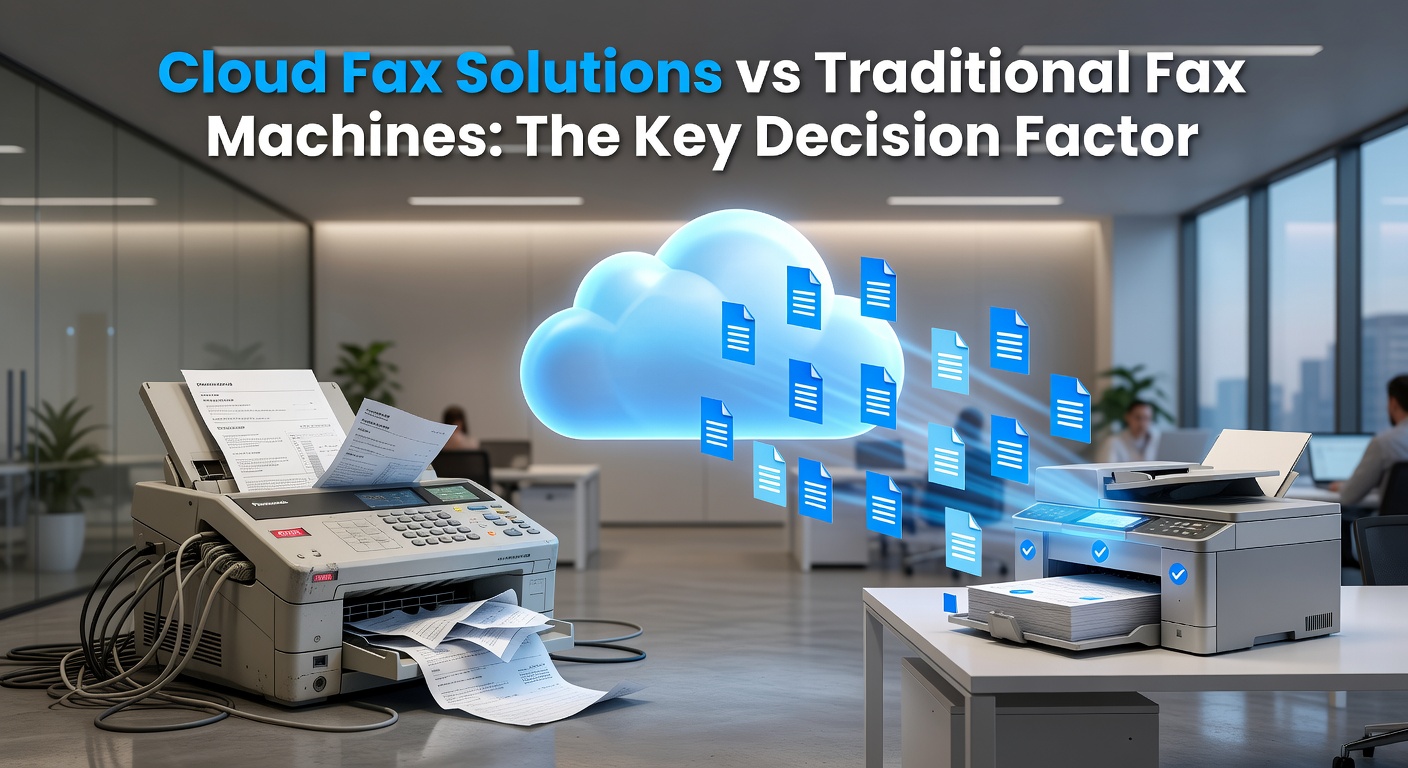
The key takeaway when comparing cloud fax services to traditional fax machines is the significant difference in infrastructure requirements. Cloud fax services offer a digital platform that eliminates the need for physical machines, phone lines, and ongoing maintenance, appealing to those looking to streamline their office space and reduce hardware investments.
On the other hand, traditional fax machines necessitate physical presence, manual operation, and can incur costs from paper, ink, and equipment upkeep. Despite these drawbacks, some organizations prefer the perceived control and immediate physical output of traditional faxing. Furthermore, certain industries may mandate the use of hard-copy faxing due to regulatory requirements.
Actionably, businesses should cloud fax solutions weigh the pros and cons in the context of their specific operational needs and preferences. Consulting with IT professionals and conducting a cost-benefit analysis would be prudent steps toward deciding which solution aligns best with the company’s workflow and objectives.
Key Decision Factors: Security and Compliance in Faxing
Security and compliance are critical in the choice between cloud faxing and traditional fax machines. Cloud fax solutions typically offer robust security features such as encryption and secure data transmission, which are imperative for protecting sensitive information and adhering to compliance standards like HIPAA or GDPR. For deeper insights, explore enterprise security risks.
Whereas traditional fax machines may be less vulnerable to cyber attacks due to their offline nature, the risk of documents being left unattended or falling into the wrong hands still exists. For companies in heavily regulated industries, compliance with strict regulations on data protection may sway the decision towards cloud solutions that have built-in compliance safeguards.
For actionable guidance, businesses should review their industry-specific compliance requirements and assess whether a cloud fax service or a traditional fax machine offers the most secure and compliant method of transmission. It’s also advisable to look into the vendor’s track record regarding security breaches or compliance lapses.
Analyzing Cost-Effectiveness and Efficiency in Fax Communication
The cost-effectiveness and efficiency of a faxing solution are often determining factors. Cloud fax services can be more cost-effective in the long run by reducing the need for physical equipment, maintenance, and supplies. This is especially true for businesses with high fax volumes, as cloud services typically offer scalable plans to accommodate varying needs.
In comparison, traditional fax machines may represent a higher upfront cost and will continuous incur expenses for paper, ink, and possibly repairs. However, for organizations with minimal faxing needs, this traditional route might still be economically justifiable. The efficiency gains from cloud fax services, such as the ability to send and receive faxes from multiple devices and locations, can significantly increase workplace productivity.
To guide decision-making, conduct a comprehensive assessment of fax volume, potential growth, and the opportunity cost of employees’ time spent managing traditional faxing processes versus the streamlined operations of a cloud-based system.
Cloud Fax Solutions and Integration with Modern Business Ecosystems

Integrating faxing capabilities with existing business systems is increasingly critical as companies pursue digital transformation. Cloud fax solutions offer inherent advantages here, as they can easily interface with email systems, customer relationship management (CRM) tools, and other business applications, thus enhancing workflow automation and data coherence.
Traditional fax machines, by contrast, remain relatively isolated from other business processes, potentially creating information silos and inefficiencies. With cloud fax services, businesses can take advantage of IT integration practices and automated workflows that reduce manual data entry and the potential for human error.
When seeking actionable guidance, evaluate the compatibility of cloud fax solutions with your organization’s current and future software ecosystem. Moreover, consider how a transition could affect your staff’s workflow and whether it aligns with your broader digital strategy. For virtualization support, check Hyper-V backup solutions.
Ultimately, when deciding between cloud fax solutions and traditional fax machines, a multitude of factors come into play. Cost, efficiency, security, compliance, and integration with business systems are all critical aspects to consider. Through careful evaluation of these key points, organizations can select a faxing solution that not only meets their current needs but also supports their future growth and technological advancement.