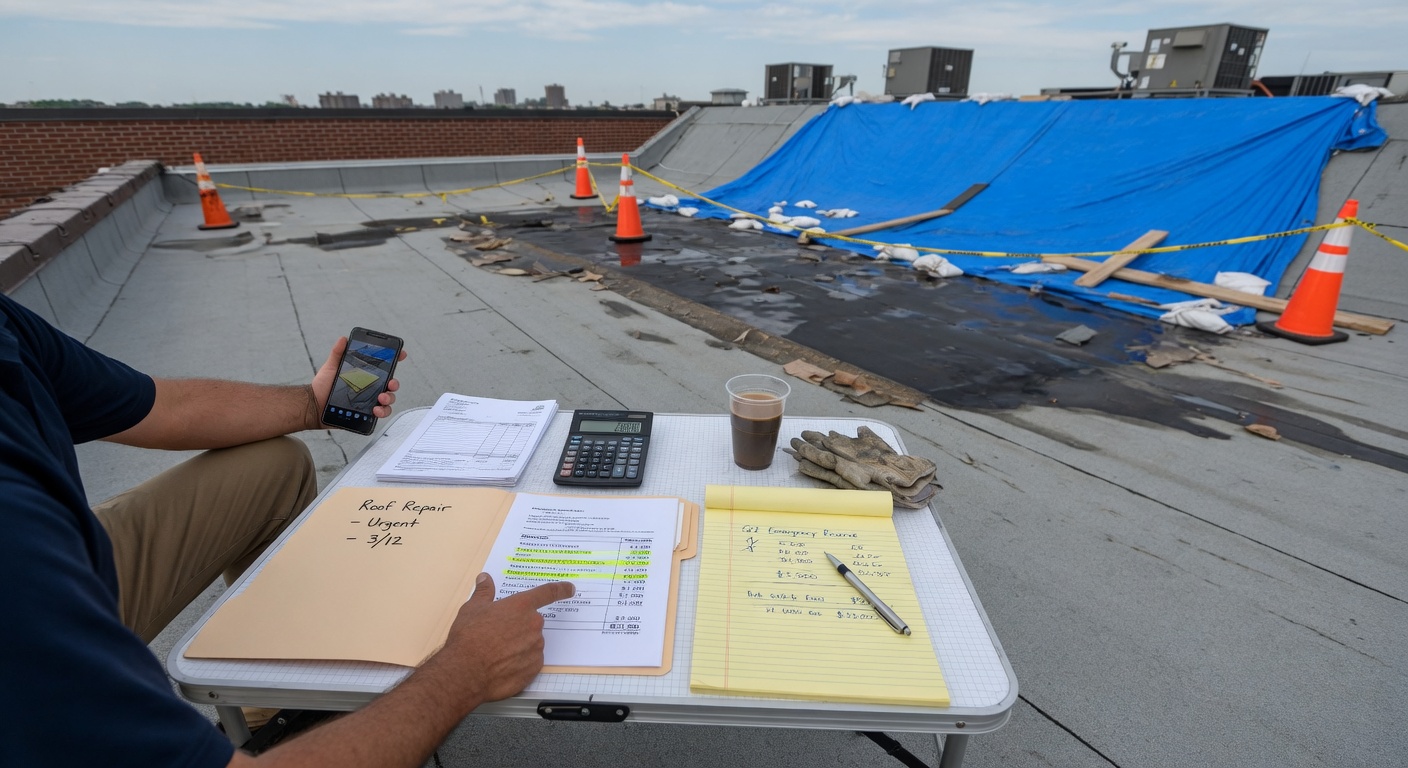
Roofing emergencies don’t send calendar invites. They show up uninvited, mid-quarter, peak season, right when your team is juggling three other fires, and the bill attached tends to be the kind that makes even seasoned property managers wince. The sudden weight of unexpected commercial roofing repair costs can blow through operating budgets, stall capital projects, and cause genuine anxiety at the ownership level. But here’s the thing: with better planning, the right partners, and honest self-assessment of your financial position, you can walk into that chaos with your head clear instead of spinning.
In 2024, roof repair and replacement cost value totaled nearly $31 billion, up nearly 30 percent since 2022. That figure alone should jolt anyone responsible for a commercial property into rethinking how they approach roofing budgets.
When your facility keeps your business running, your roofing contractor isn’t just a vendor; they’re a strategic partner. That’s exactly why companies like Champion Commercial Roofing are worth knowing before an emergency hits. They manage insurance claims directly, offer zero-deposit project starts, and can mobilize nationally for both planned work and urgent responses.
What Actually Drives Commercial Roofing Repair Costs Up
Commercial roofing repair costs swing wildly depending on circumstances, and Champion Commercial Roofing often reminds clients that several variables stack on top of each other quickly. If you’re not aware of them going in, the final invoice can feel completely disconnected from reality.
Roof Type, Damage Scope, and Site Complexity
Flat roofs with layered drainage systems cost significantly more to repair than standard sloped configurations. Add in multi-story access challenges, equipment blocking critical sections, or the need for specialty materials that aren’t sitting in a local warehouse, and costs climb.
Emergency timelines make all of this worse because contractors have to pull resources on short notice, and urgency has a price.
The Emergency Premium Is Real
Emergency roofing services typically run 25–50% above what you’d pay for the same work scheduled in advance. That gap reflects after-hours labor, expedited material sourcing, and rapid mobilization costs. Throw in permit requirements and local inspection timelines, yes, even emergencies sometimes require them, and you start to see why the numbers feel brutal.
Knowing what inflation costs is genuinely useful. But the real leverage is building financial and operational readiness before any of this happens.
What Emergency Commercial Roof Repair Actually Looks Like
Not all roof problems are created equal. Some are nuisances. Others are crises. Knowing the difference, and knowing it fast, is what separates a controlled response from a scramble.
When Does It Officially Become an Emergency?
Emergency commercial roof repair typically kicks in when you’re dealing with active water intrusion, storm-related structural compromise, or a failure that’s directly threatening your ability to operate. Post-hail punctures, sudden membrane separations, wind-stripped sections, these aren’t things you pencil into next month’s maintenance schedule. They demand same-day attention.
The Cost of Waiting
Here’s a figure that doesn’t get quoted enough: delaying action by just 24–48 hours on a serious leak can cascade into soaked insulation, ruined inventory, mold exposure, and structural deterioration that multiplies your repair bill several times over. What started as a targeted fix becomes a full system replacement. Waiting is never the cheaper choice; it just feels like one in the moment.
So now you understand what triggers an emergency. The next question, naturally, is what you’re likely to pay, and why that number is almost always higher than you expected.
Proactive Roofing Budget Strategy: What Smart Property Managers Do Differently
Strong budgeting for roof repairs isn’t pessimism, it’s professionalism. The managers who handle roofing emergencies best are almost never the ones reacting; they’re the ones who built a buffer months or years earlier.
Creating a Dedicated Reserve Fund
Most facility managers recommend setting aside 1–3% of a building’s total replacement value annually for maintenance reserves and unexpected repairs. The right number for your property depends on your roof’s current age, its condition, and how exposed you are to local weather patterns. Older roofs in high-storm regions sit at the top end of that range.
Document your inspection findings in detail; that paper trail is worth its weight in gold when you need to justify expenditure or support an insurance claim.
Using Technology to Stay Ahead
Digital maintenance tracking and drone-based inspection programs give property teams a serious edge. Scheduling formal commercial roof inspections twice a year catches developing vulnerabilities before they mature into failures.
The ROI here is not theoretical; preventive maintenance programs have been shown to cut operating expenses by 12–18% and deliver up to 4× return through extended asset life and fewer emergency callouts. Even with all of this in place, emergencies still happen. When they do, financial clarity becomes your most urgent resource.
Rapid Financial Assessment When a Roofing Crisis Hits
Speed matters on two fronts during a roofing emergency: physical containment and financial triage. Knowing where your money is, and where more of it could come from, is a skill worth developing well before you need it.
Taking Stock of Available Resources
Start with your reserve fund. Then look at operating credit lines and any vendor financing your contractor offers. Pull your insurance policy and read through what’s actually covered under emergency roofing services. Many commercial property policies cover sudden and accidental damage, though the documentation requirements aren’t always obvious from a quick scan.
Getting Insurance Engaged Immediately
Call your adjuster early. Insurers tend to respond faster when they’re looped in quickly, and documentation completeness determines how well your claim performs. This is where your contractor relationship becomes critical. Champion Commercial Roofing takes the lead on navigating insurance claims, ensuring your documentation is thorough and positioned to maximize your payout.
Once you know what resources you have, the next move is making those dollars go as far as possible.
Practical Cost-Saving Strategies for Emergency Repairs
There are real ways to reduce spending during a roofing crisis, without cutting corners on quality or safety.
Activate Warranties Before Opening Your Wallet
Before authorizing any new spend, dig up your existing roofing warranties. Depending on the manufacturer and the nature of the failure, labor and materials on qualifying repairs may already be covered. It’s a step that gets skipped constantly under pressure, and it’s consistently one of the most expensive oversights.
Bundle Repairs Into a Single Mobilization
If you have deferred maintenance items sitting alongside your emergency repair, this is the moment to bundle them. Contractors price consolidated work more favorably than multiple separate callouts, and you avoid paying mobilization costs twice.
Emergency vs. Preventive Costs: A Direct Comparison
| Factor | Emergency Repair | Preventive Maintenance |
|---|---|---|
| Cost Premium | 25–50% above standard | Standard or lower |
| Response Time | Hours to days | Scheduled, flexible |
| Business Disruption | High | Minimal |
| Insurance Support | Claim-driven | Optional |
| Long-term ROI | Lower | Up to 4× return |
Frequently Asked Questions
Who’s responsible for roof repairs in a commercial lease?
Generally, the property owner, unless the lease explicitly transfers structural maintenance obligations to the tenant. Review the exact language carefully and get legal counsel involved if there’s any ambiguity.
What if the repair cost is beyond what’s available right now?
Start with your insurance policy; hail, wind, and falling debris damage are frequently covered, which can dramatically reduce your out-of-pocket exposure. Zero-deposit financing and deferred payment structures through your contractor are also worth asking about immediately.
Do preventive upgrades actually strengthen a commercial roof’s resilience?
Without question. Coatings, upgraded drainage systems, and properly maintained flashing all extend lifespan and reduce storm vulnerability, which means fewer emergency situations over time.
The Bottom Line on Emergency Preparedness
Budgeting for emergency commercial roof repair isn’t about expecting the worst; it’s about refusing to be caught flat-footed when it arrives. A funded reserve, disciplined commercial roof maintenance, smart insurance coverage, and a trusted contractor relationship work together to keep small problems from turning into financial catastrophes.
The data supports it clearly: proactive spending consistently outperforms reactive scrambling. Don’t wait for the ceiling to leak before you build your plan. The best time to act on this was last year. The second-best time is right now.