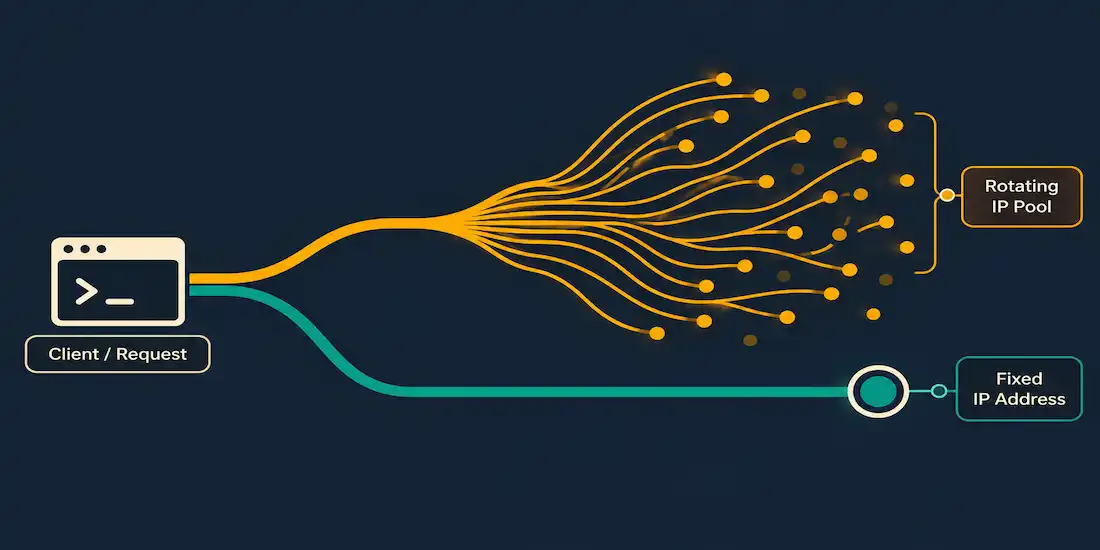
Picking the wrong proxy type is one of the most common, and most expensive, mistakes in data acquisition projects. Teams often default to whatever proxy option sounds most robust — usually a static, fixed IP — without actually matching it to what the task needs. The result is predictable: success rates drop, costs climb, and the proxy gets blamed for a problem that was actually a selection mistake from the start.
This guide walks through a practical framework for choosing between active (rotating) residential proxies, static residential proxies, and static datacenter proxies, based on the actual shape of your task rather than which option sounds the most “serious.”
The Five Questions That Actually Determine Your Choice
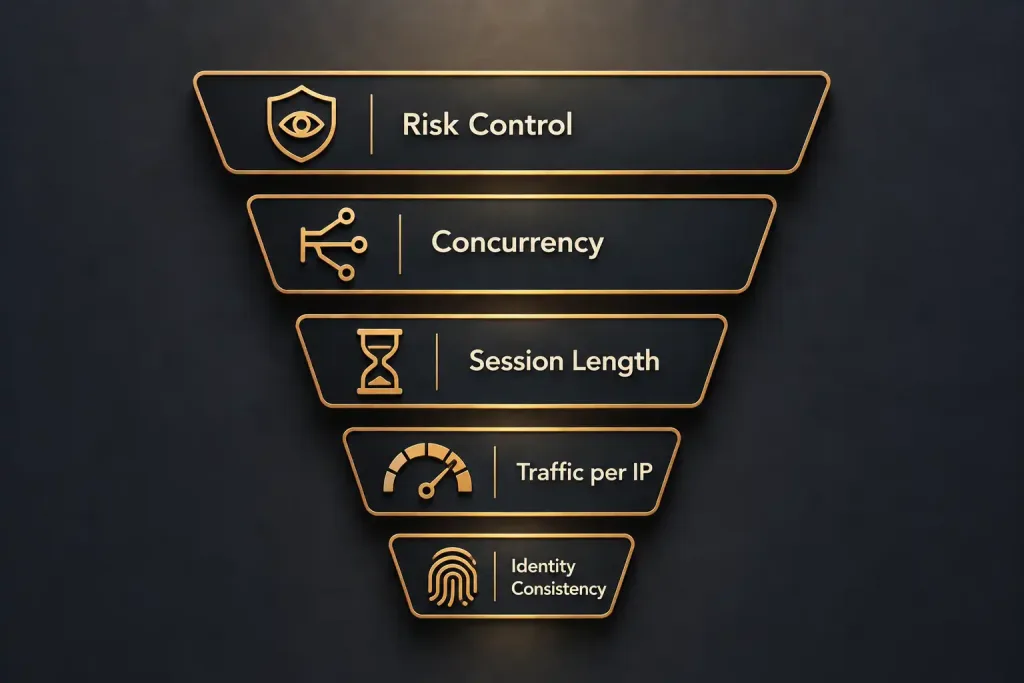
Before comparing proxy types, answer these for your specific task:
- How strict is the target site’s risk control? Sites with aggressive bot detection need more natural-looking, flexible IP rotation. Sites with minimal detection can tolerate more rigid setups.
- What’s your concurrency level? High-volume, parallel requests generally need a scalable pool of IPs, not a handful of fixed addresses straining under load.
- How long does a single session need to last? A quick page fetch is a fundamentally different problem than an hours-long logged-in session.
- How much traffic will a single IP carry? Heavy, sustained traffic through one IP changes the cost-efficiency calculation compared to light, distributed requests.
- Does the task require a consistent identity? Logged-in sessions, shopping carts, and account-based scraping need IP consistency that anonymous public scraping doesn’t.
Get these five answers first. The proxy type decision follows from them — not the other way around.
When Active (Rotating) Residential Proxies Make Sense
For most public web data collection — price monitoring, SERP observation, competitor analysis, general market research — active residential proxies are usually the right starting point, not static ones.
| Task Type | Why Active Residential Fits |
|---|---|
| Public web scraping, price monitoring | Short sessions, frequent IP changes reduce per-IP load and detection risk |
| SERP/ranking observation | High request volume benefits from a large, rotating IP pool rather than a few fixed addresses |
| Competitor/market research at scale | Easier to expand capacity without each IP accumulating a suspicious traffic pattern |
The core logic: in high-concurrency, short-session tasks, a fixed IP becomes a bottleneck and a detection liability at the same time. Spreading requests across a rotating pool keeps any single IP’s footprint low, which is usually what actually improves success rates — not raw proxy “quality” in the abstract.
When to Switch to Static Residential or Datacenter Proxies
Static proxies earn their place in a narrower but real set of scenarios:
Long-term logged-in sessions. If a task needs to maintain the same account identity over an extended period — shopping cart persistence, authenticated dashboards, ongoing account monitoring — rotating the IP mid-session can break the session state entirely or trigger exactly the account-security flags you’re trying to avoid.
Regional consistency requirements. Some tasks genuinely need to appear from a consistent city or ISP across many requests, which static residential IPs handle more reliably than a rotating pool.
High traffic per IP with moderate target-site risk control. When a task generates heavy, sustained traffic but the target site’s detection isn’t especially aggressive, static datacenter proxies can be meaningfully more cost-efficient than paying for traffic-billed rotating residential bandwidth.
The general rule: the more a task resembles “be one consistent user for a long time” rather than “make many brief, independent requests,” the more it points toward static resources over active ones.
Connection Methods: API Allowlist vs. Account/Password
Once you’ve chosen a proxy type, how your collection program actually connects matters too:
API-IP allowlist works well for server-based, automated tasks. You add your server’s public outbound IP to the provider’s allowlist, then the server authenticates automatically without embedding credentials in the application itself — cleaner for deployment and easier to manage across a fleet of servers. One detail worth getting right: the allowlist entry needs to be your server’s actual public-facing egress IP, not a private/internal address (anything in the 192.168.x.x or 10.x.x.x range) — this is a common setup mistake, especially behind a NAT gateway or load balancer, where the real external IP isn’t obvious without checking directly.
Account and password authentication is more flexible for local development, multi-person collaboration, or situations where your own egress IP changes frequently — you’re not tied to a specific server’s fixed address.
The Legal and Ethical Boundary Worth Taking Seriously
This is worth stating directly, since it’s easy to lose sight of in a purely technical proxy comparison: a proxy changes your connection’s origin point. It does not grant permission to ignore a target site’s terms of service, bypass access controls, or disregard robots.txt directives. Using rotating IPs specifically to defeat rate-limiting or access controls a site has deliberately put in place is a meaningfully different activity — legally and ethically — than using a distributed proxy pool to avoid overloading any single connection during otherwise legitimate, permitted data collection.
Before scraping any site at scale, check its terms of service and robots.txt file, respect reasonable rate limits even when technically able to exceed them, and avoid collecting data explicitly marked as restricted or requiring authentication you don’t have independent rights to use. A proxy solution should solve a technical bottleneck — not serve as a workaround for rules a site has clearly established.
A Practical Setup Sequence
- Define the task first. Answer the five questions above before looking at any specific proxy product.
- Match resource type to the answers. Short sessions and high concurrency point toward active residential; long sessions and fixed identity point toward static residential or datacenter.
- Choose your connection method. Server-based automation generally favors API-IP allowlist access; local development and multi-person work generally favors account/password.
- Test before scaling. Run a small-scale test measuring timeout rates, retry frequency, concurrency limits, and regional accuracy before committing to a larger resource purchase.
Warning Signs Your Current Proxy Setup Is Mismatched
A few patterns indicate the proxy type itself — not your code — is the problem: sessions disconnecting repeatedly alongside frequent IP changes, consistently high traffic concentrated on individual IPs in what’s supposed to be a rotating pool, and a collection program that keeps needing manual intervention to stay running. When these show up together, the fix is usually revisiting the five-question framework above, not debugging the scraping code further.
Frequently Asked Questions
Should I start with active or static residential proxies for data acquisition? For most public web scraping — price monitoring, SERP observation, market research — active (rotating) residential proxies are the better starting point, since these tasks typically involve short sessions and benefit from spreading load across many IPs. Static resources make more sense when a task needs long-term identity consistency.
Do I need to buy long-term fixed proxy IPs from the start? Usually not, for public scraping tasks. Test with a flexible, rotating solution first on a small scale, and only move to fixed/static resources if the target site’s login requirements or account-association rules genuinely demand consistent identity.
Should I use API-IP allowlist or account/password authentication? API-IP allowlist suits automated, server-based tasks with a fixed outbound IP. Account/password authentication suits local development, multi-person collaboration, or situations where your egress IP changes frequently.
What IP should I add to an API allowlist? Your server’s actual public-facing outbound IP — never a private network address like 192.168.x.x. If there’s a NAT gateway or load balancer in front of your server, confirm the real external egress IP before submitting it.
Is it legal to use proxies for web scraping? Using a proxy itself isn’t inherently illegal, but what you do with it matters. Always check a target site’s terms of service and robots.txt file, respect rate limits, and avoid accessing data that requires authentication you don’t have legitimate rights to use.
The Bottom Line
The right proxy type for a data acquisition task isn’t about which option sounds most robust — it’s about matching session length, concurrency, target-site risk control, and identity requirements to the resource actually built for that pattern. Most public scraping tasks are well served by active residential proxies; long-term, identity-consistent tasks generally call for static residential or datacenter resources instead. For reference on current proxy product specifications and terminology, Global Proxy’s documentation is one resource worth reviewing, alongside comparing against other providers before committing to a specific vendor.