Why SMS Verification Is Still So Widely Used
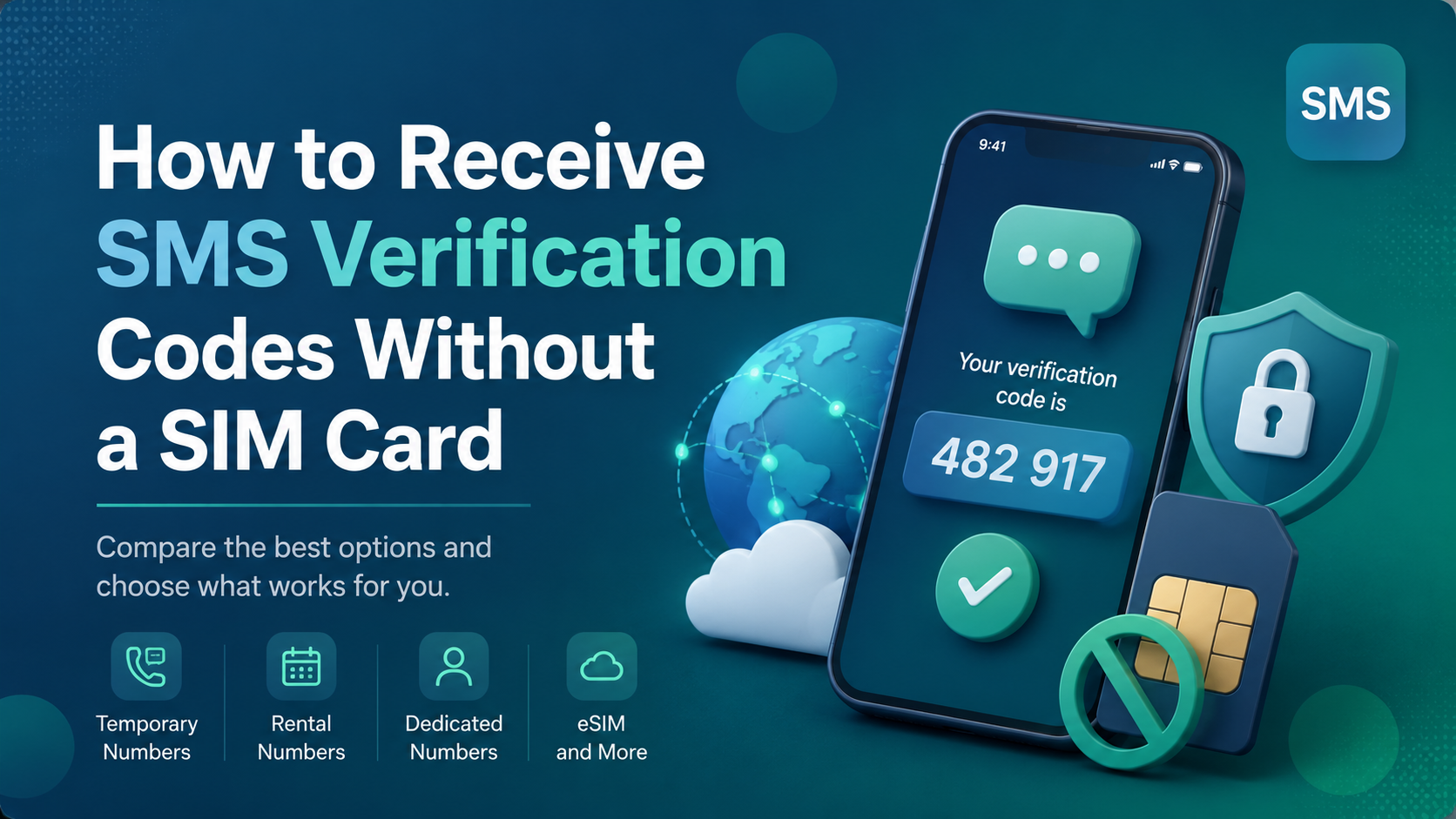
Phone verification has become a routine part of using the internet. Whether you are creating a new account, enabling two-factor authentication (2FA), or recovering access to an existing profile, receiving an SMS verification code is often unavoidable. Online services use SMS codes to verify new accounts, reduce automated registrations, confirm account ownership, recover forgotten passwords, and authorize logins from unfamiliar devices.
Although authentication apps and passkeys are becoming more common, SMS verification remains one of the most widely supported security methods across thousands of platforms globally — in large part because nearly every mobile phone can receive a text message, no setup required.
The question is: what if you do not have a physical SIM card available? Perhaps you are traveling with a Wi-Fi-only device, protecting your privacy from unnecessary data sharing, or simply do not want to attach your personal number to every service you sign up for. A physical SIM card is no longer the only path forward — and in many situations, it is not even the most practical one.
Can You Receive SMS Without a Physical SIM Card?
Yes. The ability to receive SMS online no longer requires inserting a plastic SIM card into a phone.. Verification codes can instead be received through temporary phone numbers, rental phone numbers, dedicated virtual numbers, and in some travel-oriented cases, eSIM services. The right option depends on how frequently you will need the number, whether the service might send additional verification messages in the future, and how much privacy you require.
One practical note before comparing options: in some countries — including India, China, and parts of the Middle East — strict Know Your Customer (KYC) laws require identity verification to activate any phone number, including virtual ones. In these regions, the availability of anonymous or temporary numbers may be more limited, and local regulations should be checked before relying on any specific service. In most other countries, using temporary phone numbers for legitimate account verification and privacy purposes is legal, provided you are not violating the terms of service of the platform you are registering with or using the number for fraudulent activity.
Method 1: Temporary Phone Numbers
Temporary phone numbers for SMS are among the most widely used ways to receive SMS verification codes without a personal SIM card. Instead of your own mobile number, incoming verification messages are delivered through a secure online dashboard — typically within seconds of requesting the code on the platform you are verifying.
These numbers are commonly used to verify accounts on services such as WhatsApp, Telegram, Google, PayPal, Discord, Facebook, OpenAI, Binance, and thousands of other platforms that require SMS verification at registration or during account recovery. They are the right choice when you only need a verification code once and do not expect additional SMS messages to that number in the future. Their primary limitation is exactly that: most temporary phone numbers are single-use or valid only for a short window, so if the same service later asks for a second verification, you may no longer have access to the original number.
Common uses for temporary phone numbers include creating new online accounts, verifying social media profiles, testing applications during development, registering for online marketplaces, and keeping your personal number private from services you do not fully trust.
Method 2: Temporary Rental Phone Numbers
Not every service sends only one verification code. Many platforms continue requesting SMS verification long after the initial registration — when you sign in from a new device, reset your password, enable two-factor authentication, or trigger an account security review. In these situations, losing access to the number used for registration can lock you out of the account entirely.
Temporary rental phone numbers solve this problem by assigning a specific number to you for a defined rental period — typically from a few days to several weeks. The number stays yours throughout the rental window, meaning you can continue receiving future verification messages without needing to re-register the account or contact support. This makes rental numbers the more reliable choice for accounts you plan to actively use, rather than accounts created for a single transaction.
The key distinction from a basic temporary number is continuity: a rental number does not expire immediately after delivering one code. If you are setting up an account on a service with ongoing 2FA requirements, a rental number is a better starting point than a one-time temporary number.
Method 3: Dedicated Phone Numbers
Dedicated phone numbers are designed for long-term use and belong exclusively to a single customer throughout the subscription period. Unlike temporary activation numbers or short-term rental numbers, a dedicated number is not shared with other users and can typically be renewed indefinitely as long as the subscription is active.
Because no one else uses or has ever used the number in the same context, dedicated numbers carry the lowest risk of being pre-blocked by a platform that has seen the number used for suspicious registrations before. This makes them the most reliable option for business accounts, long-term professional projects, services that require frequent or repeated verification, and users managing multiple important accounts simultaneously.
Dedicated numbers are not necessary for occasional personal use — the cost and commitment involved make them more appropriate for structured business or professional environments where consistent, uninterrupted access to a stable number is a genuine operational need.
Method 4: eSIM
An eSIM is a digital version of a traditional SIM card issued by a mobile carrier. It is embedded into a device rather than inserted as a removable card, and it functions in the same way as a physical SIM — it requires an active mobile subscription and connects to a carrier network. Many modern smartphones, tablets, and smartwatches support eSIM alongside or instead of a physical SIM slot.
It is worth being specific about where eSIM fits in this comparison: eSIM is primarily a connectivity technology, not a privacy or verification tool. If your goal is replacing your regular carrier while traveling internationally, or activating a second mobile line without a second physical card, eSIM is a practical and increasingly well-supported solution. However, if your goal is specifically to receive SMS verification codes without exposing your personal mobile number, eSIM alone does not solve the problem — the number associated with the eSIM is still yours and still traceable to your identity through the carrier.
A further practical note: many travel eSIMs are data-only plans and do not include a phone number at all, meaning they cannot receive SMS messages by default. For SMS verification purposes, temporary phone numbers are generally the more flexible and purpose-built solution.
Method 5: Public Online SMS Websites
Free online SMS websites display incoming messages on publicly accessible phone numbers that anyone can view in a browser. While they may appear convenient for quick testing, they carry significant limitations that make them unsuitable for most real account verification scenarios.
Because messages on these services are publicly visible, anyone who knows which number was used — or who simply browses the site — can read the verification code before you use it. This makes account security effectively nonexistent for any account registered through a public SMS site. Beyond the privacy problem, many online platforms actively block public SMS numbers from receiving verification codes, as the numbers are well-known to fraud prevention systems. The numbers themselves are also frequently overloaded, unavailable, or removed without notice.
Public SMS websites may be acceptable for simple development testing where no real account security is involved, but they are not appropriate for personal accounts, financial services, business registrations, or any account that contains meaningful information.
How the Options Compare
| Method | Privacy | Future SMS | Best For |
|---|---|---|---|
| Temporary Phone Number | High | Limited | One-time verification |
| Temporary Rental Phone Number | High | Yes | Ongoing account access |
| Dedicated Phone Number | Very High | Yes | Long-term business and personal accounts |
| eSIM | Medium | Yes | Mobile connectivity and travel |
| Public SMS Website | Low | No | Temporary testing only |
Choosing the Right Option for Your Situation
The right choice depends on one primary question: how many times will this number need to receive a verification message?
If the answer is once — you are creating an account, you need the confirmation code, and you do not expect the service to send further OTP codes — a temporary phone number is the simplest and most affordable option. If the service is likely to send additional verification codes in the future, such as when you log in from a new device or reset your password, a temporary rental number gives you continued access to the same number without having to re-register the account. If the number needs to remain stable for months or years and will be tied to critical accounts or business operations, a dedicated number provides the highest reliability. If you need a mobile connection for travel rather than just an SMS inbox, eSIM is worth evaluating — but check whether the eSIM plan includes a phone number or is data-only before assuming it will work for SMS verification.
Common Mistakes to Avoid
Using a public SMS website for any account you actually care about is the most common mistake in this category — the combination of public message visibility and widespread platform blocking makes these services unreliable for anything beyond throwaway testing. A closely related mistake is using a basic one-time temporary number for an account that will require ongoing verification, then losing access when the number expires before the next login challenge arrives.
On the practical side: when renting a number, renting for too short a period is a frequent source of avoidable account access problems. Some services send their first post-registration verification weeks after signup — triggered by an unusual login, a password reset, or an automatic security review. Forgetting this and letting a rental number expire shortly after registration can leave you locked out of an account you are actively using. It is also worth verifying before signup whether a specific platform accepts the type of number you are using, since some services specifically filter out VoIP-based or virtual numbers and only accept SIM-registered ones.
Conclusion
A physical SIM card is no longer a prerequisite for receiving SMS verification codes. Temporary phone numbers, rental numbers, dedicated virtual numbers, and eSIM technology each address different parts of the problem, and the right choice is determined by how long you need the number, how often the service is likely to contact it, and whether you need actual mobile connectivity or simply an inbox for OTP codes.
For single verifications, a temporary number is fast and straightforward. For accounts where ongoing access to the same number matters, a rental number is the more reliable starting point. Dedicated numbers serve businesses and users with long-term, high-reliability requirements. And eSIM remains the appropriate solution when the goal is replacing or supplementing a mobile carrier plan rather than receiving a one-time verification code.
Understanding which option fits which scenario prevents the most common account access problems that come from choosing the wrong method — specifically, losing access to a number before the service ever stops needing to verify you through it.