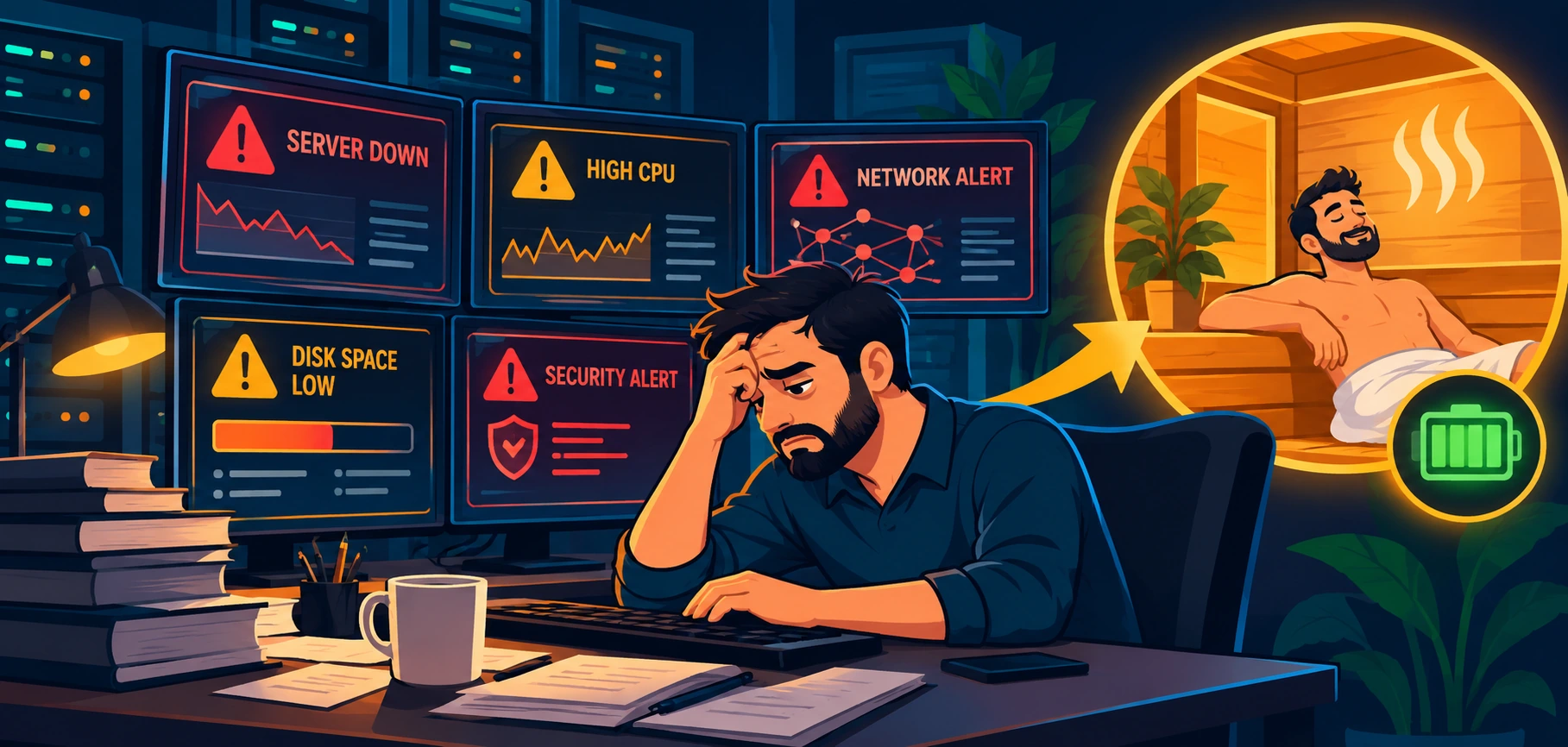
IT work doesn’t stop when the office closes. A server goes down at 2 a.m., and someone’s phone buzzes. A client’s firewall gets probed on a Saturday, and the on-call analyst is already awake. This isn’t a complaint. It’s just the job. But it comes with a cost that rarely gets discussed openly: a slow, specific kind of IT burnout that builds quietly, year after year, until it starts affecting judgment, health, and the work itself.
The Specific Pressures Behind IT Burnout
Most jobs have deadlines. Tech work has something sharper — a sense that failure is immediate and visible. A missed patch becomes a breach. A bad deployment becomes a 3 a.m. rollback. Security analysts in particular live inside a kind of low-grade vigilance that never fully switches off, because the threat landscape doesn’t take weekends.
A few things make this field especially prone to IT burnout:
- On-call culture. Many IT and SOC roles require being reachable at all hours, which fragments sleep and recovery time even when nothing goes wrong.
- Alert fatigue. Security teams handle a constant stream of alerts, most of which are false positives. Sorting signal from noise, repeatedly, wears people down faster than any single big incident does.
- Responsibility without full control. A network engineer can configure everything correctly and still get blamed when a third-party vendor’s outage takes down a client’s service.
- Rapid skill obsolescence. The tools change every year. Staying current isn’t optional, and that treadmill adds pressure on top of the day job.
None of this is unique to one company or one role. It’s structural. And structural stress needs more than a pep talk to actually improve.
What Chronic Stress Actually Does to You
Stress isn’t just an unpleasant feeling. It has measurable physical effects, and they accumulate.
Cortisol, the body’s primary stress hormone, is supposed to spike and then fall back down. Under chronic pressure, it stays elevated longer than it should. Over months and years, that pattern has been linked to poorer sleep quality, weakened immune response, and higher long-term cardiovascular risk. It also affects cognition directly — sustained stress makes it harder to concentrate, harder to retain new information, and easier to make the kind of small mistake that, in security or infrastructure work, isn’t small at all.
There’s a reason “burnout” became a formally recognized occupational phenomenon by the World Health Organization. It isn’t just tiredness. It’s a specific pattern of exhaustion, cynicism, and reduced effectiveness that builds when job demands consistently outpace recovery time. IT burnout specifically shows up at some of the highest rates across any white-collar field, largely because of the always-on expectations described above.
What Actually Helps With IT Burnout — and What’s Mostly Noise
A lot of stress advice is vague to the point of being useless. “Just relax” doesn’t help anyone staring down a ticket queue. Here’s what actually has real support behind it for reducing IT burnout.
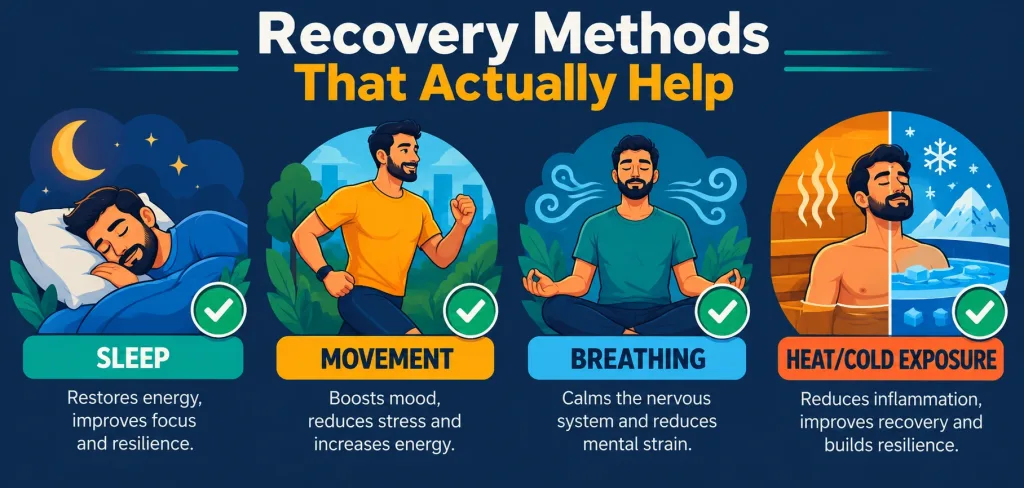
Sleep comes first, not last. It’s the most undervalued recovery tool in tech culture, where pulling a late night to fix something feels like a badge of honor. Chronic sleep debt amplifies every other stress symptom. Protecting a consistent sleep window — even a short one — does more for next-day cognitive function than almost anything else on this list.
Physical movement, even in small doses, works. You don’t need an hour at the gym. Twenty minutes of walking or a short strength session measurably lowers stress hormones for hours afterward. The barrier for most IT professionals isn’t motivation — it’s that the workday swallows the time. Scheduling it like a meeting, rather than hoping it happens, is the difference that actually sticks.
Breathing techniques are underrated because they sound too simple. Slow, controlled breathing activates the parasympathetic nervous system — the body’s actual “stand down” signal. A few minutes of deliberate slow breathing between tickets can measurably lower a racing heart rate before a stressful call or incident review.
Heat exposure is one of the more researched recovery methods. A large, well-known Finnish cohort study (published in JAMA Internal Medicine, following thousands of men over roughly two decades) found that frequent sauna use was associated with meaningfully lower rates of cardiovascular death and all-cause mortality. The cortisol-specific research is less settled — some smaller studies suggest short-term reductions after sauna sessions, though the evidence there is still preliminary compared to the cardiovascular findings. Still, regular sauna use is a genuinely supported way to reduce your stress levels after a demanding shift, combining physical relaxation with a forced break from screens — something that rarely happens otherwise in this field.
Cold exposure complements heat for a different reason. Brief cold exposure, like a short cold plunge, triggers a controlled adrenaline response followed by a calming rebound. Some people find alternating between heat and cold — a sauna session followed by a short cold plunge — gives a more complete reset than either alone, since it exercises the nervous system’s ability to shift states rather than just relaxing it passively.
Building Recovery Into an Actual Routine Against IT Burnout
None of this works as a one-time fix. The job’s structural pressures don’t go away after one good night’s sleep or one sauna session. What actually moves the needle against IT burnout is treating recovery as part of the job, not an afterthought squeezed in if there’s time left.
A few practical starting points:
- Set a hard boundary on after-hours checking, even if on-call status requires reachability — there’s a real difference between being reachable and compulsively checking Slack at 11 p.m. out of habit rather than necessity.
- Rotate on-call fairly and track the actual hours it costs people, not just the headcount assigned to it. Teams that measure this tend to catch burnout risk before it becomes attrition.
- Normalize talking about alert fatigue and workload, rather than treating stress tolerance as a personality trait some people simply have and others don’t.
- Build in physical recovery time deliberately — whether that’s a short walk, a consistent gym block, or regular sauna and cold-plunge sessions — rather than treating it as something that happens only when the schedule magically clears.
The Bottom Line on IT Burnout
Tech and cybersecurity work carries a specific, structural kind of stress — always-on expectations, alert fatigue, and responsibility without full control. That stress has real physiological costs, not just a bad mood at the end of a long week. The methods that actually help against IT burnout aren’t exotic: protected sleep, regular movement, breathing techniques, and heat or cold exposure all have genuine support behind them. The hard part isn’t knowing what helps. It’s building it into a schedule that doesn’t leave room for it unless you make the room yourself.