Nothing Ear 3A Review: Strong Sound and Smart Features
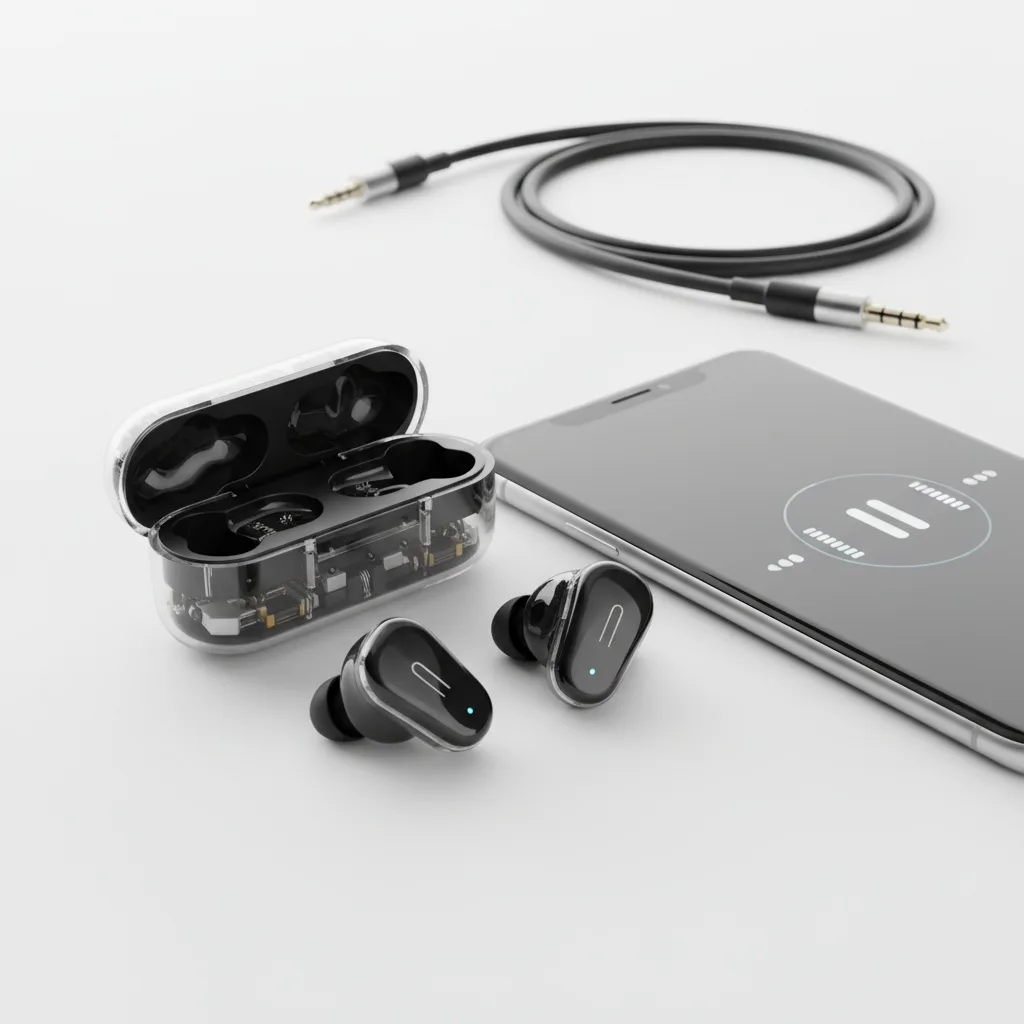
The Nothing Ear 3A delivers a spec sheet that would embarrass earbuds twice its price: 12mm dynamic drivers, adaptive 45dB ANC, Bluetooth 6.0 with multipoint, LDAC, and an unprecedented on-device audio recording feature across a 32MB built-in storage split between both buds. Battery life hits exactly 10 hours without ANC — matching Nothing's claim — and the transparent design remains one of the most distinctive in the category. The one honest weakness is stock sound tuning that leans heavily toward bass out of the box, requiring time in the Nothing X app's 8-band parametric EQ to bring the signature in line with most listeners' preferences. At $99 targeting commuters, content creators, and Android users who refuse to overpay, this is the default recommendation in the sub-$100 TWS segment for 2026.
Performance Analysis
The Nothing Ear 3A’s audio performance centres on its upgraded 12mm dynamic driver — an increase from the 11mm TPU unit in the Ear (a). Nothing claims this delivers up to 5dB more bass, and in practical use the signature leans noticeably warm out of the box. SoundGuys’ Multi-Dimensional Audio Quality Score (MDAQS) testing found that the Balanced and More Treble EQ presets scored above 4.6 out of 5.0 on simulated panel responses from approximately 200 listeners — meaning most people will enjoy the sound once they adjust the tuning away from the default. The stock Balanced preset scores around 3.4 out of 5.0 for timbre under the tougher headphone-only comparison, a fair reflection of the elevated low end that can overwhelm detail in complex arrangements.
ANC performance measured an average noise reduction of 80.9% in perceived loudness across SoundGuys’ test samples — not class-leading, but comfortably effective for daily commuting. The adaptive system covers 40Hz to 5000Hz and automatically adjusts isolation level based on environment. A notable addition is a new physical mesh inside the earbud housing specifically targeting wind noise, which SoundGuys found to perform at least as well as competing models — a reversal from the original Ear (a)’s known weakness in breezy outdoor conditions.
Call quality is a genuine step forward. Six MEMS microphones paired with Nothing’s Clear Voice Technology — a machine-learning DSP trained on 28 million noise scenarios — produced results that SoundGuys characterised as impressive for the price tier. Windy condition microphone tests, which typically expose budget earbuds, held up noticeably better than expected. Echoes in highly reverberant spaces remain an area of weakness, but that applies across the category. In controlled ideal-conditions testing, approximately 49% of SoundGuys’ community voters rated the microphone as Good or Excellent.
Connectivity stability benefits directly from Bluetooth 6.0‘s improved handling of congested RF environments. The 15m claimed range and multipoint support across two simultaneous devices are genuine additions at this price — the Ear (a) shipped with Bluetooth 5.3 and a similar multipoint capability but on an older stack. One quirk noted during testing: the in-ear detection sensor is sensitive enough that a loose fit can cause ANC to momentarily drop out, which occasionally triggers unexpected switching behaviour. Ensuring a snug fit with the included XS–L ear tips resolves this.
Design and Build Quality
Nothing’s transparent aesthetic continues unchanged, and it remains one of the most recognisable design languages in consumer audio. The Ear 3A uses the same clear plastic shell that reveals the internal components, with colour-coded dots on each stem — red for right, black for left — borrowing the visual language of RCA cables. The earbuds sit in a redesigned case that is rounder and more compact than the Ear (a)’s rectangular predecessor, with a visible LED status light on the left side and the pairing button on the right. The case carries a new LED status matrix for clearer charge and pairing feedback.
Each earbud weighs 4.9g, light enough for multi-hour wear without fatigue. The short nozzle design produces a shallow insertion depth — preferable for users sensitive to deeper in-ear fits — and the angled driver housing keeps the charging contacts from making prolonged contact with skin, which matters for users with nickel sensitivity. Ear tips ship in four sizes including a new XS option added for listeners with smaller ear canals, and they snap onto the nozzle with minimal force for secure attachment.
The IP54 rating covers standard commuter and workout conditions — sweat, light rain, and incidental moisture — with no concerns during exercise. The case does not share the IP rating, and Nothing is clear that the USB-C-only charging excludes wireless. This is the most notable physical downgrade versus the Ear (a), which supported Qi wireless charging. Users who depend on wireless charging pads will feel this absence immediately.
One assembly note worth flagging from SoundGuys’ testing: the earbuds cradle at an unusual angle in the case with nozzles facing outward. It is possible to seat a bud slightly off-axis, breaking the charging contact without an obvious visual cue. Taking a moment to confirm correct placement before closing the case becomes a routine worth developing.
Software and User Experience
The Nothing X app on both Android and iOS provides a clean, tile-based interface that keeps the most common controls — ANC mode, transparency, EQ — visible without digging through menus. App setup requires a Nothing account, which unlocks transcription, recording sync, and parametric EQ sharing. Account creation is straightforward but worth noting for users who prefer not to associate usage data with an account.
EQ configuration is the area where the app genuinely earns its keep. The Balanced and More Treble presets are the most broadly liked according to MDAQS simulations, and the community explore tab surfaces user-shared presets for anyone who wants a starting point. Nothing’s own curated presets provide reasonable options for common listening scenarios.
The Nothing X app does not yet match the depth of Sony’s Headphones Connect or Bose Music in terms of third-party integrations and detailed usage analytics. Update history for the Ear (a) suggests Nothing delivers firmware updates for at least two years post-launch, though Nothing has not published an explicit update commitment for the Ear 3A. In-ear detection behaviour — specifically the ANC-drop issue on loose fit — is a candidate for firmware refinement in future updates.
Battery Life
SoundGuys conducted four independent battery tests on the Nothing Ear 3A and found the earbuds reached the 10-hour mark every single time with ANC disabled — an exact match to Nothing’s marketing claim, which the reviewer noted as unusually accurate. The wear sensor used for in-ear detection interfered with the standard automated test setup, meaning all four runs reflect ANC-off music playback without the sensor triggering.
With ANC enabled, Nothing rates the earbuds at 6 hours per charge and 25 hours total with the case. Based on the accuracy of the ANC-off measurement, these figures appear credible. The case holds a 500mAh cell, substantially larger than the 55mAh per earbud, giving the charging case a meaningful top-up reserve for daily users. Fast charge performance means 10 minutes in the case provides approximately one hour of additional playback — sufficient for most emergency charge situations before leaving the house. A full charge of the earbuds from empty takes around 70 minutes.
The case charges via USB-C only. The absence of wireless charging is the clearest regression from the Ear (a), which supported Qi charging. For users who leave earbuds on a Qi pad overnight, this requires a habit change. For everyone else, the battery life is strong enough that nightly USB-C charging covers a typical daily usage pattern comfortably.
Value for Money and Competition
At $99, the Nothing Ear 3A competes against the Sony WF-C710N ($119.99), EarFun Air Pro 4 ($89.99), Anker Soundcore Liberty 5 ($129.99), and the Google Pixel Buds 2A. Against the Sony WF-C710N, the Nothing wins on driver size, Bluetooth version (6.0 vs 5.3), on-device recording, and price — Sony counters with marginally more consistent ANC in very loud environments and a more refined companion app experience. The EarFun Air Pro 4 at $89.99 is a legitimate alternative, offering competitive ANC and a more neutral stock tuning, but lacks the on-device storage feature and has a less distinctive design.
Versus the Google Pixel Buds 2A, the Nothing Ear 3A wins on codec support (LDAC vs AAC-only on Pixel), Bluetooth version, parametric EQ depth, and the recording feature. Google Buds retain the advantage for users embedded in the Google Assistant ecosystem on Pixel phones. The Nothing Ear (3) sits one tier above at $179, offering a metal case, the Super Mic system for case-level recording, and a slightly more refined acoustic performance — the 3A is not a substitute for it, but for listeners who do not need case-based recording, the $80 gap is hard to justify.
Against AI SDR platforms like Artisan AI earbuds and 11x Audio’s products in the same price bracket, the Nothing Ear 3A’s verifiable specs, established brand support infrastructure, and physical retail availability provide a lower-risk purchase. The combination of Bluetooth 6.0, LDAC, 45dB ANC, parametric EQ, and on-device recording in a single $99 package has no direct match in the sub-$100 market as of August 2026.
Verdict
The Nothing Ear 3A is the most complete sub-$100 TWS earbud available in mid-2026. Nothing maintained the $99 price point while upgrading the driver size, moving to Bluetooth 6.0, adding on-device recording, and improving ANC coverage and microphone performance — all areas where the Ear (a) left room for improvement. SoundGuys’ independent hands-on testing confirmed the battery life claims as accurate and rated the overall package an 8 out of 10, with the main deduction being the stock tuning that requires time in the app.
The two meaningful caveats are practical ones: the bass-heavy default signature needs EQ attention before most listeners will be satisfied, and the absence of wireless charging removes a convenience that the previous model had. If neither is a dealbreaker — and for most commuters and casual listeners they won’t be — this is an easy recommendation. Users who need wireless charging, prefer out-of-box tonal accuracy, or frequently take calls in severe wind conditions may find the Sony WF-C710N at $120 a more suitable match.
Check the current price for the Nothing Ear 3A at the official Nothing Store.
Rating: 4.3 / 5 — The best-value TWS earbuds of 2026, held back only by a bass-heavy default tune.
Specs verified from the official Nothing website (nothing.tech) and confirmed against GSMArena, SoundGuys (hands-on review, July 17, 2026), Beebom Gadgets (launch coverage, July 7, 2026), TechCabal (full specs, July 8, 2026), and NothingTec. Battery life figures independently tested by SoundGuys. Prices accurate as of August 2026. Contains affiliate links to nothing.tech official store.
Frequently Asked Questions
Is the Nothing Ear 3A worth buying in 2026?
What is the battery life of the Nothing Ear 3A?
How does the Nothing Ear 3A compare to the Sony WF-C710N?
Where can I buy the Nothing Ear 3A at the best price?
Does the Nothing Ear 3A support wireless charging?
Does the Nothing Ear 3A support multipoint Bluetooth?
What is the on-device recording feature on the Nothing Ear 3A?
+Pros
- On-device audio recording (32MB total) is genuinely unique at this price — no comparable feature exists in the sub-$100 segment
- Bluetooth 6.0 with confirmed multipoint across Android, Windows, and iOS, at a price where BT 5.3 was previously standard
- Battery life verified at exactly 10 hours ANC-off in independent SoundGuys testing — rare accuracy for manufacturer claims
- 8-band parametric EQ with community preset sharing gives professional-level sound customisation
- LDAC and Hi-Res Audio Wireless support at 24-bit/96kHz, enabling high-resolution streaming on compatible Android devices
- Six-microphone system with AI-trained Clear Voice Technology performs notably above the price tier in windy conditions
−Cons
- Stock sound tuning is heavily bass-forward and requires manual EQ adjustment to suit most listeners — not ideal for users who prefer out-of-box accuracy
- No wireless charging on the case — a regression from the Ear (a) that will inconvenience users reliant on Qi pads
- In-ear detection sensor is sensitive enough to cause ANC drop-outs with a loose or imprecise fit, requiring deliberate ear tip selection