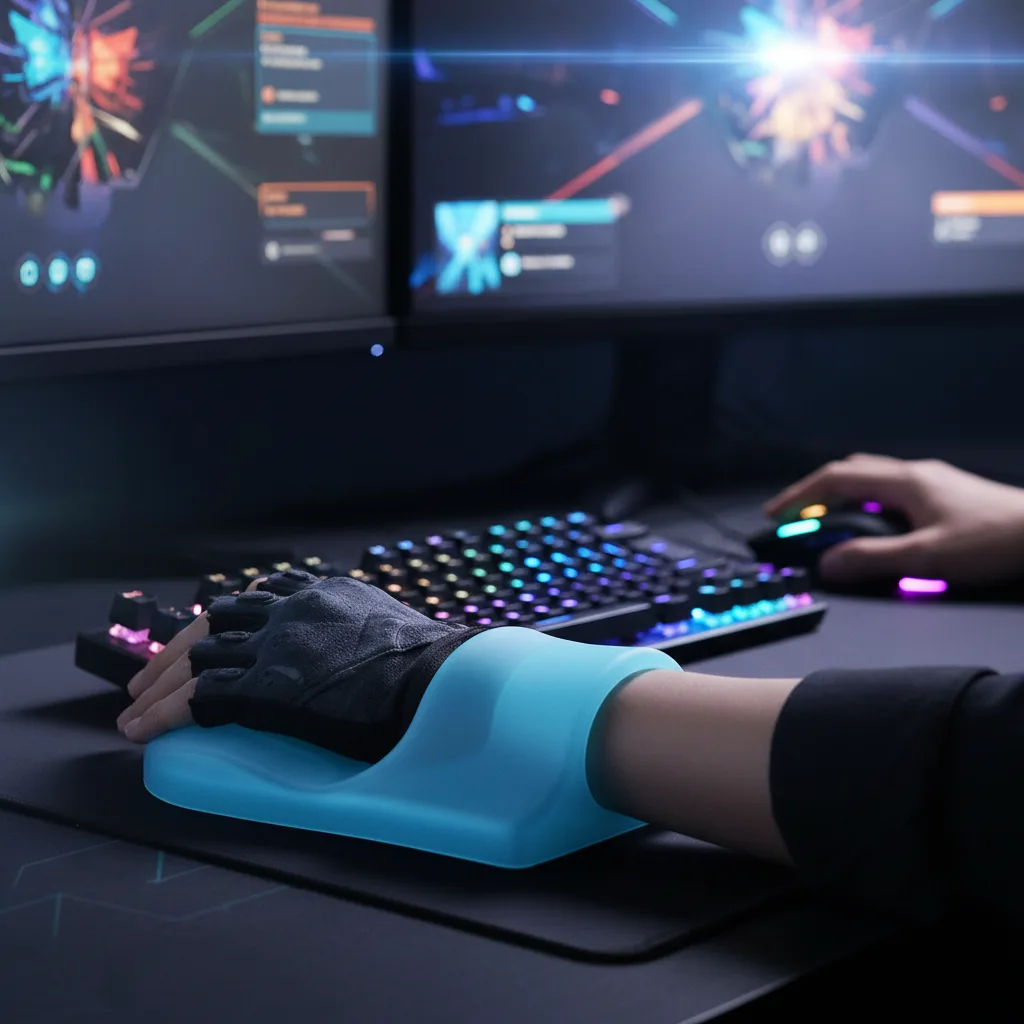
You’re three hours into an intense gaming session when you notice it — that familiar ache creeping through your wrists, the stiffness settling into your forearms, and the warmth building under your palms against the desk surface. For millions of gamers worldwide, this scenario plays out nightly, often leading to chronic discomfort that threatens both performance and long-term health. The silicone wrist rest has emerged as a modern answer to this persistent problem, combining ergonomic engineering with material science to address what traditional desk accessories never could. Gamers today face a dual challenge: they need reliable wrist support that prevents strain during marathon sessions, but they also need a surface that stays cool and comfortable as intensity builds. This article explores how silicone wrist rests deliver on both fronts, examining their unique benefits, comparing them against alternatives like acrylic options, and providing practical guidance for choosing and maintaining the right ergonomic desk accessory for your setup.
The Problem: Wrist Strain and Discomfort in Gaming
Gaming demands repetitive, precise movements sustained over hours — a combination that places enormous stress on the wrist joint and surrounding tendons. Carpal tunnel syndrome, tendonitis, and repetitive strain injuries have become increasingly common among gamers, with symptoms ranging from tingling numbness to sharp pain that can sideline players for weeks or months. The mechanics are straightforward: when wrists rest at unnatural angles against hard desk surfaces, blood flow restricts, nerves compress, and inflammation builds silently over time. Many gamers dismiss early warning signs, attributing occasional stiffness to normal fatigue rather than recognizing it as the beginning of a progressive condition. Proactive wrist support isn’t a luxury — it’s a necessity for anyone spending more than an hour daily at their gaming station. Without deliberate ergonomic intervention, the cumulative damage from thousands of micro-movements compounds, eventually forcing players to choose between their hobby and their physical wellbeing.
Why Ergonomic Desk Accessories Matter for Gamers
Ergonomics — the science of designing tools and environments to fit human physiology — has become essential in gaming setups where players maintain fixed postures for extended periods. A properly configured gaming station reduces unnecessary physical stress, allowing players to focus entirely on performance rather than fighting discomfort. Ergonomic desk accessories like wrist rests, monitor arms, and angled keyboard stands work together to align the body in neutral positions that minimize joint compression and muscle fatigue. For competitive gamers, this translates directly into sustained reaction times and precision that would otherwise degrade as fatigue accumulates. The wrist rest specifically addresses one of the most vulnerable contact points in any setup — the junction where forearms meet the desk edge. By elevating and cushioning this critical area, ergonomic desk accessories transform a potential injury zone into a supported platform that enables longer, healthier sessions without sacrificing the speed and accuracy that gaming demands.
Silicone Wrist Rest: Key Features and Advantages
Silicone stands apart from foam, gel, and rigid materials because of its unique molecular structure — it’s inherently flexible yet resilient, returning to its original shape after thousands of compressions without degrading. This durability means a quality silicone wrist rest maintains consistent support for years, unlike memory foam alternatives that flatten and lose effectiveness over months of heavy use. The material naturally dissipates heat rather than trapping it, creating a surface that feels noticeably cooler against skin even during extended contact. For gamers, this translates to a wrist rest that won’t develop warm spots or become uncomfortable as sessions stretch past the two-hour mark. Silicone’s non-porous surface resists bacteria buildup and repels moisture, making it far more hygienic than fabric-covered alternatives that absorb sweat and oils. Cleaning requires nothing more than a quick wipe with a damp cloth — no removable covers to wash or specialized products needed. The material also provides natural grip against desk surfaces without requiring adhesive strips, staying firmly in place during intense gameplay while remaining easy to reposition when needed.

Ergonomic Support for Enhanced Gaming Sessions
Unlike rigid supports that force wrists into a single position, silicone gently conforms to individual wrist contours, distributing pressure evenly across a broader surface area. This adaptive quality means the material cradles rather than pushes against the delicate tendons and blood vessels running through the wrist. The result is sustained blood circulation and reduced nerve compression, allowing gamers to maintain peak reflexes and precision for longer periods. Players consistently report less post-session stiffness and faster recovery between gaming days when using properly contoured silicone wrist support.
Cooling and Hygiene Benefits
The thermal conductivity of silicone actively draws heat away from skin contact points, functioning as a passive cooling wrist rest without requiring any powered components. During high-intensity gaming where adrenaline raises body temperature and palms begin to sweat, this cooling effect keeps the wrist area dry and comfortable. The smooth, non-porous surface means spilled drinks, skin oils, and accumulated dust wipe away instantly — a practical advantage for gamers who snack at their desks or share equipment. This combination of thermal regulation and effortless maintenance addresses two persistent complaints gamers have with traditional padded wrist rests.
How to Choose the Right Wrist Support: A Step-by-Step Guide
Selecting the ideal silicone wrist rest requires more than grabbing the first option you find — it demands a thoughtful evaluation of your specific gaming habits, physical dimensions, and desk configuration. The wrong choice can actually worsen discomfort by introducing awkward angles or insufficient support, so taking time to assess your needs upfront pays dividends in long-term comfort and injury prevention.
Assessing Your Gaming Setup and Needs
Start by measuring the usable space between your keyboard’s front edge and the desk’s edge closest to you — this gap determines the maximum depth your wrist rest can occupy without crowding your setup. Consider your keyboard profile next: low-profile mechanical boards require thinner wrist rests to maintain neutral wrist alignment, while taller keyboards with raised chassis need correspondingly thicker support to prevent upward wrist extension. Evaluate your primary gaming posture honestly. Do you hover your wrists above the surface and only rest during pauses, or do you maintain constant contact throughout sessions? Constant-contact gamers benefit from softer silicone with more give, while intermittent resters can opt for firmer densities that provide quick positional feedback. Your hand size matters too — wider rests accommodate lateral wrist movement for players who sweep across large mouse pads, while compact options suit those with tighter, more controlled setups. Finally, consider whether you need a full-length keyboard rest, a compact tenkeyless version, or a separate mouse-side pad for your dominant hand.
Practical Solutions for Integration and Use
Position your silicone wrist rest so its front edge sits flush against your keyboard or roughly one centimeter away — this prevents a gap that forces wrists to bridge unsupported space. Your forearms should approach the rest at a slight downward angle from elbow to wrist, never bending upward at the wrist joint. During the first week, consciously check your posture every thirty minutes to confirm you’re resting on the fleshy heel of your palm rather than pressing your actual wrist crease directly onto the support, which can compress the carpal tunnel. Incorporate brief wrist rotation exercises during loading screens or queue times to complement the passive support the rest provides. If you notice the rest sliding during intense moments, place it on a thin rubber shelf liner for additional grip without adhesives. For gamers who alternate between work and play, keep the wrist rest consistently in place rather than removing it between tasks — this builds muscle memory for proper hand positioning and ensures ergonomic benefits extend beyond gaming into everyday computer use.
Comparison: Silicone vs. Acrylic Wrist Rest and Other Options
The acrylic wrist rest has gained popularity among gamers who prefer a rigid, aesthetically striking surface — often featuring RGB lighting or custom artwork embedded within the transparent material. However, the fundamental difference between silicone and acrylic comes down to how each interacts with your body during use. Acrylic provides zero give against the wrist, meaning all pressure concentrates on a narrow contact line rather than distributing across a conforming surface. While acrylic does offer excellent cooling through its naturally cold-to-the-touch surface, this advantage diminishes quickly as body heat warms the rigid material with no mechanism to dissipate it efficiently. Silicone maintains its cooling properties continuously because its thermal conductivity actively transfers heat away rather than simply starting cold and warming up. Durability favors silicone as well — acrylic can crack or chip from impacts, while silicone absorbs shocks without damage. Foam and gel alternatives offer comfort but trap heat and degrade faster, with gel pads sometimes developing leaks and memory foam compressing permanently. Wooden wrist rests provide firmness and natural aesthetics but lack any cushioning or thermal benefit. Brands like MAMBASNAKE have recognized this gap in the market, offering silicone wrist rest options designed specifically for gamers who prioritize the intersection of ergonomic wrist support, lasting cooling comfort, and low-maintenance durability — the metrics that matter most during long sessions.
Maintaining Your Cooling Wrist Rest for Longevity
Silicone’s low-maintenance nature doesn’t mean zero maintenance — a simple care routine ensures your cooling wrist rest performs at its best for years rather than gradually losing its appeal. Weekly cleaning should become as automatic as charging your peripherals: wipe the entire surface with a slightly damp microfiber cloth to remove accumulated skin oils, dust particles, and any food residue from desk-side snacking. For deeper monthly cleaning, use a mild soap solution or isopropyl alcohol diluted to seventy percent, which cuts through stubborn grime without degrading the silicone’s surface integrity or thermal properties. Avoid abrasive scrubbers, bleach-based cleaners, or acetone, as these can create micro-scratches that eventually harbor bacteria and diminish the smooth cooling contact you rely on during sessions.
Store your wrist rest flat rather than on its edge to prevent warping over time, and keep it away from direct sunlight when not in use — prolonged UV exposure can gradually yellow lighter-colored silicone and reduce elasticity. If you notice the non-slip base losing grip after several months, a quick wash with warm soapy water typically restores its traction by removing the invisible film of oils that accumulates underneath. Inspect the surface quarterly for any signs of tearing or permanent compression, though quality silicone typically shows neither even after daily use spanning multiple years. This minimal investment of five minutes weekly preserves both the ergonomic support and the cooling effectiveness that made the silicone wrist rest worth choosing in the first place.
Protect Your Wrists and Game Longer with Silicone Support
The silicone wrist rest addresses the two most persistent complaints gamers face during extended sessions: progressive wrist strain and uncomfortable heat buildup at desk contact points. By conforming to individual wrist contours while actively drawing heat away from skin, silicone delivers ergonomic support and cooling comfort simultaneously — something rigid acrylic, degradable foam, and fabric-covered alternatives simply cannot match. The material’s durability ensures consistent performance across years of daily use, while its non-porous surface eliminates the hygiene concerns that plague traditional padded rests. For gamers serious about protecting their wrists without compromising on comfort or cleanliness, integrating a silicone wrist rest into your setup represents one of the simplest yet most effective ergonomic upgrades available. Take the time to measure your space, assess your keyboard height, and select the right thickness for your posture. Your wrists sustain your ability to game — investing in their support today prevents the forced breaks and chronic pain that sideline players who ignored the early signs. Make the switch, build the habit, and game longer without paying the physical price.