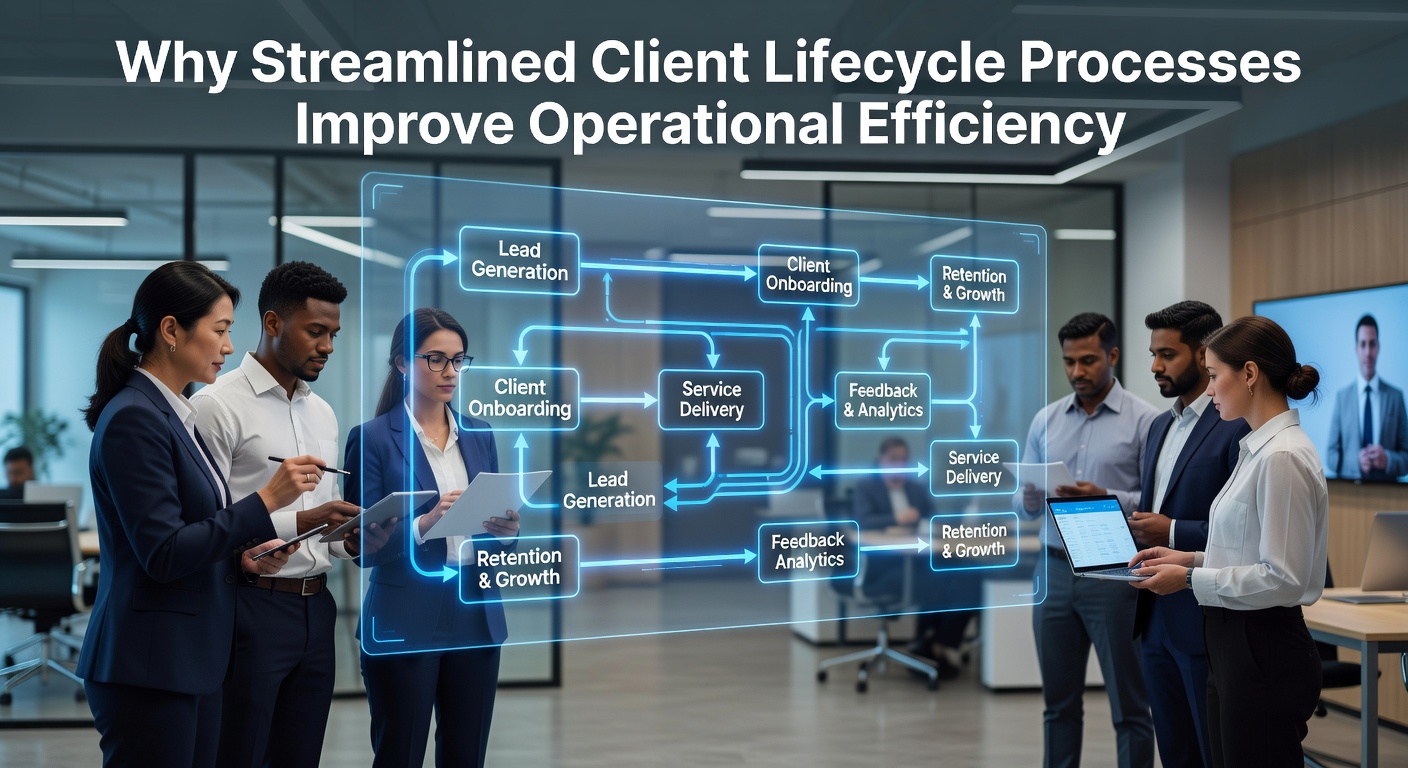
Every business strives to deliver great service and maximize output. To these ends, streamlined client lifecycle processes support these goals by optimizing how organizations interact with their clients. With streamlined cycles, teams minimize redundant actions, leading to seamless operations and happier stakeholders. In this post, you will discover how organized client management benefits your firm’s operational efficiency.
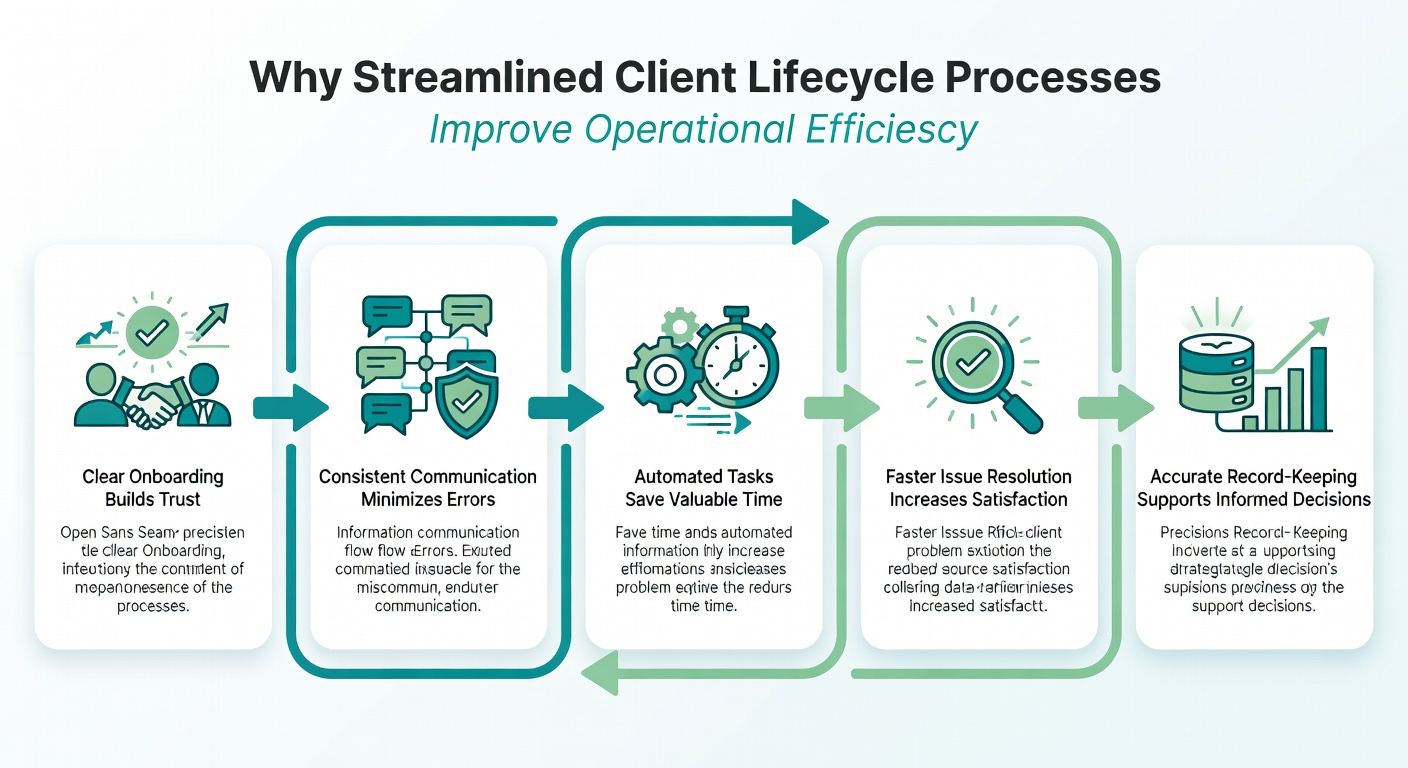
Clear Onboarding Builds Trust
An orchestrated onboarding process is a systematic, structured way to onboard customers to services. When you communicate straightforwardly from the outset, you reassure new clients that they are feeling supported. Early communication helps avoid confusion. Fenergo provides a standardized approach that gives employees clarity on the direction to take and the steps to follow. It reduces errors and enables a healthy start for all.
Consistent Communication Minimizes Errors
Being in touch is key to solid business relationships. A clear process ensures effective message delivery to the right people at the right time. When communication is clearer, projects run smoothly. Regular updates also gave clients a sense of security that their requirements were being addressed within stipulated timeframes. This habit leads to fewer errors, saving time and resources for both parties.
Automated Tasks Save Valuable Time
If managed manually, repeat business can steal hours of working time. They often use technology to automate repetitive tasks. It also leaves little room for mistakes and gives employees more time to focus on what matters. This means that by avoiding manual labor, teams can focus their efforts on tasks that require creativity or strategy. This yields a more effective workforce with less time spent on needless repetition.
Faster Issue Resolution Increases Satisfaction
In any professional relationship, issues will occasionally occur. With an organized client management system, they can communicate with their clients and respond to issues quickly. Standardized workflows give employees clarity on how to respond to issues. If teams can deal with this quickly, clients will remain happy and trust the company’s capabilities. If you resolve them quickly, they will not grow into deterrent items.
Accurate Record-Keeping Supports Informed Decisions
Whether you run a solo operation or a full-scale multinational operation, organized record-keeping is going to be integral to success. Efficient client lifecycle processes that guide the capture of information into a consistently documented and easily accessible repository. Good data helps managers look back and assess patterns, enabling them to make better decisions moving forward. Employees also gain from having quick access to client information, making their daily tasks less stressful. Current records allow companies to be more agile when needs change.
Improved Collaboration Boosts Productivity
Good client management promotes collaboration between departments. Groupwork becomes easier and more natural when everyone is following the same steps. Shared Systems make the data available to staff promptly. These efforts ensure that related projects flow smoothly, avoiding the confusion of redundant work. However, this type of organization enhances productivity and fosters a positive culture within the workplace.
Lower expenses mean higher profits
Streamlined processes are efficient, and they incur lower operational costs. Efficiency means less waste of resources—done steps are saved, and repeated steps are eliminated. By making things automated and having a structured way of doing things, you minimize the chances of costly mistakes. These savings can then be used to invest in growth initiatives or passed along to clients as competitive pricing. The history of these financial gains leads to improving profitability and the potential for long-term existence.
Enhanced Client Retention Strengthens Reputation
Excellence builds customer loyalty. Efficient interactions demonstrate to clients that you value them and want to handle their needs in a professional manner. Contented customers are often the ones who provide services to others, increasing the business impact through word-of-mouth. The market reputation will be strong if the service delivery is consistent. Stable expectations make for much more sustainable relationships over the long haul.
Conclusion
For any company that wants to enhance operational efficiency, having proper client lifecycle processes is essential. They promote trust, communication, and collaboration, and lower costs and errors. A focus on clarity and consistency leads to better client and employee experiences. It makes sense—especially in the long term—to establish sustainable success and growth through streamlined processes. The process of getting warm leads through the door, converting them into clients, performing the desired service, and getting them out the door is one that every organization can refine.