exit interface
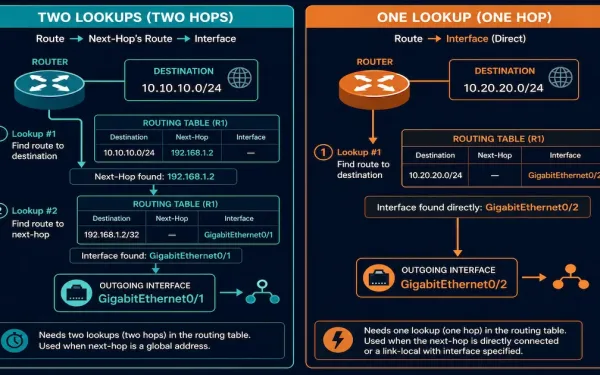
Static IPv6 Routes: Next-Hop Address vs. Directly Connected (Exit Interface)
A static IPv6 route can be built two different ways: pointing only at a next-hop IPv6 address, or pointing at an exit interface directly. These aren’t just two syntax options — they produce genuinely different lookup behavior in the router, and understanding that difference is core CCNA and CCNP material. This guide covers both forms,...
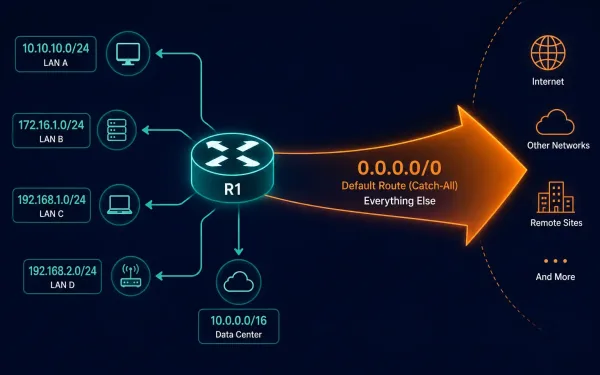
How to Configure a Default Route on a Cisco Router
A default static route is a route that matches any destination network not otherwise present in a router’s routing table. Routers use default routes that are either configured locally as static entries or learned dynamically from another router through a routing protocol — this guide covers the static configuration. [See Infographic: Default Route as the...
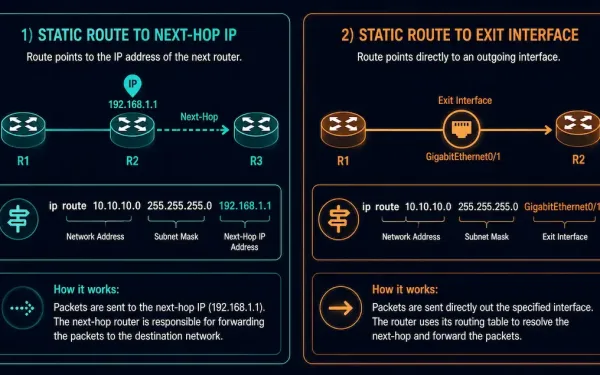
Directly Connected Static Routes: Configuration and When to Use Them
A static route can point to a destination in one of two ways: by specifying the next-hop IP address, or by specifying the exit interface directly. This second form — using the exit interface — is what’s called a directly connected static route, and understanding when and why to use it is a useful piece...