Network Routing
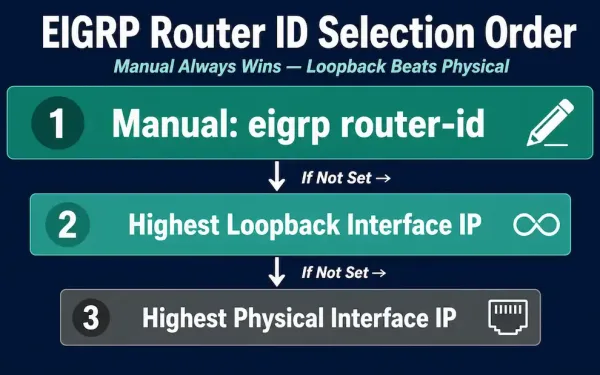
EIGRP Router ID: Selection Rules and Configuration
An EIGRP router ID is a 32-bit unique identifier assigned to each router in the EIGRP domain, represented in the same dotted-decimal format as an IPv4 address. This guide covers exactly how EIGRP selects a router ID automatically, how to configure one manually, a genuinely useful “sticky” behavior that catches people off guard when they...
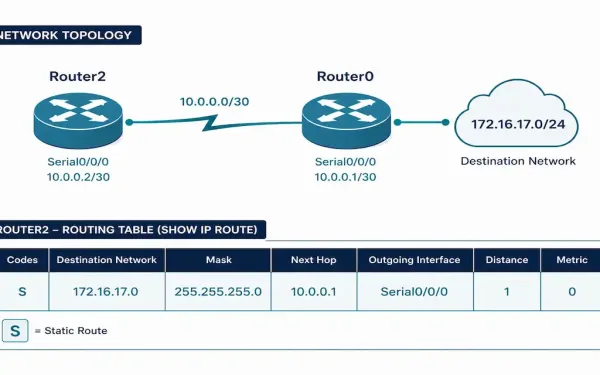
Static Route Configuration: IPv4 and IPv6
Static routes are the simplest routing tool a network administrator has: manually tell the router exactly how to reach a specific network, with no protocol overhead and no automatic recalculation if something changes. That simplicity is both the appeal and the limitation, and knowing exactly when a static route is the right choice — versus...
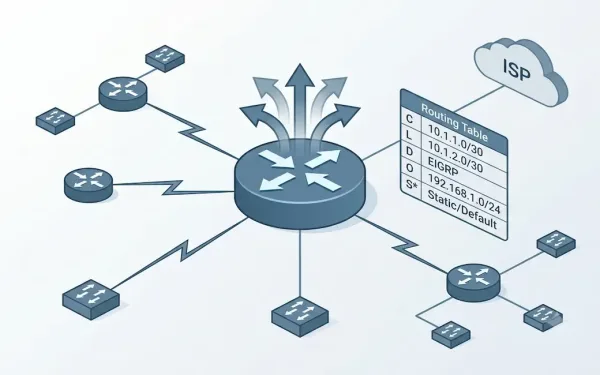
What is a Routing Table – Explained
Routing tables are the backbone of IP networking, guiding routers in forwarding data packets to their intended destinations efficiently. For CCNA and CCNP students, mastering routing tables is essential, as they form a core component of Cisco certification exams and real-world network administration. A routing table contains critical information about network paths, including directly connected...