Routing Table
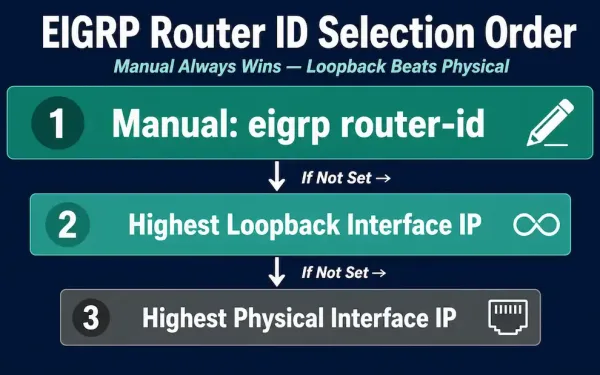
EIGRP Router ID: Selection Rules and Configuration
An EIGRP router ID is a 32-bit unique identifier assigned to each router in the EIGRP domain, represented in the same dotted-decimal format as an IPv4 address. This guide covers exactly how EIGRP selects a router ID automatically, how to configure one manually, a genuinely useful “sticky” behavior that catches people off guard when they...
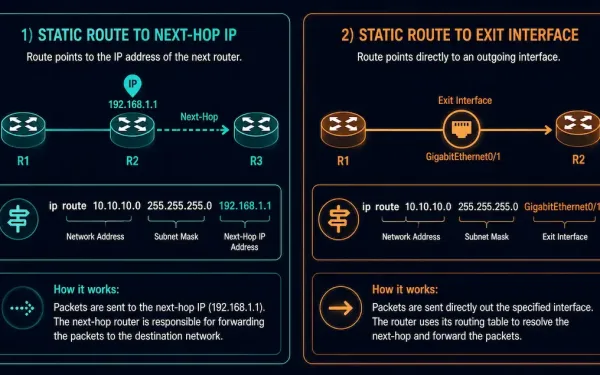
Directly Connected Static Routes: Configuration and When to Use Them
A static route can point to a destination in one of two ways: by specifying the next-hop IP address, or by specifying the exit interface directly. This second form — using the exit interface — is what’s called a directly connected static route, and understanding when and why to use it is a useful piece...
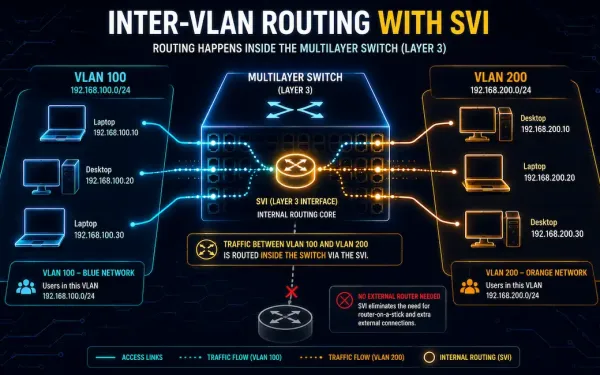
Switch Virtual Interface (SVI): Configuration, Verification, and Troubleshooting
Switch Virtual Interfaces, or SVIs, are a cornerstone of modern enterprise networking. They enable efficient inter-VLAN routing directly on a multilayer switch, no separate router required. This guide covers SVI configuration, verification, troubleshooting, and real-world tradeoffs, for CCNA and CCNP study alike. Evolution of Layer 2 and Layer 3 Switching In early networking, Layer 2...