Subnet mask

Configuring and Verifying IPv4 Addressing and Subnetting
Domain 1.6 | Network Fundamentals — 20% of exam Learning Objectives By the end of this lesson, you will be able to: Key Terms Term Definition Subnet mask A 32-bit value marking which bits of an IP address identify the network versus the host CIDR notation Shorthand for a subnet mask, written as a slash...
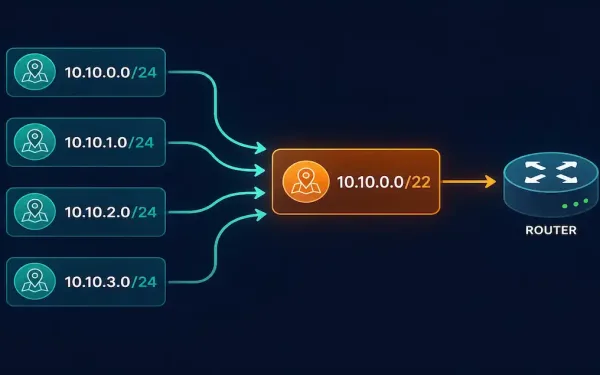
Summary Static Routes: How to Calculate and Configure Them
Static routes are manually configured entries in a router’s routing table that direct traffic to specific destinations. Unlike dynamic routing protocols such as OSPF or EIGRP, static routes offer simplicity and precise control, which makes them a natural fit for small networks, stub networks, or default gateways. For CCNA and CCNP study, mastering static routes...
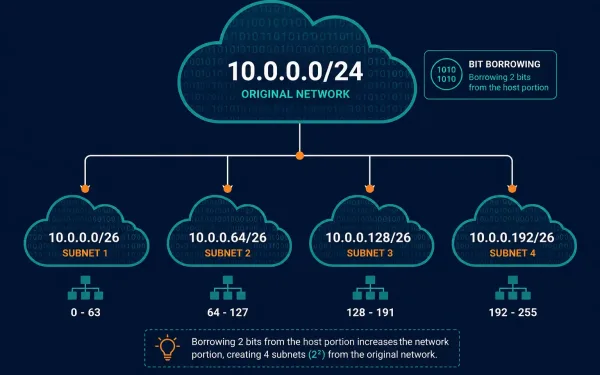
Introduction to Subnetting: How and Why to Divide a Network
Subnetting lets a network administrator divide a large network into smaller, more manageable sub-networks by borrowing bits from the host portion of an IP address. Rather than running one enormous flat network, subnetting adds a third level to the addressing hierarchy, network, subnetwork, and host, giving administrators far more control over how a network actually...
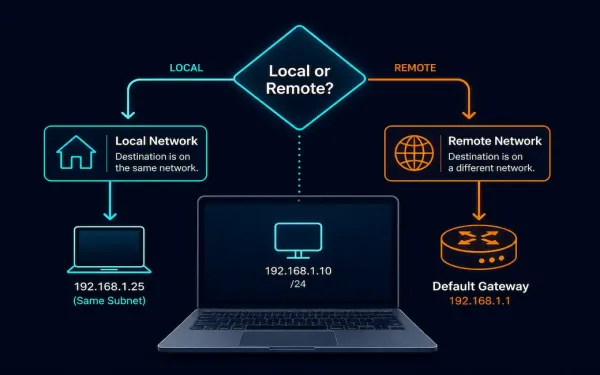
Host Forwarding Decisions: How Hosts Actually Route Their Own Traffic
Every networked device, whether it’s a dedicated router or an ordinary laptop, has to decide how to get a packet toward its destination. Routers specialize in this, but end hosts, PCs, servers, phones, make their own forwarding decisions too, using a much simpler process built on subnetting, a minimal routing table, and address resolution. This...