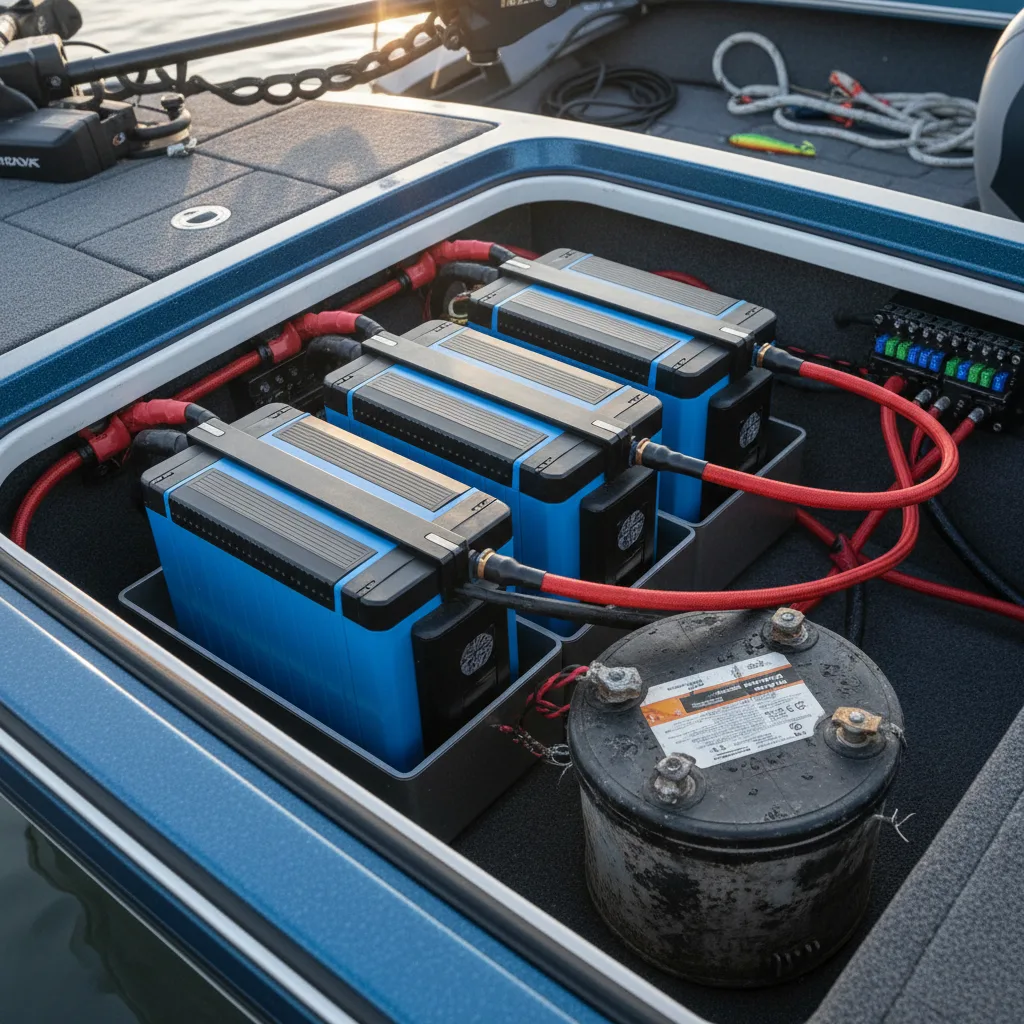
Serious anglers know that the difference between a productive day on the water and a frustrating one often comes down to the power source hidden under the deck. Trolling motor performance, position control, and total runtime are all direct outputs of the pack that feeds them, and yet the trolling motor battery remains one of the most misunderstood components in the modern fishing rig. What worked reliably a decade ago has been quietly displaced by newer chemistry, better monitoring, and a fundamentally different approach to storage that experienced captains have already adopted.
This article establishes the current standard for trolling motor power systems built around the latest lithium iron phosphate chemistry, matched inverter and charger technology, and the wiring conventions that professionals actually follow. Whether you fish tournament bass circuits, run guide trips, or simply demand reliable performance from a dedicated bass boat, the guidance below reflects where the industry has moved and where informed buyers are placing their money in the coming season.
Why the Old Deep-Cycle Standard No Longer Sets the Bar
For decades, the flooded lead-acid group 27 or group 31 deep-cycle was the default trolling motor power source, and it defined what anglers expected from a day on the water. It also defined the limitations they quietly tolerated: heavy packs that shortened boat range and speed, voltage sag that reduced thrust in the last hour, and a usable capacity that rarely exceeded half of what the label promised. Every one of those compromises has now been eliminated by newer chemistry, and yet many boats still leave the dock carrying yesterday’s technology.
The modern standard is a purpose-built lithium iron phosphate pack that delivers roughly the full rated capacity from bank voltage down to the low-voltage cutoff. It weighs less than a third of an equivalent lead-acid setup, holds voltage steady until nearly empty, and shrugs off the partial-state-of-charge cycling that destroys older chemistries. For a twenty-four or thirty-six volt trolling motor, the weight savings alone often translate into meaningful gains in top-end speed, holeshot, and fuel economy on the outboard side of the transom.

What a Professional Trolling Motor Power System Looks Like
A modern professional-grade system starts with a purpose-built lithium trolling motor battery stack sized for the specific motor voltage and expected runtime. Each cell group is protected by an integrated battery management system that handles cell balancing, over-current protection, and low-temperature charge lockout without owner intervention. The stack is connected to the motor through class T fusing sized for continuous current, cabling rated for the actual load rather than the average, and terminal hardware torqued to specification and marked for verification.
Charging is handled by a lithium-profile onboard charger that maintains proper absorption voltage for each stack in the system, followed by a genuine no-current maintenance state rather than a lead-acid float. Solar top-up from a deck panel is common on tournament boats because it keeps the pack ready between events without pulling shore power. Bluetooth monitoring on modern packs turns capacity management into a glance at a phone rather than a guessing game at the ramp.
Getting the Capacity Right for the Way You Fish
Capacity sizing has changed alongside the chemistry. Because lithium delivers essentially its full rated capacity, an angler who ran two flooded group 31 packs for a typical tournament day now often gets equivalent or better runtime from a single one-hundred amp-hour lithium module at each series position in the stack. That said, tournament anglers who spool for long spot-lock sessions in windy conditions still benefit from higher amp-hour ratings because sustained thrust in current or wind is one of the most demanding uses a trolling motor sees.
Wiring and Safety Conventions the Best Rigs Share
Professional rigs share a set of wiring conventions that separate them from casually assembled setups. Positive leads are fused within eighteen inches of the pack. Cable size is calculated for continuous motor current with a margin for voltage drop over the actual run length rather than the assumed run length. Series interconnects between packs use factory-supplied cables or shop-fabricated cables of identical length and gauge, which prevents unbalanced charging that would otherwise shorten total stack life.
Ground paths deserve the same discipline. A single point ground on the negative bus keeps stray current from wandering through the hull and reduces the risk of galvanic corrosion on aluminum outdrive components. Battery switches rated for continuous motor current, rather than starter current, prevent contact welding under sustained draw. These are the details that experienced technicians install without comment and that owners often overlook until a problem forces attention.
Care Routines That Preserve Peak Performance
Lithium packs demand far less routine care than lead-acid ever did, but they still reward a light discipline. Charge fully after each fishing day, but do not leave the pack floating at one hundred percent for weeks between events. A partial state of charge in storage extends calendar life measurably. Keep the pack within its designed temperature range, and take advantage of the low-temperature charge lockout rather than trying to charge a cold pack in early spring conditions.
Firmware and battery management updates, when offered by a serious manufacturer, address real improvements in balancing algorithms and communication protocols. Take the ten minutes required to apply them when notifications appear. Brands like Vipboss build these updates into an app-based workflow that requires no special hardware, which reflects the direction the entire industry has moved.
What the new of Anglers Should Expect
The trajectory is clear. Trolling motor power will continue to move toward integrated stacks that combine multiple modules, communicate with the motor and charger over a shared bus, and provide predictive runtime estimates based on actual load history. Boats sold new in the coming years will increasingly ship with lithium as standard rather than optional, and aftermarket upgrades will focus on drop-in modules that match the physical dimensions of legacy lead-acid trays. The old assumption that a trolling motor pack is a consumable to be replaced every three or four years is giving way to the reality that a well-built lithium stack will comfortably outlast the boat’s original outboard.
Setting the Standard for the Season Ahead
The trolling motor battery has moved from an afterthought to a defining component of any serious fishing rig, and the standard has been reset by lithium iron phosphate chemistry, integrated management, and the wiring discipline that experienced captains already practice. Anglers who match modern chemistry to properly sized cabling, correct fusing, and lithium-aware charging equipment are seeing longer runtimes, steadier thrust, and total ownership costs that undercut the old lead-acid model within a single replacement cycle.
The next season on the water will belong to the rigs that have already adopted the current standard. Take the time to review your existing system against the conventions above, upgrade the components that no longer keep up, and demand documentation and support from any supplier serious enough to earn a place on your deck. The performance gains are real, the reliability gains are larger, and the confidence at the ramp on tournament morning is the truest measure of the difference.