Most warehouses and manufacturing floors don’t fail because they lack software. They fail because their systems don’t communicate with reality.
Your ERP tracks inventory. Your MES schedules production. But your teams on the floor? They’re still walking around, calling supervisors, and searching for assets. And somewhere between digital plans and physical reality, inefficiencies creep in.
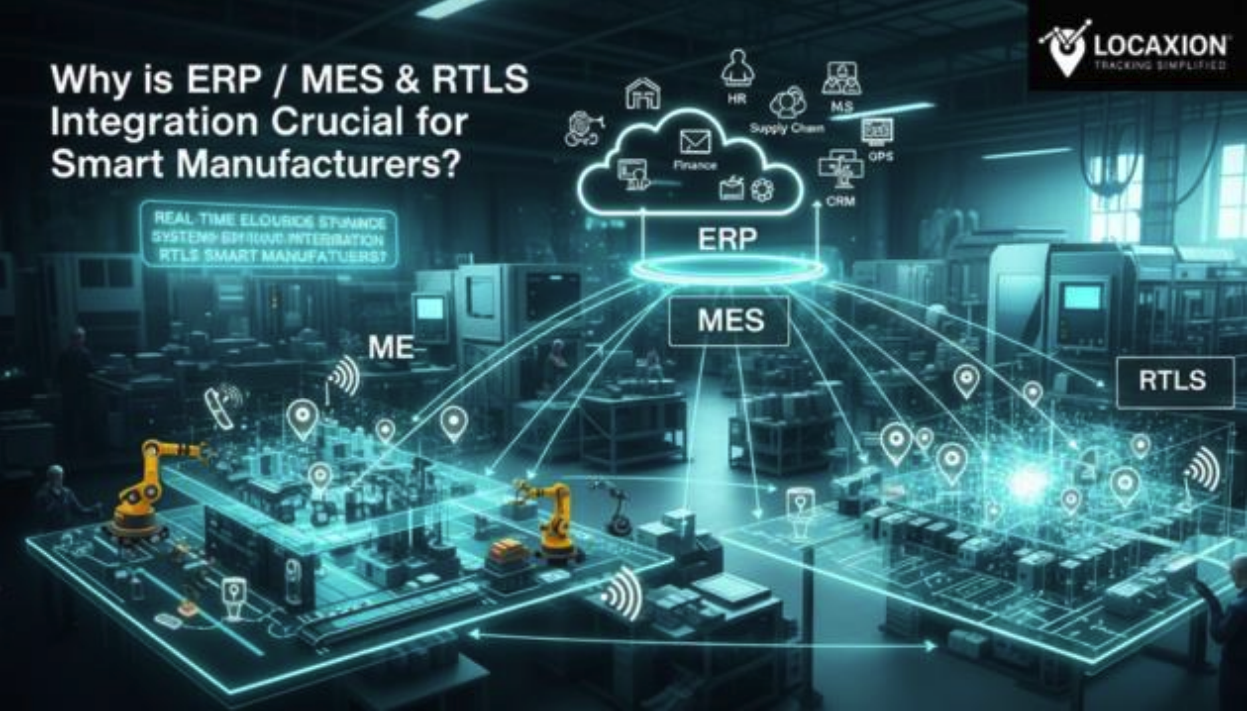
That’s where RTLS integration makes a real difference. By connecting RTLS with ERP and MES, your operation gains real-time intelligence: equipment, materials, and even workers’ movements become actionable data, helping your systems respond faster and smarter.
Why ERP and MES Alone Aren’t Enough
ERP and MES systems are powerful, but they rely heavily on manual updates. An ERP can show stock levels, but it can’t always confirm where materials physically are. An MES can schedule production, but it often doesn’t know if tools, pallets, or forklifts are available at the right place and time.
This creates blind spots, which lead to delays, miscommunication, and wasted effort. Even with advanced software, teams end up reacting rather than proactively solving problems.
RTLS closes this gap by providing real-time visibility that informs both planning and execution.
Step 1: Define Your Operational Goal
Integration works best when you start with a clear purpose. Identify the biggest bottlenecks:
- Missing materials causing production delays
- Misplaced tools or assets
- Idle forklifts or underutilized equipment
- Inefficient staging or congestion
By defining goals, RTLS integration becomes purposeful, supporting your ERP and MES systems where it matters most.
Step 2: Identify the Right Real-Time Tracking Needs
ERP and MES platforms don’t need constant location pings they need meaningful triggers:
- A pallet moved to storage
- A component arriving at a workstation
- A tool leaving maintenance
- A forklift idle too long
Feeding these actionable events into your systems ensures integration is efficient and drives real operational improvements.
Step 3: Connect RTLS with ERP for Inventory Accuracy
ERP systems often report inventory as “available,” but reality may differ. RTLS ensures your ERP reflects actual movement in the warehouse.
When materials move from receiving to storage, the ERP updates automatically. When items are pulled for production, availability is reflected in real time. This prevents stockouts, over-ordering, and operational delays.
Integrating RTLS here ensures the ERP becomes a reliable source of truth for planning and procurement.
Step 4: Connect RTLS with MES for Production Flow
MES systems schedule production, but without real-time visibility, they can’t always confirm if resources are at the right place.
RTLS integration enables MES to verify:
- WIP has reached the correct workstation
- Required tools or molds are available
This prevents downtime caused by missing assets and improves traceability, essential for compliance and reporting.
Step 5: Improve Forklift Efficiency with RTLS
Forklifts are the backbone of material movement. Yet many facilities lack insight into their efficiency. This is where forklift monitoring systems provide enormous value. They help supervisors understand usage patterns, idle times, and route inefficiencies, allowing smarter decisions that optimize operations.
With better visibility, forklifts are used more efficiently, congestion is reduced, and material handling becomes faster.
Step 6: Automate Workflows with Forklift Tracking
While monitoring systems show patterns, forklift tracking ensures you know exactly where each machine is during operations. When integrated with ERP and MES, it allows task assignments to align with production schedules, improving workflow accuracy.
For example, the system can automatically assign the nearest available forklift to a pick-up task or alert supervisors if a vehicle is off-route. This reduces delays and improves coordination without extra effort.
Step 7: Scale and Measure Success
Start with one workflow like inventory movement or tool tracking then scale. Measure KPIs like task completion time, forklift utilization, and production accuracy. Small, proven wins build trust and encourage wider adoption.
Integration succeeds when technology and people work together. Operators need training, supervisors need clear dashboards, and management KPIs must align with actual operational goals.
Conclusion: Connected Systems, Smarter Operations
ERP and MES tell you what should happen. RTLS shows what is happening. When all three work together, operations shift from guesswork to precision.
Modern facilities adoptforklift monitoring systems in combination with RTLS because they don’t just track assets they improve productivity, reduce delays, and eliminate chaos.
With LocaXion, your ERP and MES systems work smarter, your forklifts move efficiently, and your teams gain full operational control.Want to see how this integration transforms real-world facilities?