What Is Ortho-K and Why Does Singapore Need It So Much
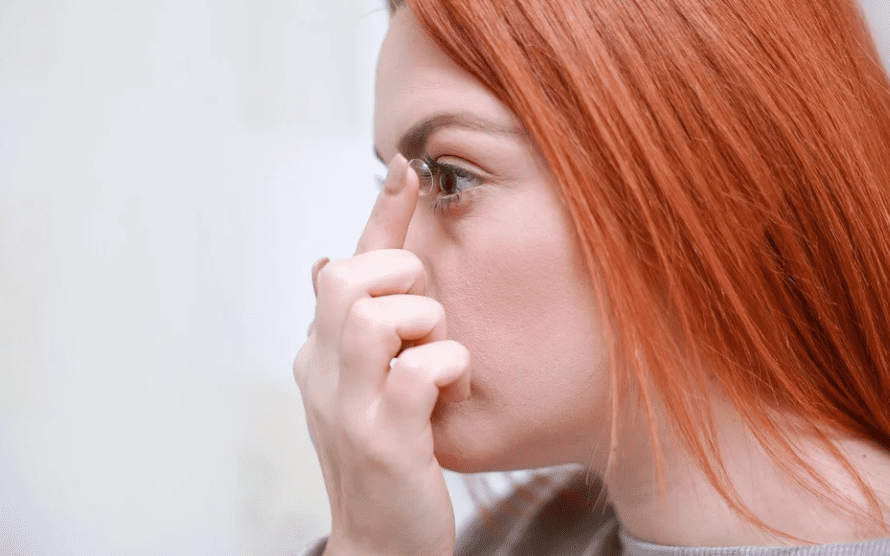
Orthokeratology — commonly shortened to Ortho-K — is a non-surgical vision correction method that uses custom-designed rigid gas-permeable (RGP) contact lenses worn overnight while the patient sleeps. The lenses gently reshape the cornea during sleep. When removed each morning, the cornea retains its new shape for the remainder of the day, giving the wearer clear vision without glasses or daytime contact lenses. The effect is temporary and must be maintained by wearing the lenses nightly, but it is fully reversible — if you stop wearing the lenses, the cornea gradually returns to its original shape over a few days.
Singapore has one of the highest myopia rates in the world, which is the main reason Ortho-K has become a significant part of the local eye care market. According to the Singapore Optometric Association, approximately 80 to 90 percent of young adults completing secondary school in Singapore are myopic — among the highest rates globally. Research published through 2025 and 2026 consistently shows that Ortho-K lenses slow axial eye growth — the physical elongation of the eyeball that causes myopia to worsen — by approximately 50 to 60 percent compared to standard single-vision spectacles. For parents watching their child’s prescription increase every year, that figure represents a meaningful clinical outcome, not just a convenience.
Singapore’s Primary 1 myopia rate dropped to 26 percent as of late 2025, down from higher historical levels, partly attributed to national initiatives encouraging outdoor time and school-based eye screening programmes. Despite that progress, the baseline rate of myopia progression among children already diagnosed remains high enough that myopia control interventions — including Ortho-K, low-dose atropine, and specialised spectacle lenses — remain a central concern for Singaporean families.
What Ortho-K in Singapore Actually Costs in 2026
The price of Ortho-K in Singapore in 2026 ranges from approximately SGD 1,500 to SGD 2,800 for the initial fitting package, depending on the provider, the complexity of the prescription, and what is included in the package. OWNDAYS Singapore lists Ortho-K from SGD 1,688 and notes that the package includes one set of cleaning solutions and a pair of backup spectacles worth up to SGD 198. Evershine Optical quotes between SGD 1,600 and SGD 2,800, with all follow-up visits included for up to 18 months. Hirocon Singapore offers packages in the SGD 1,800 to SGD 2,000 range depending on complexity.
What a typical Ortho-K package in Singapore includes is important context for understanding the price. Most providers bundle the comprehensive corneal topography assessment — a detailed 3D map of the cornea’s surface — along with the custom lens fabrication, the initial fitting appointment, fitting adjustments over the first few weeks, and follow-up consultations at regular intervals for one to two years. Some providers also include a replacement pair of lenses or backup spectacles. When the full scope of included services is itemised, the per-visit and per-consultation cost frequently works out more favourably than paying for each appointment separately.
Annual lens replacement costs after the initial package period vary by provider but typically range from SGD 300 to SGD 800 per pair, depending on whether the prescription has changed and whether both lenses need replacing simultaneously. Some providers also offer annual maintenance plans covering routine check-ups and solution replenishment.
Why the Price Is Higher Than Regular Contact Lenses
The most straightforward reason Ortho-K costs more than regular contact lenses is that it is a custom-manufactured medical device, not a mass-produced commodity. Every pair of Ortho-K lenses is individually designed for one specific patient’s corneal topography. The fitting process begins with a corneal topography scan that measures the curvature of the cornea at hundreds of points across its surface. That data is used to design a lens with a specific back-surface geometry — the shape that will apply the precise pressure distribution needed to flatten the central cornea to the right degree while leaving the mid-periphery untouched. No two pairs of Ortho-K lenses are identical.
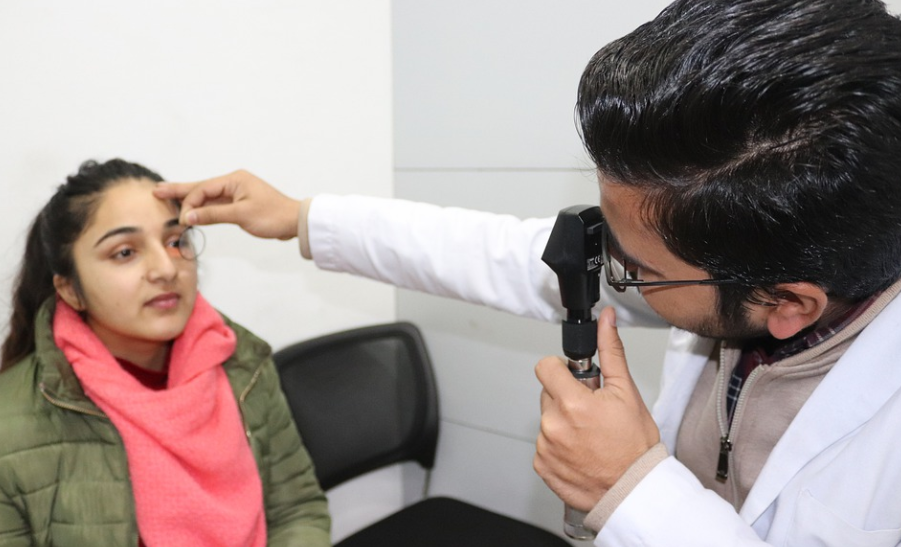
The manufacturing process for RGP lenses also requires tighter tolerances than soft disposable lenses. The materials used — high-oxygen-permeability rigid polymers — are more expensive per unit than the hydrogel or silicone hydrogel materials used in daily disposable soft lenses. The fitting itself requires considerably more optometrist time than a standard contact lens fitting: a typical Ortho-K assessment involves the topography scan, a preliminary lens selection, a trial fitting, assessment of the initial lens settling effect, and then a series of follow-up appointments to verify corneal reshaping is occurring as intended and to adjust the lens parameters if needed.
There is also the expertise dimension. Optometrists who fit Ortho-K are required to complete additional specialist training beyond their base qualification, and many hold additional certification in myopia management. In Singapore, the Singapore Optometric Association (SOA) publishes Orthokeratology Fitting and Myopia Management Guidelines, and fitting practitioners are expected to follow these protocols and maintain continuing professional development. That specialist skill has a cost that is reflected in the consultation and fitting fees.
Who Is Ortho-K Best Suited For
Ortho-K is most widely used for myopia control in children, typically between the ages of seven and fifteen, whose prescriptions are actively increasing each year. For this group, the clinical evidence for slowing myopia progression is well-established — multiple studies, including research cited in journals such as Optometry and Vision Science, confirm 50 to 60 percent reduction in axial length growth rate compared to single-vision correction. Given that every additional dioptre of myopia meaningfully increases the lifetime risk of conditions such as retinal detachment, glaucoma, and macular degeneration, slowing progression during childhood has long-term health implications beyond simple convenience.
Adults with stable myopia who want freedom from daytime glasses and contacts are also candidates, particularly those with active lifestyles, involvement in contact sports, or occupations where glasses and soft lenses are inconvenient. Ortho-K is suitable for prescriptions up to approximately minus 6.00 dioptres of myopia, and some providers can accommodate mild to moderate astigmatism as well. It is not suitable for all prescriptions — patients with very high myopia, certain corneal irregularities, or dry eye conditions may not be candidates, which is part of why a thorough pre-assessment is a non-negotiable first step.
Students are a particularly common Ortho-K user group in Singapore. The combination of daytime glasses-free clarity, myopia progression control, and suitability from a relatively young age makes it well-matched to the academic and extracurricular demands of Singapore’s school environment. Athletes, swimmers, and children involved in outdoor activities benefit specifically from the elimination of daytime eyewear.
How Ortho-K Compares to Alternatives on Long-Term Cost
The upfront price of Ortho-K can appear steep, but a long-term cost comparison with alternatives is more nuanced. Consider a child who begins Ortho-K at age eight and continues until age eighteen — a ten-year period. At SGD 1,800 for the initial package and approximately SGD 500 per year for replacement lenses and follow-up visits thereafter, the ten-year cost would be approximately SGD 6,300. For comparison, standard soft daily disposable contact lenses for a child in Singapore — including the lenses themselves, regular eye examinations, and solutions — typically cost SGD 600 to SGD 1,000 or more per year, putting the ten-year cost at SGD 6,000 to SGD 10,000 without any myopia control benefit.
When a myopia control benefit is factored in, the comparison shifts further in Ortho-K’s favour. If Ortho-K reduces a child’s final adult prescription from, say, minus 6.00 dioptres to minus 3.00 dioptres, the downstream savings on spectacles and contact lenses across an adult lifetime — and the reduction in risk of high-myopia-related eye diseases — represent value that is difficult to quantify precisely but is genuinely substantial.
Alternatives to Ortho-K for myopia control in Singapore include low-dose atropine eye drops, MiSight soft contact lenses, and defocus-incorporated spectacle lenses such as Stellest or MiyoSmart. Low-dose atropine (typically 0.05%) has shown approximately 59 percent reduction in progression over two years and is considerably less expensive, typically costing SGD 50 to SGD 150 per month. Some providers combine atropine with Ortho-K for patients whose myopia is progressing particularly rapidly. MiSight and specialty spectacle lenses fall between atropine and Ortho-K in both cost and complexity of fitting. The right approach depends on the child’s prescription, rate of progression, lifestyle, and tolerance for different modalities — decisions best made in consultation with a specialist optometrist.
What to Look for When Choosing a Provider in Singapore
Given that Ortho-K packages vary widely in what they include and how long the post-fitting care period lasts, the price alone is not a reliable basis for comparison. When evaluating providers, the key questions are how many follow-up consultations are included in the quoted price and over what period, whether the topography assessments at each visit are included or billed separately, what the replacement lens cost is if a lens is lost or damaged during the covered period, and whether the practitioner holds relevant professional registration and specialist qualifications in myopia management.
The Singapore Optometric Association provides guidance on practitioner standards and can help verify whether a provider follows current evidence-based protocols. The SOA’s Orthokeratology Fitting and Myopia Management Guideline, updated in line with emerging research, is the professional benchmark for fitting practice in Singapore. Providers who follow this guideline will schedule regular monitoring every three months — a frequency that allows early detection of any fitting issues or unexpected corneal changes.
It is also worth asking whether the provider uses corneal topography mapping at follow-up visits rather than only at the initial fitting. Ongoing topography monitoring is the standard approach for confirming that the reshaping effect is correct and consistent across visits, and its absence at follow-ups would be a concern.
Conclusion
The price of Ortho-K in Singapore — typically SGD 1,500 to SGD 2,800 for an initial package — is higher than regular contact lenses because it involves custom-manufactured medical devices, specialist fitting expertise, comprehensive pre-assessment, and an extended period of professional follow-up care that is generally bundled into the quoted price. For a country where myopia affects the large majority of school-age children and where the clinical evidence for Ortho-K’s ability to slow myopia progression is well-established, the investment has both immediate lifestyle benefits and meaningful long-term implications for eye health.
The price makes most sense when evaluated over a multi-year period against the cost of equivalent-quality alternatives, and when the myopia control benefit — reducing the final prescription and the associated risk of serious eye disease in adulthood — is included in the calculation. For families considering Ortho-K, the first step is a pre-assessment consultation with a registered optometrist who specialises in myopia management, to determine whether the treatment is clinically appropriate and to get a provider-specific quote that itemises exactly what is included.