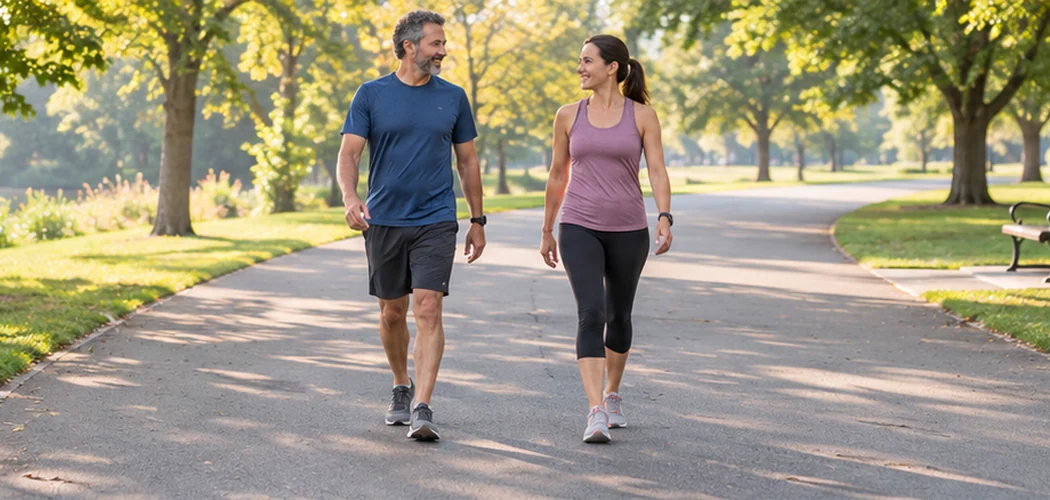
The first few minutes of a workout are a chance to ease into the work ahead. If you’re going for a brisk walk, start with an easy walk. If you’re lifting weights, rehearse your first lift with an unloaded or light version. Begin at a pace you can control, then move closer to the pace or effort you plan to use in the workout.
You only need a clear space and a few minutes to get started. Marching, heel taps, knee lifts, shoulder rolls, and shallow knee bends are simple movements you can do at home or at the gym. Choose the ones that suit your workout and finish with an easier version of the activity itself. On a walking day, that may be as simple as taking the first block slowly.
If you are building a regular exercise habit, our guide to the benefits of daily physical activity also covers ways to get started.
How to warm up before exercise in three steps
Start with easy movement. Walk or march at a comfortable pace. If you’re already on a stationary bike, pedal with light resistance. Let your movements become smoother as you go. Give yourself time to settle into a rhythm before you add speed, resistance, or a larger range of motion.
Move through a comfortable range. Pick a few dynamic movements for the body parts you’ll use most. Heel taps and small knee lifts make sense before a walk or a run. Shoulder rolls can help you ease into upper-body movement before a strength session. A shallow knee bend can help you rehearse the first part of a squat.
Practise the upcoming activity at lower effort. Walk a little faster before a brisk walk. Ease into a jog before running at your planned pace. For strength work, rehearse your first lift with a lighter load. This last step gives you a chance to notice how the exercise feels before adding the full demand of the workout.
The NHS warm-up guide gives an example of a routine lasting at least six minutes. Use that as a starting point. You can spend more time easing in on a cold day or before a harder session. You can also use part of the workout as your warm-up by starting below your planned pace and gradually building up.
Five dynamic movements you can mix and match
The examples below can be adapted to your space and balance. Start near a wall or a sturdy counter if you want support for the standing movements. Keep the floor clear. Use smaller movements while you are getting comfortable with the sequence.
1. Easy march
Stand with your feet comfortably apart. Lift one foot a short distance and set it down. Switch sides and find a steady rhythm. Let your arms swing gently, with your elbows relaxed. If you have room, turn the march into a slow walk across the room and back.
The march is a natural first movement because the pace and step height are easy to change. If the first few steps feel stiff, keep them low. Once the movement feels comfortable, allow your steps to become a little more deliberate. The same idea works outdoors. Begin with a short stride and settle into your usual stride after a minute or two of easy walking.
2. Alternating heel taps
From a comfortable standing position, move one heel a short distance forward. Tap the floor lightly with your toes pointing up, then bring your foot back underneath you and change sides. Keep most of your weight over the standing leg. Leave a small bend in that knee.
Think of this as stepping out and returning. You may feel a mild pull at the back of the moving leg. Shorten the reach if you have to lean back or shift your weight abruptly to touch the heel down. A small tap still gives you a smooth way to alternate sides. Use normal walking in place of heel taps if that suits you better.
3. Low knee lifts
Stand tall and lift one knee to a comfortable height. Lower your foot with control and repeat on the other side. A knee lift can start only slightly higher than your easy march. Use a fingertip on a sturdy counter if balancing takes your attention away from the movement.
Watch for a tendency to lean backward as the knee rises. Keep your gaze ahead, make the lift smaller, and lower the foot before you change sides. If knee lifts are part of your warm-up before running, use them to rehearse lifting and setting down each foot smoothly. Save faster movement for the later part of your warm-up.
4. Shoulder rolls
Let your arms hang by your sides. Move your shoulders gently up, forward, and down in a small circle. Reverse the direction after a few slow repetitions. Keep your head relaxed and let your arms move naturally with your shoulders.
Shoulder rolls can fit before upper-body work. Follow them with a light practice version of your first exercise. Before a row, for example, rehearse the pull with a light resistance band or use the lowest suitable load on the machine. For a general warm-up, you can do the rolls while standing still or during a slow march if that feels steady.
5. Shallow knee bends
Stand with your feet about hip- to shoulder-width apart, or at a stance that feels natural. Bend at the knees and hips just enough to lower slightly. Keep both feet grounded and let your knees follow the direction of your toes. Return to standing smoothly before repeating.
A shallow bend is enough for this part of the routine. Imagine beginning to sit down, then standing again while you still have control. If the main workout starts with squats, this can be an early rehearsal. You can then practise a squat that matches the range you plan to use, with a comfortable load and good control.
Match your warm-up to the workout
| Workout | Start here | Finish the warm-up with |
|---|---|---|
| Brisk walk | Easy walking on a level stretch | A gradual increase in pace |
| Easy run | Easy walking, with heel taps or low knee lifts if useful | A gentle jog before settling into your running pace |
| Lower-body strength | Easy movement, then shallow knee bends | A few light practice repetitions of the first lift |
| Upper-body strength | Easy walking or marching, then shoulder rolls | An easy set of the first push or pull |
| Stationary cycling | Slow pedalling with light resistance | A gradual increase toward your planned cadence or resistance |
Before a walk or run
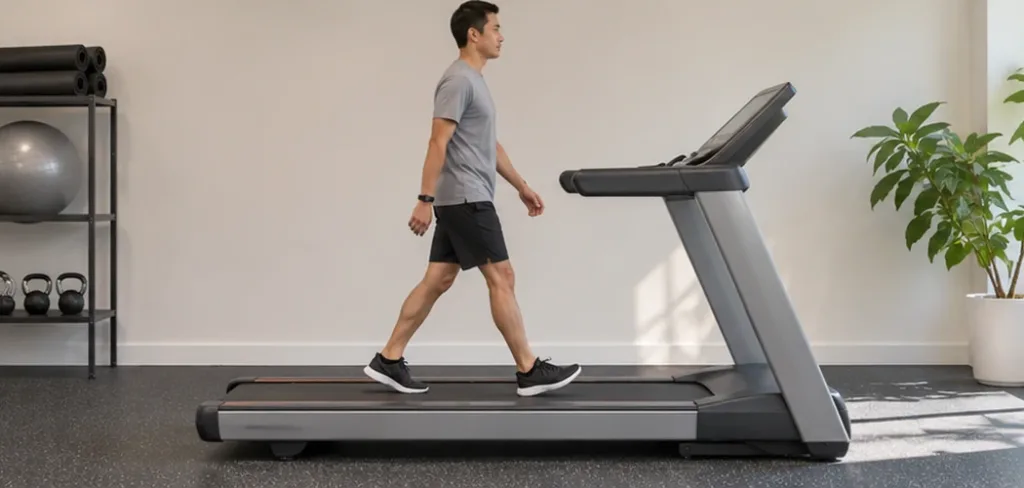
Start on a stretch where you can change pace easily. On a treadmill, begin at a comfortable walking speed and adjust it gradually. Outdoors, use a flat stretch before you meet the first hill. If you are planning intervals, the transition from walking to an easy jog is part of the warm-up. Begin the first faster effort after you have spent time moving comfortably at lower intensity.
Before lifting weights
Follow a brief period of general movement with practice sets for the first lift. If the workout opens with a press, practise that pressing motion with a light load. If it opens with a squat, start with a shallow bend and move toward your intended range. Add weight in steps as appropriate for the session. A demanding workout may call for more practice sets than a session that uses light resistance throughout.
Before a mixed exercise class
Use the beginning of the class to build toward the pace you plan to maintain. If the first activity is a lateral step, make the first few steps short. If the class starts with a series of punches or reaches, rehearse them slowly before adding speed. Ask the instructor for a lower-impact variation if you want one. In a new class, using a smaller range can give you time to learn the sequence.
Where static stretching fits
A static stretch holds a position for a period of time. A dynamic movement takes you through a range and returns you to the starting position. Before a workout, use controlled movements that resemble what you will do next. During separate flexibility work, choose gentle stretches for the areas you want to work on.
Mayo Clinic’s stretching guide advises warming up with light activity before stretching and generally places static stretches after a workout. Ease into a stretch until you notice mild tension and back off if it hurts. If your sport involves a particular movement, such as a swing or a serve, you can rehearse an easy version as part of the warm-up. The practice movement gives you a way to check the range you need that day.
Adjust the plan to how you feel
Start with an effort you can manage and check how your movement feels as you progress. If a movement feels awkward, reduce its range or slow it down. If you feel sharp pain, stop that movement. A recent injury, surgery, or ongoing symptoms may call for a plan from a healthcare professional or physical therapist.
A warm-up can be short on a day when you are already moving easily. On a colder day or before a demanding session, you may choose to build up more gradually. Keep a simple record if that helps you remember what worked. For example, note whether you felt comfortable beginning a run after an easy walk and a short jog. The next time you take the same route, you can start with a warm-up you already know how to adjust.