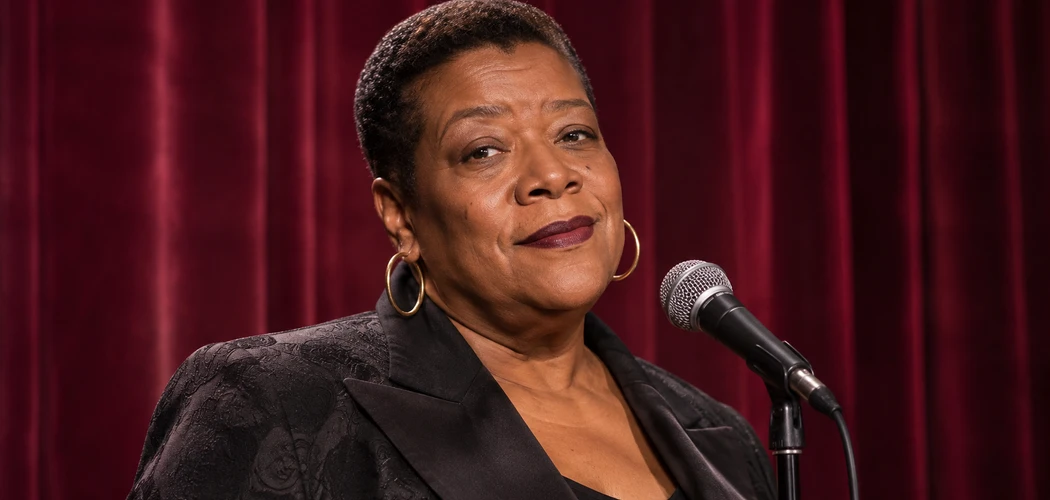
Marsha Warfield entered the original Night Court after the show was already running. By the time it ended in 1992, her character, bailiff Roz Russell, had become one of its most recognisable figures. Roz could cut through an absurd exchange with a few words. In a courtroom comedy full of characters who talked themselves into trouble, the person who knew when to stop talking often got the laugh.
The television role grew out of a career already rooted in stand-up. Warfield won the San Francisco International Comedy Competition in 1979, worked on The Richard Pryor Show, became a regular on Empty Nest, and returned as Roz in the Night Court revival. Her recent work has also brought her back to a live stage. In November 2026, a San Francisco venue billed her alongside singer Martha Wash for a show built around comedy, music, and personal stories.

Marsha Warfield’s Career Began in Stand-Up
Warfield was born in Chicago and built her early career in stand-up. Her official press kit records her win at the San Francisco International Comedy Competition in 1979. That date gives the career a useful starting point. By then, Warfield was already making a name for herself in live comedy, years before a network sitcom gave her a recurring audience at home.
Stand-up places the responsibility for a set on one performer. The comedian has to learn where a room follows a story, when it laughs, and how long a pause can last before the moment passes. Sitcom work gives the performer a different problem. A line may depend on what happened earlier in the scene or on an actor across the room. The timing is shared. Watching Warfield in either setting gives a sense of how well she uses silence and a direct delivery.
Her early credits include The Richard Pryor Show, where she worked as a performer. For someone tracing her career, that credit offers a way into the work she did before Roz. It places her in sketch television as well as live comedy, with characters and short scenes that had to establish a situation quickly. A single clip can show how different that pace is from the rhythm of a solo set.
Readers interested in another route from stand-up to a broader audience can compare NetworkUstad’s profile of comedian Nate Bargatze. Warfield’s career followed its own path through sketch television, ensemble sitcoms, and live performance.
How Roz Russell Fit Into Night Court
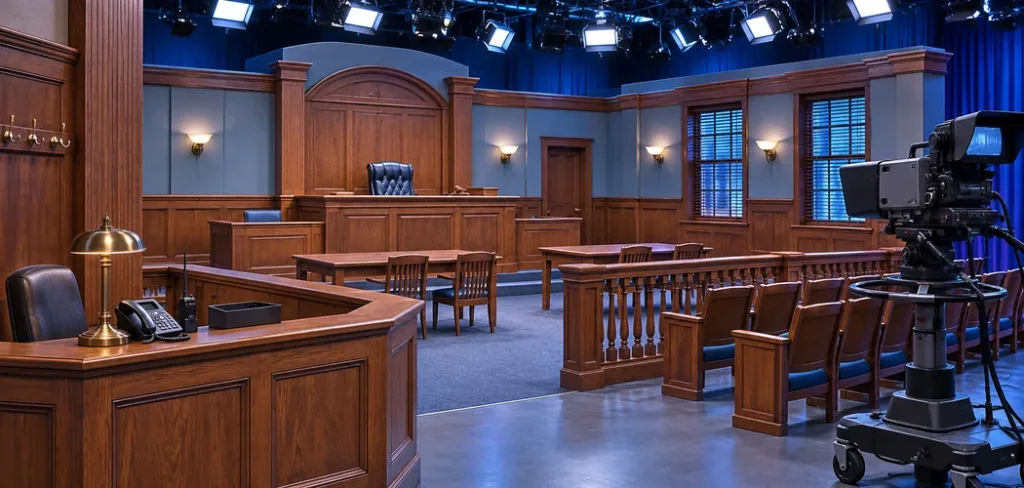
Night Court used a late-night Manhattan courtroom to bring unusual cases and a wide range of visitors into the same room. Its regular characters had to deal with whatever turned up at the door. The cast could play a ridiculous situation broadly, then leave room for a moment of sympathy once the story made clear why a visitor was there.
Warfield played Rosalind “Roz” Russell from 1986 to 1992. The bailiff worked alongside Bull Shannon, played by Richard Moll. Bull could meet a strange situation with curiosity or an unexpected reaction. Roz often seemed to recognise the problem before everyone else and wanted the room to get on with it. That difference gave the characters room to react to the same joke in different ways.
Roz had a public-facing job. She had to keep order while people came and went and her colleagues pursued their own distractions. Warfield could make a short answer sound like a decision the character had arrived at a long time ago. The room might need another minute to get there. This is one reason a reaction from Roz can be as memorable as a speech from one of the louder characters.
To see what Warfield contributed, try watching how a scene moves between speakers. Notice when she waits for someone to finish, where she directs her attention, and what she does when she has no line. An ensemble comedy often gets its rhythm from those choices. Roz’s place in the room also let the show build humour around someone who was trying to do a job while almost everyone else made it harder.
Empty Nest and Other Television Work
Warfield’s next long-running television role took her away from the courtroom. On Empty Nest, she played Dr. Maxine Douglas as a series regular. The series followed a doctor and the people around him, which gave Warfield another workplace setting. It also gave her a character with a different profession and different responsibilities. If you know her only as Roz, Maxine is a good place to see how she fits into another ensemble.
As a physician in the series, Maxine has to respond to situations from a position of professional responsibility. In Night Court, Roz’s job often requires her to stop a situation from taking over the room. The roles make a useful pair to watch because viewers can see the same performer handle authority in settings with different demands. In both, other characters help set up the rhythm of the scene.
Warfield also had a daytime television programme, The Marsha Warfield Show. Hosting calls for listening, moving a conversation along, and making space for a guest’s answer. In a sitcom, a scripted exchange can be rehearsed. In a talk format, the host has to work with what the other person says. These credits give readers a broader picture of how Warfield worked on television beyond the role for which she is most often recognised.
Her later credits include 9-1-1, where she appeared as Toni Wilson, the mother of firefighter Hen Wilson. A recurring role in a drama offers another point of comparison. The scenes serve a family story within a larger series. They show viewers who know her from comedy a different part of her television work and provide an entry point for audiences who encountered her first in a newer show.
Returning to Roz in the Night Court Revival
Warfield reprised Roz in the Night Court revival, which stars Melissa Rauch as Judge Abby Stone and brings back John Larroquette as Dan Fielding. Her return gave the new series a chance to show where an original character had ended up and how she interacted with a courtroom that had changed around her.
The original show had several seasons to establish Roz as a regular part of the courtroom. The revival could draw on that familiarity when Warfield appeared again. Returning viewers recognised the voice and the way the character assessed the people around her. New viewers could follow the exchange through what the character wanted in the scene. A guest return has to work for both groups.
The revival also gives viewers two points in time from which to look at Roz. In the earlier episodes, her place in the ensemble is part of the ordinary life of the court. In the revival, people are reacting to someone they remember, so there is more attention on what she has been doing away from that setting. Watch the original episodes first if you want to understand the relationships the newer appearances revisit.
Live Work With Martha Wash in 2026
Warfield’s career has continued beyond television. One example is It’s Raining Queens, a collaboration with singer Martha Wash. Feinstein’s at the Nikko listed a November 13, 2026 San Francisco date and described a programme mixing music, comedy, and personal stories. The listing documents how the venue billed the evening. It does not establish what was performed on the night or give a schedule for later shows.
For Warfield, the San Francisco booking also connects two points in her career. The city hosted the comedy competition she won in 1979. Decades later, a venue there advertised her in a format that paired live storytelling and comedy with a singer. That return gives the career a useful through line from the club stage to television and back to a room with an audience in front of her.
If you are looking for future dates, check the performer’s announcements and the venue’s current listing before making plans. An older event page can stay online after the performance date. It can document where a show was scheduled, while a current calendar is the better place to confirm future bookings.
Where to Start Watching Marsha Warfield
Start with the original Night Court if you want to understand why Roz Russell remains the role most closely associated with Warfield. Look for episodes from the seasons after she joined the show in 1986. Watch how she handles the routine of the court as well as the scenes in which the story gives her more to do. Then compare one of her revival appearances to see how the character fits into a different cast.
For something outside the courtroom, try an Empty Nest episode featuring Maxine Douglas or look for her earlier work on The Richard Pryor Show. Her appearances on 9-1-1 offer another route into the work. Availability varies by region and changes over time, so search for the series and her character’s name when looking for a specific episode.
Tracing the credits in that order shows how a performer known for one role worked across several formats. The stand-up competition, the original sitcom, the later guest and recurring roles, and the live collaboration with Wash each give a different setting in which to hear Warfield’s timing and delivery.