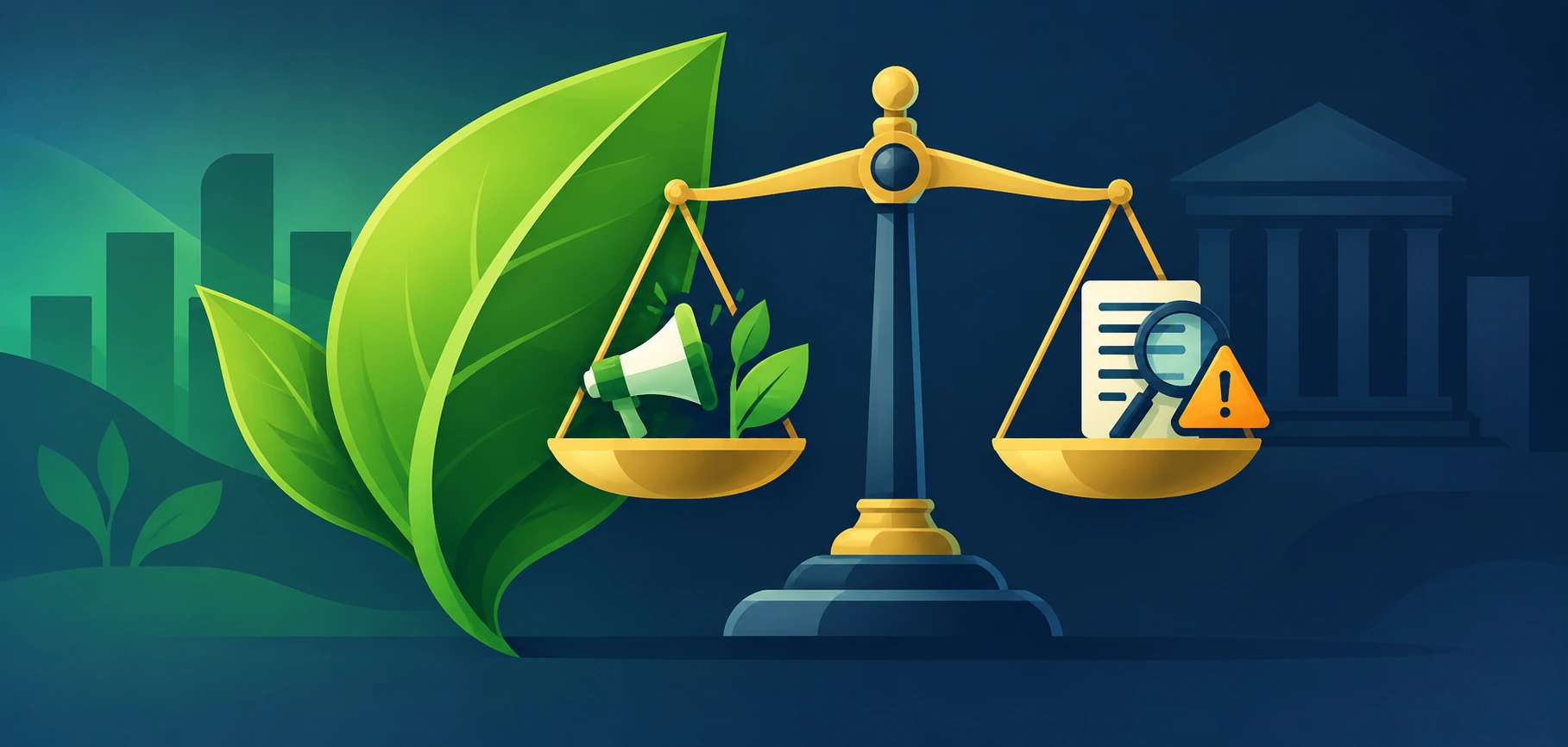
Consumers genuinely care about environmental responsibility — a widely cited NielsenIQ survey from 2018 found 81% of global respondents felt strongly that companies should help improve the environment, and that sentiment hasn’t reversed. What’s changed since then is the regulatory risk around how brands talk about sustainability. A vague or unsubstantiated green claim isn’t just a missed marketing opportunity anymore — in several markets, it’s now something regulators are actively scrutinizing. Here’s how to build genuinely credible sustainability messaging, and what to watch for so a green marketing campaign doesn’t become a greenwashing liability.
Why Sustainability Messaging Matters — and Why It’s Riskier Than It Used to Be
That 81% figure from NielsenIQ’s 2018 research is still the number most often cited for consumer sentiment on this, and directionally it holds up — sustainability remains a genuine factor in brand perception and loyalty, not just a trend that faded. But the regulatory environment around how companies can make that case has shifted substantially:
- In the EU, the proposed Green Claims Directive — which would have required independent third-party verification before making an environmental claim — was actually withdrawn by the European Commission in June 2025, following pushback from the European Parliament’s largest political group over compliance costs and complexity. That withdrawal does not remove existing protection: the separate Empowering Consumers for the Green Transition Directive remains in force and applies from September 27, 2026, continuing to prohibit vague, unsubstantiated environmental claims.
- In the US, the FTC’s Green Guides — which set expectations for substantiating claims like “recyclable,” “sustainable,” and “carbon neutral” — are under active review, with the agency examining whether to move from non-binding guidance toward enforceable rules.
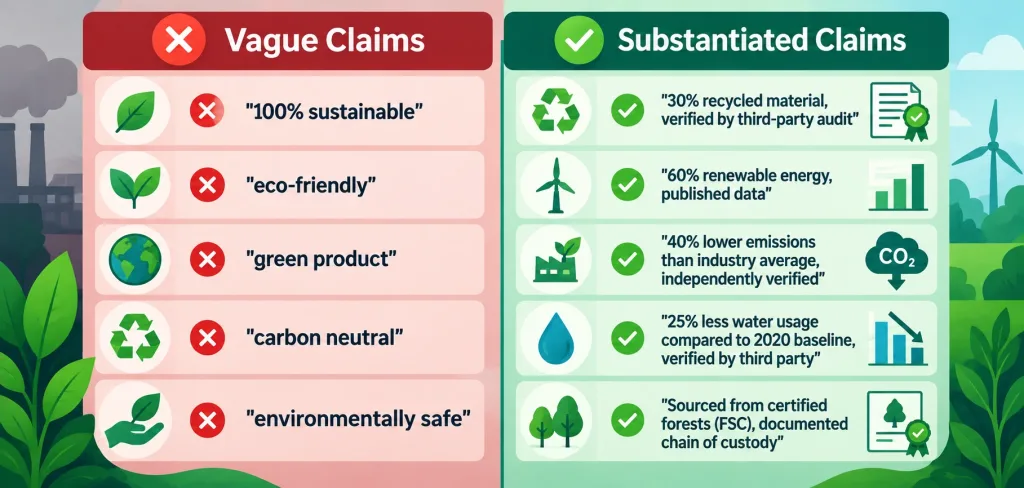
The practical takeaway: specific, substantiated claims (“this packaging is made from 30% post-consumer recycled material, verified by X”) are both more persuasive and more legally defensible than vague ones (“we care about the planet”). Vague claims are exactly the category regulators on both sides of the Atlantic are focused on — environmental reputation is simply one more factor influencing how favorably a brand gets evaluated, alongside the more conventional trust signals a consumer or business partner already weighs before committing to anything significant.
Building a Message You Can Actually Defend
- Define your specific sustainability commitment, not a general sentiment. “We’re eco-friendly” invites skepticism and regulatory risk. “Our servers run on 60% renewable energy as of this year, verified by our hosting provider’s published data” is a claim you can point to something concrete for.
- Match the claim to what you can actually substantiate. If you can’t produce the data behind a claim on request, it shouldn’t be in the marketing copy — this is the core principle behind both the FTC Green Guides and the EU’s remaining anti-greenwashing framework.
- Avoid vague superlatives (“the most sustainable,” “100% green”) unless you can back them with a specific, named standard or certification — these are the exact phrasing patterns that draw regulatory attention.
Creating Content That Actually Lands
- Storytelling beats a list of claims. A campaign showing an actual process change (a supplier switch, a packaging redesign, measured energy savings) is more credible and more shareable than a blog post asserting general environmental values.
- Use the content format that fits the claim. A short video or infographic can show a before/after supply-chain change concretely; a longer blog post works better for explaining the reasoning behind a bigger initiative, with enough detail that it doubles as the substantiation you’d want on hand anyway.
- Keep the same marketing messages consistent across every channel — a sustainability claim made on social media should match, word for word in substance, what’s on the company’s own sustainability page, since a discrepancy between channels is exactly the kind of inconsistency that undermines credibility (and, in a regulatory review, looks like the claim wasn’t carefully substantiated in the first place).
LinkedIn and B2B Sustainability Marketing
LinkedIn remains a genuinely strong channel for sustainability messaging aimed at other businesses, since its audience skews toward decision-makers who care about corporate social responsibility as part of vendor and partner evaluation. A few things worth getting right, drawing on LinkedIn’s own ad best practices:
- Target by role and industry specifically — CSR and sustainability-focused roles, and industries where environmental practices are already a procurement consideration, rather than a broad professional audience.
- Use Carousel Ads to show a sequence, not just a slogan — each card can walk through one concrete initiative (a specific supply-chain change, a measured reduction) rather than repeating the same general claim across cards.
- Lead creative with the specific substantiating detail, not the adjective — a number, a certification name, or a named process change in the headline performs better and holds up better than “sustainable” alone.
- Track engagement by claim specificity, not just by campaign. If posts with concrete data consistently outperform posts with vague claims (a pattern worth checking directly in your own analytics), that’s useful evidence for how to write future creative, independent of any regulatory consideration.
Measuring Impact Honestly
- Track the marketing metrics (website traffic, social engagement, ad performance) separately from the actual sustainability outcomes — a successful campaign and a successful environmental initiative are two different things, and conflating them is itself a mild form of the vagueness problem described above.
- Customer feedback and sentiment can reveal whether an audience perceives a claim as genuine or as marketing spin — worth monitoring directly rather than assuming engagement numbers alone tell the full story.
- Revisit claims periodically, not just at campaign launch — a sustainability commitment made in a campaign two years ago needs to still be true and substantiable today, not quietly outdated the way any specific factual claim can become without update.
The Bottom Line
Sustainability messaging works because the underlying consumer sentiment behind it is real and durable, not because the topic is trendy. What’s changed is the margin for vagueness — between the EU’s continuing (if narrower, post-Green-Claims-Directive-withdrawal) anti-greenwashing framework and the FTC’s active review of its Green Guides, a specific, substantiated claim is now both the more persuasive marketing choice and the legally safer one. Building a campaign around what you can actually back up, rather than a general feeling of environmental virtue, is the difference between sustainability marketing that builds trust and sustainability marketing that becomes a liability.
Frequently Asked Questions
Is it still true that most consumers care about company sustainability efforts?
Yes, directionally — the widely cited 81% figure traces to a 2018 NielsenIQ survey, and more recent consumer research continues to show sustainability as a real factor in brand perception, though the exact percentage from any single older study shouldn’t be treated as a current, precisely measured figure.
What’s the biggest legal risk in sustainability marketing right now?
Vague, unsubstantiated claims — “eco-friendly,” “100% sustainable” — without evidence behind them. The EU’s Empowering Consumers for the Green Transition Directive (applying from September 27, 2026) and the US FTC’s Green Guides both focus enforcement attention on exactly this category of claim, even though the EU’s more demanding Green Claims Directive proposal was withdrawn in 2025.
Did the EU drop its rules against greenwashing?
Not entirely — the proposed Green Claims Directive, which would have required independent third-party verification of environmental claims, was withdrawn by the European Commission in June 2025 after pushback over compliance costs. The separate Empowering Consumers for the Green Transition Directive remains in force and still prohibits vague or unsubstantiated green claims.
Why does LinkedIn work particularly well for B2B sustainability messaging?
Its audience skews toward professionals and decision-makers who factor corporate social responsibility into vendor and partner evaluation, making it a genuinely higher-intent channel for this kind of content than broader social platforms, provided the targeting is specific (CSR roles, relevant industries) rather than generic.
How do I know if my sustainability claim is specific enough to be defensible?
If you can’t point to a concrete number, named standard, or verifiable process behind the claim when asked, it’s too vague. “We care about the environment” fails this test; “30% post-consumer recycled packaging material, verified by our supplier” passes it.