Asad Ijaz
NetworkUstad's lead networking architect with CCIE certification. Specializes in CCNA exam preparation and enterprise network design. Authored 2,800+ technical guides on Cisco systems, BGP routing, and network security protocols since 2018. Picture this: I'm not just someone who writes about tech; I'm a certified expert in the field. I proudly hold the titles of Cisco Certified Network Professional (CCNP) and Cisco Certified Network Associate (CCNA). So, when I talk about networking, I'm not just whistling in the dark; I know my stuff! My website is like a treasure trove of knowledge. You'll find a plethora of articles and tutorials covering a wide range of topics related to networking and cybersecurity. It's not just a website; it's a learning hub for anyone who's eager to dive into the world of bits, bytes, and secure connections. And here's a fun fact: I'm not a lone wolf in this journey. I'm a proud member and Editor of Team NetworkUstad. Together, we're on a mission to empower people with the knowledge they need to navigate the digital landscape safely and effectively. So, if you're ready to embark on a tech-savvy adventure, stick around with me, Asad Ijaz Khattak. We're going to unravel the mysteries of technology, one article at a time!"
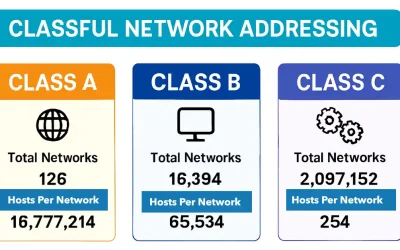
IPv4 Classful Network Exclusive Explanation
A classful network is a network addressing architecture used in networks since 1981. RFCs 790 and 791, released in 1981, describe how IPv4 network addresses were primarily allocated based on a classification system. The authors of IPv4 addresses set up three classes of network addresses: class A, B, and C for different network sizes. Classful...

Configure a Directly Connected Static IPv6 Route
The directly connected static IPv6 route is the best routing solution when CEF is not working on the router. In the old Cisco IOs before 12.0 versions, this is the best solution to avoid recursive routing. It is also the best in point-to-point networks. It is also the best alternative to using the next-hop IPv6...
Static IPv6 Route Using Next-Hop IPv6 Address
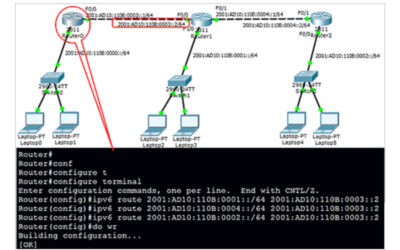
Only the IP address of the next-hop IPv6 is specified in the next-hop static IPv6 route. The exit interface is derived from the next hop. For example, in Figure 1, three next-hop static routes are configured on Router 0. Before forwarding any packet, the router must resolve the route to determine the exit interface to...
Master IPv6 Route Next-Hop Option? – Eliminate Routing Blind Spots for Superior Connectivity
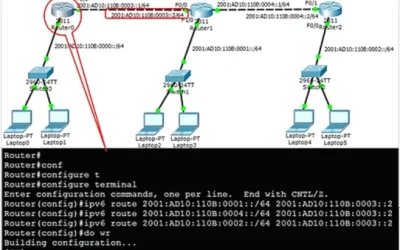
As we already discussed, what is a Next-Hop in the Network? The article is a routing term for the next neighboring router that a data packet can go through. The IPv6 route next-hop is along with a series of routers connected simultaneously in a network, and is the next possible destination for a data packet....
What is IPv6 route Command? – Brief Explanation
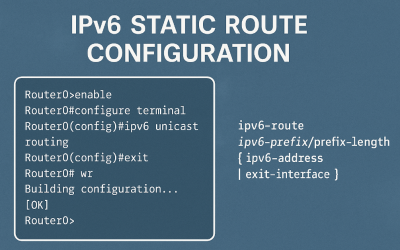
If you learn how to configure a static route for IPv4, then you can easily configure and understand the static IPv6 routes. The configuration and syntax for IPv6 static routes are similar to IPv4 static routes. There is only a minor difference between IPv4 and IPv6 static routes. The static routes for IPv6 are configured using the...
How to configure Default Route
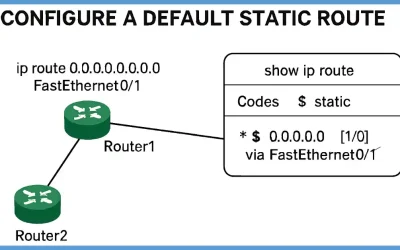
A default static route is a route that represents any network, not in the routing table of that router. Routers normally use default routes that are configured locally or learned from another router, using a dynamic routing protocol. A default route is used when there are no other routes that match in the routing table...
How to Configure Directly Connected Static Route
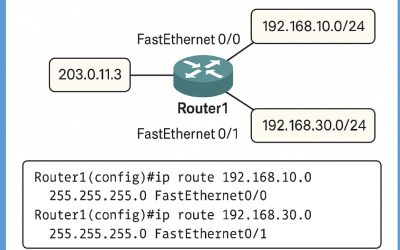
Another way to configure a static route is to use the exit interface to specify the next-hop address. Before the CEF, this method was used to avoid the recursive lookup problem. But now the CEF resolves the recursive lookup problem. In Figure 1, the same topology that we already discussed in the previous lesson is...
How to Configure Static Route with Next-Hop Address (Updated 2025)
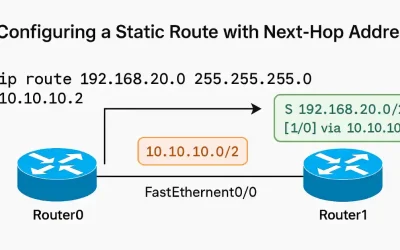
Static routing is a fundamental skill for network engineers, essential for directing traffic in small to medium-sized networks or as a backup in dynamic routing environments. For students, understanding how to configure static routes using next-hop addresses is critical for mastering Cisco router configurations. In this lesson, you’ll learn how to configure static routes, understand...
What is the Next-Hop in Networking?
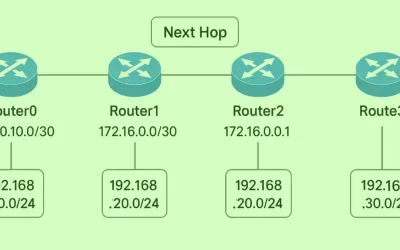
The next-hop is a routing term referring to the neighboring router that a data packet can traverse next. It is part of a series of routers connected in a network and represents the next possible destination for a data packet. Each router maintains a routing table with a next-hop address, calculated based on the routing...
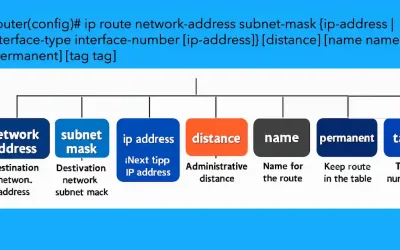
Master IP Route Command – Complete Explanation (Update 2025)
The ip route command is a fundamental tool used to configure static routes in Cisco networking devices. Static routes provide a secure and efficient way to direct traffic in small to medium-sized networks, improving performance and predictability. In this article, we’ll explore the ip route command, its syntax, parameters, and practical applications in detail, tailored...