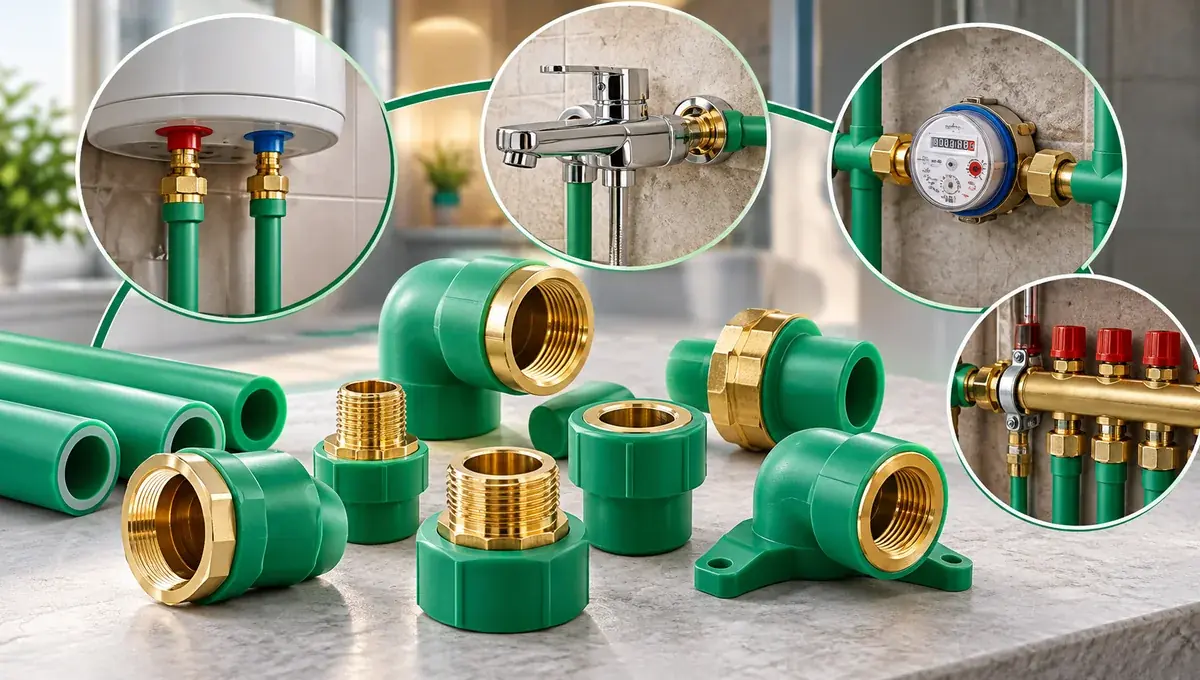
PPR (polypropylene random copolymer) pipe is joined by heat fusion, which makes a seamless, leak-free joint. That works well pipe to pipe. But a plumbing system also has to connect to water heaters, taps, meters and valves, and almost all of them have metal threads.
Brass insert fittings solve that problem. A brass threaded insert is molded into a PPR fitting body, so one end fuses to the pipe and the other end gives a strong metal thread. Plastic threads would strip, creep or crack under tightening torque and hot water. Brass threads hold their shape and can be unscrewed for maintenance.
This article looks at where these fittings are used in real installations, how to pick the right type for each job, and the installation mistakes that can cause leaks. Fitting selection is one part of keeping a plumbing system dependable; broader plumbing-system upgrades may also involve pipes, fixtures and water heaters.
Where Brass Insert Fittings Are Used
Anywhere a PPR line meets a threaded component, you will usually find a brass insert fitting. These are the most common places.
Water heaters and boilers
The inlet and outlet of electric water heaters, gas boilers and solar storage tanks are threaded. Female or male threaded PPR adapters connect the hot and cold lines to them. This is one of the hardest jobs for any fitting: the joint sees hot water, pressure cycles and the vibration of a pump or burner. A brass thread keeps its grip where a plastic thread would slowly loosen.
Showers, mixers and wall outlets
Concealed shower mixers and wall-mounted taps connect to the pipe through threaded elbows, often called wall plate elbows or drop-ear elbows. The brass female thread sits flush with the finished wall, and the tap or mixer screws straight into it. Because the pipe behind the tiles cannot be reached later, a reliable insert matters more here than almost anywhere else.
Water meters
Meters are removed for testing, calibration and replacement. Union fittings with brass threaded ends let an installer take the meter out without cutting the pipe. The same idea is used for filters and pressure-reducing valves that need regular service.
Faucets, appliances and angle valves
Under sinks and behind washing machines and dishwashers, flexible hoses connect to angle valves or threaded adapters on the PPR line. A male or female brass thread gives a standard connection that fits common hose and valve sizes.
Valves and manifolds
Many PPR ball valves and stop valves use a brass valve body or brass cartridge molded into the fitting. In underfloor heating and multi-room distribution, PPR lines also connect to brass manifolds through threaded adapters.
Transitions to other pipe materials
Renovation work often means joining new PPR to old galvanised steel, copper or PEX. A threaded brass insert is the usual bridge: the PPR side is fused, and the other side takes a threaded fitting for the existing pipe.
How to Choose the Right Brass Insert Fitting
A fitting’s thread is only as good as its grip inside the plastic. Most failures start where the brass meets the PPR, not in the thread itself. If you want the background first, this guide explains how brass insert fittings are molded into PPR and anchored against pull-out, including the knurled and grooved surfaces that stop the insert from turning.
Match the fitting type to the job:
| Application | Typical fitting | What to check |
|---|---|---|
| Water heater or boiler | Male or female threaded adapter, or union | Rated for hot water at the system’s working temperature |
| Shower mixer, wall tap | Female threaded wall plate elbow | Mounting ears, correct thread depth for the tap |
| Water meter, filter, PRV | Union with brass threaded end | Removable without cutting the pipe |
| Sink, washing machine | Male or female adapter, angle valve | Thread size matches the hose or valve |
| Shut-off point | PPR ball or stop valve with brass body | Smooth operation, full-bore option if flow matters |
Then check four details on the fitting itself:
- Thread standard. BSP (common in Europe, Asia, Africa and the Middle East) and NPT (North America) do not mix. Confirm the thread type and size before ordering.
- Brass grade. For drinking water, ask for low-lead brass and certification for your market, such as NSF/ANSI 61 and NSF/ANSI 372 in the US. Dezincification-resistant (DZR) brass is worth specifying where the water is aggressive.
- Anchoring design. Look for deep knurling, grooves or a hex section on the insert body. A smooth insert is more likely to spin or pull out over time.
- Plating and finish. Nickel-plated threads resist corrosion and look better on exposed connections.
Installation Tips and Common Mistakes
Most leaks at brass insert fittings come from how they were installed, not from the fitting. Avoid these mistakes:
- Over-tightening. Brass is strong, but the plastic around it is not. Too much torque can crack the PPR body or loosen the insert’s grip. Tighten until the joint seals, then stop.
- Turning the fitting with a wrench on the plastic. Hold the brass hex or the fitting body steady with a second wrench when you tighten the mating part. Twisting load on the plastic can break the bond with the insert.
- Using the wrong sealant. Tapered threads need PTFE tape or a thread sealant approved for drinking water. Parallel threads seal on a flat gasket or O-ring instead, so extra tape there can stop the gasket from seating.
- Fusing too close to the thread. Keep the welding tool on the socket end only. Overheating the fitting near the insert can weaken the plastic around it.
- Concealing joints before testing. Pressure-test the system before you tile over wall elbows or bury pipes in screed. A leak found after finishing is expensive.
- Mixing thread standards. A BSP part forced onto an NPT thread may seem to fit, but it will not seal reliably.
Frequently Asked Questions
Why not just use plastic threads on PPR fittings?
Plastic threads deform under tightening torque and lose grip over time, especially with hot water. A brass insert keeps its shape and can be connected and disconnected many times.
Are brass insert fittings safe for drinking water?
Yes, if they use low-lead brass certified for potable water in your market. Ask the supplier for test reports or certificates before buying for a drinking water system.
Can the threaded end be reused?
The brass thread can usually be disconnected and reconnected during maintenance. The fused PPR end is permanent and has to be cut out if the fitting is replaced.
Do brass inserts work in hot water lines?
Yes. They are widely used on water heater and boiler connections. Check that both the fitting and the pipe are rated for the system’s working temperature and pressure.
Conclusion
Brass insert fittings are the link between a fused PPR system and the threaded equipment it serves. Choose the right type for each connection, check the thread standard and brass grade, and install them without over-tightening or twisting the plastic. Get those basics right, and these small fittings will give a leak-free connection for the life of the system.