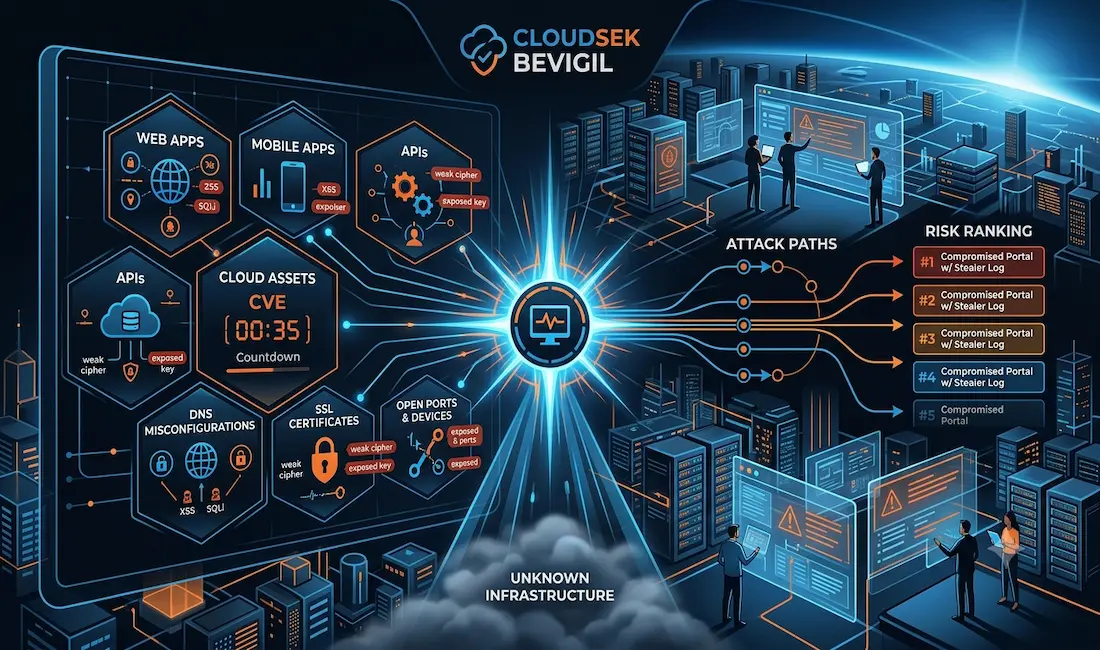
Internet-facing infrastructure accumulates faster than anyone’s records of it. Subdomains outlive the campaigns that created them, staging APIs stay reachable after launch, and certificates renew on assets nobody remembers owning. Much of that estate, the DNS zones, the certificates, the open ports, the edge devices, is infrastructure network engineers built and still maintain, which is why external attack surface findings keep landing on their desks. Attackers, who scan the same estate continuously, do not wait for anyone’s inventory to catch up.
They are scanning with intent. VulnCheck observed hundreds of vulnerabilities newly exploited in 2025, a significant share of which showed exploitation evidence on or before the day their CVE was published, up from the prior year. By the time a disclosure goes public, the hunt for vulnerable internet-facing systems is already underway. VulnCheck’s research points to network edge devices and server software as larger contributors to mass exploitation than open source.
BeVigil is CloudSEK’s external attack surface monitoring platform.
What Is CloudSEK BeVigil?
BeVigil is an external attack surface monitoring platform that discovers an organization’s internet-facing assets and scans them continuously across eight surfaces.
Discovery comes first: BeVigil automatically fingerprints the external attack surface, surfacing domains, subdomains, open ports, web and mobile applications, SSL certificates, and network devices, including the assets no internal record mentions. Continuous scanning follows: everything discovered is assessed across the eight surfaces on an ongoing basis, so new exposure is found when it appears rather than at the next scheduled audit.
The distinction from point-in-time assessment matters because the surface itself never holds still. External attack surface management built as continuous exposure monitoring maintains a single, updated view of what the organization looks like from the outside.
Eight Surfaces BeVigil Monitors
- Web applications. BeVigil’s web application scanner detects common vulnerabilities, including SQL injection and cross-site scripting, across every discovered web app.
- Mobile applications. The mobile scanner extends the same depth to an organization’s mobile apps, an exposure class most external assessments skip entirely.
- APIs. API scanning covers the endpoints that carry sensitive traffic, including the ones that were never meant to be public.
- Cloud. Internet-facing cloud assets are discovered and assessed for the misconfigurations that turn convenience into exposure.
- CVE. Known CVEs on internet-facing assets are identified continuously, which matters most for the growing share that attackers weaponize on the day of disclosure.
- DNS. BeVigil flags DNS misconfigurations, including SPF and DMARC issues, along with subdomain takeover conditions.
- SSL. Weak SSL configurations and certificate problems are surfaced before they become either an entry point or a trust failure.
- Network. Open ports and exposed network devices, the classic reconnaissance targets, round out the external view.
Together, the eight surfaces describe everything an attacker can enumerate about an organization without ever touching the perimeter. Three of them, DNS, SSL, and network, sit squarely in infrastructure that network engineers own, which is why the discipline draws them in directly alongside the security team.
From Discovery to Attack Path
Findings across eight surfaces become useful when they resolve into a ranked route rather than a queue. BeVigil reduces noise first, using more than 600 tag classifiers and query-language filters, letting teams work on the exposures that lead somewhere rather than every deviation from best practice.
Those findings then leave the silo. BeVigil identifies external attack surface initial access vectors, which CloudSEK Nexus AI correlates into attack paths, joined with dark web exposure from XVigil and adversary context from CloudSEK Threat Intelligence. An exposed portal is a finding; an exposed portal whose credentials are circulating in a stealer log is a path, and it is ranked accordingly.
What BeVigil Is Not
- Not a single-purpose code scanner. Exposed credentials in code are one finding type among many across eight surfaces, and describing the platform as a code scanner undersells its category.
- Not an AI attack surface tool. Prompt injection, model abuse, and AI infrastructure risks belong to AIVigil, CloudSEK’s dedicated AI attack surface monitoring platform.
- Not a network monitoring or network security tool. BeVigil does not inspect internal traffic and does not replace firewalls or intrusion prevention. It shows how the network’s public-facing edge, its exposed devices, open ports, DNS records, and certificates, looks to an attacker on the outside.
- Not an internal vulnerability manager. BeVigil covers the external, internet-facing estate: the attacker’s view, not the asset database’s.
A Continuous Surface Needs Continuous Monitoring
An external attack surface changes with every deployment, every DNS edit, and every certificate renewal, which is why assessing it on a schedule always means defending yesterday’s estate. The teams that stay ahead are the ones whose visibility updates as fast as the surface does.
BeVigil turns external attack surface assessment from a periodic audit into a continuous security intelligence workflow and feeds what it finds into the attack graph, where exposure becomes a ranked, disruptable path.
Frequently Asked Questions
What is the difference between external attack surface monitoring and vulnerability management?
Vulnerability management scans the assets that an organization already knows it owns. External attack surface monitoring first discovers what is internet-facing, including unknown assets, then assesses it continuously from the attacker’s outside-in view.
How does BeVigil discover unknown assets?
Through automatic fingerprinting of internet-facing infrastructure, which surfaces domains, subdomains, open ports, web and mobile applications, SSL certificates, and network devices without relying on internal inventories.
Can BeVigil detect subdomain takeovers?
Yes, Subdomain takeover conditions are flagged alongside DNS misconfigurations, including SPF and DMARC issues, as part of continuous DNS surface monitoring.
Which BeVigil findings route to network teams?
DNS misconfigurations, including SPF and DMARC issues, weak SSL configurations and certificate problems, subdomain takeover conditions, and open ports or exposed network devices, since remediation for these issues sits with the people who own that infrastructure.
What is an initial access vector?
An initial access vector is the specific entry point an attacker uses to gain a first foothold, such as an exposed port, an unpatched internet-facing CVE, or a hijacked subdomain. Attack paths begin at one.
Does external attack surface monitoring require agents or internal access?
No, External attack surface monitoring runs from outside the perimeter, scanning what is reachable over the internet. No agents are deployed, and no internal network access is needed.