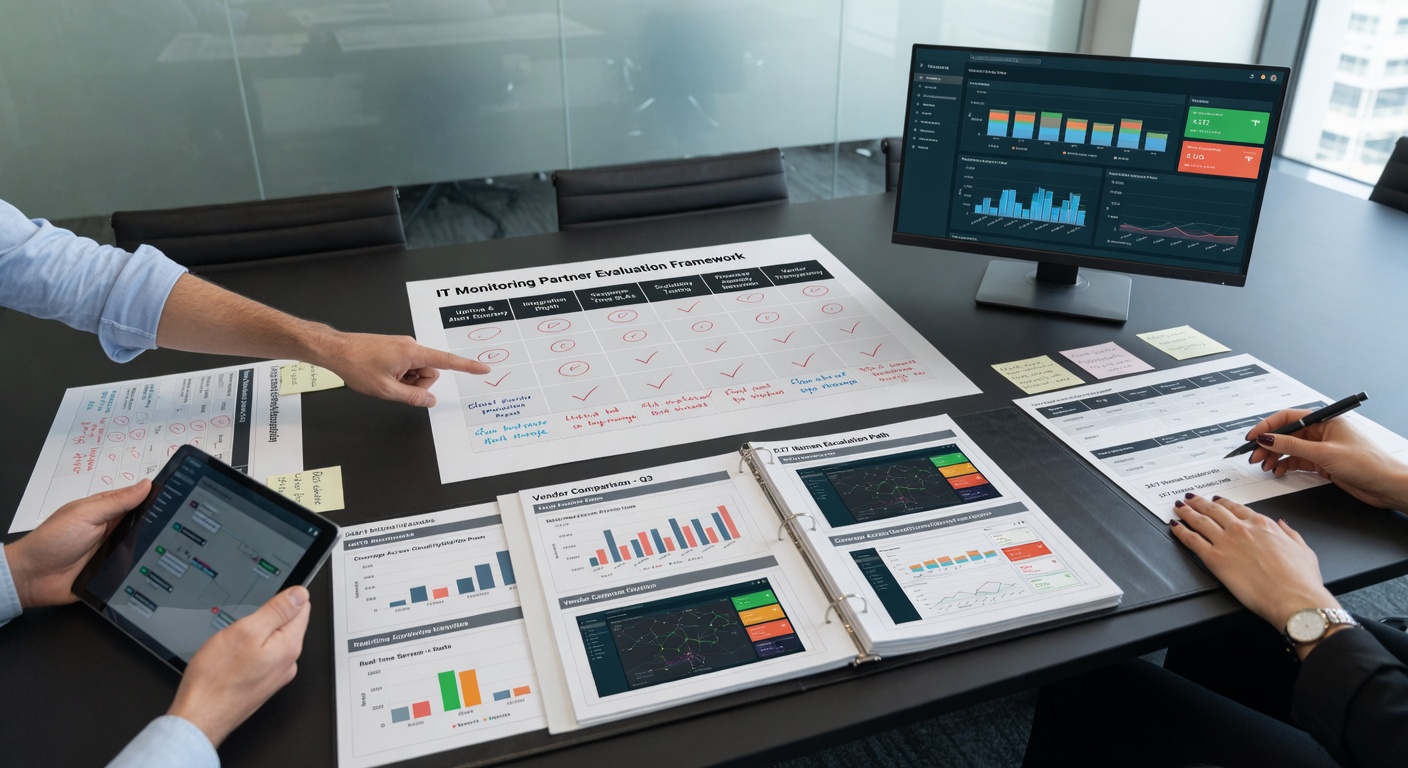
Let’s be honest, every minute your systems are down, money is walking out the door. Sometimes a little, sometimes a lot. As organizations lean harder on digital infrastructure, picking the right IT monitoring partner has become less of a checkbox exercise and more of a genuine business survival decision. Get it right, and you gain real operational leverage. Get it wrong, and those performance gaps quietly turn into competitive losses you may not even see coming.
The Qualities That Actually Separate Good Partners from Great Ones
Here’s the uncomfortable truth: plenty of vendors promise monitoring excellence. Not all of them deliver it. A genuinely reliable IT monitoring partner has receipts, documented uptime history, transparent reporting, and client outcomes you can actually verify.
Don’t get hypnotized by polished sales decks. Dig into independent reviews, third-party certifications, and real case studies instead. Those paint a far more honest picture than any pitch meeting will.
Established network monitoring companies typically publish detailed client testimonials alongside third-party audit results, and those documents reveal how a provider and its network monitoring tool actually perform when things go sideways, which is exactly when it matters most.
Reputation and Uptime History
Consistent uptime isn’t negotiable. A provider’s historical performance data should be sitting right in front of you, not something you have to pry loose after three follow-up emails.
Push them directly: What’s their average incident response time? How is their SLA actually structured? If the answers feel vague or rehearsed, trust that instinct; it’s probably telling you something real.
Transparency in Operations
Any provider offering IT infrastructure monitoring services should be upfront about their methodologies, escalation paths, and how often you’ll hear from them. Providers who dodge those questions usually have a reason to.
Monitoring Solutions That Actually Fit Your Business
One-size-fits-all is a myth in IT monitoring, and honestly, any vendor still pushing a rigid universal package deserves healthy skepticism. Your business IT monitoring solutions need to flex with you as you grow, shrink, pivot, or suddenly find yourself managing a distributed team across four time zones.
This flexibility matters even more if you’re running a hybrid infrastructure, juggling multi-cloud environments, or dealing with remote teams that seem to multiply by the quarter.
Multi-Environment Support
A solid provider handles on-premises networks, cloud workloads, and hybrid setups, often all at once. If a vendor only shines in one environment? That blind spot *will* surface eventually, usually at the worst possible moment.
Modular Offerings That Don’t Waste Your Budget
The best partners give you modular, à la carte service options. You pay for what your business actually needs, not a bloated bundle of features that look great on a proposal but collect digital dust in practice.
Technology Stack: What “Modern” Should Actually Mean
Technology doesn’t slow down for anyone. Tools that felt cutting-edge in 2021 may now be leaving dangerous gaps in your visibility. AI-driven alerting, machine learning-powered analytics, and predictive diagnostics have graduated from “nice to have” to baseline expectations.
Splunk’s 2024 State of IT Observability report puts a hard number on this: observability leaders achieve a 2.6x annual return on investment. That’s not a rounding error. The quality of your monitoring technology directly shapes business outcomes.
Predictive Analytics Over Reactive Scrambling
Reactive monitoring catches fires after they’ve already burned through something important. Predictive analytics flags anomalies *before* they escalate, giving your team a real window to intervene rather than clean up.
Automation That Actually Shortens Response Times
Smart automation takes the manual burden off internal teams and dramatically compresses the time between detection and resolution. Real-time dashboards and intelligent alerting mean fewer 2 a.m. surprises, and faster decisions when surprises do happen.
Infrastructure Coverage That Doesn’t Miss the Corners
Here’s a coverage standard worth holding vendors to: comprehensive IT infrastructure monitoring services should span networks, servers, endpoints, cloud workloads, IoT devices, and remote connections, all visible inside one unified framework. Anything less, and you’ve got blind spots.
The 2024 Observability Pulse report found that 60% of organizations are seeing faster troubleshooting, while 56% report meaningfully better central visibility into apps and infrastructure. That data isn’t abstract; it shows exactly what holistic monitoring does for operations day to day.
Clean Integration With Your Existing Stack
Monitoring tools that clash with your ITSM platform or can’t talk to your ticketing system don’t reduce friction, they *create* it. Integration compatibility with third-party tools and APIs is a critical evaluation point, full stop.
Industry-Specific Adaptability
Healthcare, finance, retail, and manufacturing each have distinct demands. A strong provider tailors their services to those realities rather than recycling a generic product across every vertical.
Security Isn’t Optional, It’s Woven In
Security and monitoring don’t live in separate rooms. Reliable IT monitoring has to include continuous threat detection, vulnerability scanning, and meaningful alignment with compliance frameworks, GDPR, HIPAA, SOC 2, whatever applies to your world.
Providers should maintain documented data handling policies and undergo regular third-party security audits. This isn’t paranoia, it’s how you protect your clients, your data, and frankly, your reputation.
Real-Time Threat Detection
Providers who only surface threats during scheduled scans leave gaps between checks that attackers are very happy to use. Real-time detection catches intrusions the moment they appear, not hours later.
Compliance as a Built-In Feature
Regulatory compliance can’t be duct-taped on after the fact. Your monitoring partner should actively *support* your compliance posture, not just avoid complicating it.
Genuine Partnership vs. Just Another Vendor Relationship
The best monitoring relationships don’t feel like transactions. The providers worth keeping operate more like business allies, offering 24/7 expert support, proactive account management, and strategic input that keeps you ahead of problems instead of reacting to them.
Round-the-Clock Expert Availability
Threats don’t check your business hours before showing up. Expert availability, not just automated ticket queues, is the difference between a genuine partner and a service vendor who disappears after the contract is signed.
Strategic Advisory That Actually Evolves With You
Ongoing optimization reviews, user training, and regular check-ins keep your monitoring strategy pointed at where your business is *going*, not where it was when you first signed on.
Pricing That Doesn’t Ambush You Later
Hidden fees have a quiet way of eroding the ROI that looked so obvious during the proposal stage. Pricing transparency is just as important as technical capability when you’re vetting a reliable IT monitoring partner.
Ask specifically what’s *not* included. Whether the model is pay-as-you-go, tiered, or enterprise-level, you deserve a clear picture upfront. Value-added services like disaster recovery planning and compliance enablement should strengthen the package, not quietly inflate it.
Your Pre-Commitment Checklist
Before you sign anything, run through this:
– Vet credentials, client reviews, and third-party audits thoroughly
– Confirm integration compatibility with your existing tools
– Validate security protocols and compliance certifications
– Test support responsiveness before signing , not after
– Lock down customization options and scalability commitments in writing
Treat this as a floor, not a ceiling. Every business has nuances that deserve its own scrutiny.
Is Your Partner Built to Evolve With You?
Once you’ve found the right fit, one final question deserves real attention: can they keep up? Forward-thinking providers are already building toward edge computing monitoring, zero-trust network frameworks, AI-powered root cause analysis, and ESG compliance reporting.
Unified observability platforms are becoming the new baseline, replacing the messy, fragmented multi-tool environments that slow teams down and create coverage blind spots.
Reputable network monitoring companies that think ahead don’t just react to technological and regulatory shifts; they anticipate them, which means your business gets access to next-generation capabilities faster than competitors still scrambling to catch up.
The Bottom Line
Choosing the right IT monitoring partner shapes everything from daily operations to long-term resilience. The strongest providers combine technical depth, genuine transparency, flexible business IT monitoring solutions, and support that actually means something, not just dashboards and alert emails.
Whether you’re evaluating IT infrastructure monitoring services for the first time or reconsidering a relationship that’s stopped serving you well, start with the checklist above. The right partner won’t just watch your network. They’ll help determine how confidently and how quickly your business moves forward.
Quick Answers to Common Questions
What should businesses prioritize when choosing an IT monitoring partner?
Start with proven uptime history, transparent pricing, broad infrastructure coverage, strong security practices, and real 24/7 expert support. A dependable partner communicates clearly, adapts to your environment, and acts like a strategic ally.
How do network monitoring companies handle compliance in regulated industries?
Reputable network monitoring companies align their practices with frameworks like HIPAA, GDPR, and SOC 2 through strict data handling policies, regular third-party audits, and proactive compliance guidance, not reactive patching.
Which KPIs should you track to measure monitoring effectiveness?
Focus on mean time to detect (MTTD), mean time to resolve (MTTR), uptime percentage, false positive rate, and compliance audit outcomes. These numbers cut through the noise and reveal whether your partner is actually moving the needle.