IP Encoders, In today’s digital-first economy, reliable video broadcasting isn’t a luxury—it’s a lifeline. Small businesses depend on live streaming for everything from product launches and training sessions to community engagement and revenue-generating events. At the heart of this capability sits a critical piece of hardware: the IP encoders. This device serves as the essential bridge between traditional video sources—cameras, switchers, media players—and modern IP networks that deliver content to audiences worldwide. But here’s the challenge that keeps small business owners up at night: when that encoder fails during a critical broadcast, who answers the phone? Unlike enterprises with dedicated IT departments and backup equipment, small operations face devastating consequences from even brief periods of downtime. A failed encoder doesn’t just mean a technical hiccup—it means lost viewers, damaged credibility, and evaporated revenue. This article goes beyond specs and features to address a pain point that rarely gets the attention it deserves: warranty and support quality. We’ll explain what IP encoders do, how they work, and most importantly, guide you toward solutions backed by the kind of after-sale protection that budget-conscious businesses genuinely need.
What Are IP Encoders and Why Are They Essential for Modern Broadcasting?
An IP encoders is a hardware device that takes video and audio signals from traditional sources—cameras, mixers, media players—and converts them into compressed digital streams suitable for transmission over IP networks, including the internet. Think of it as a translator that speaks both the language of your camera and the language of the web, enabling your content to reach viewers anywhere in the world through platforms, CDNs, or private networks.
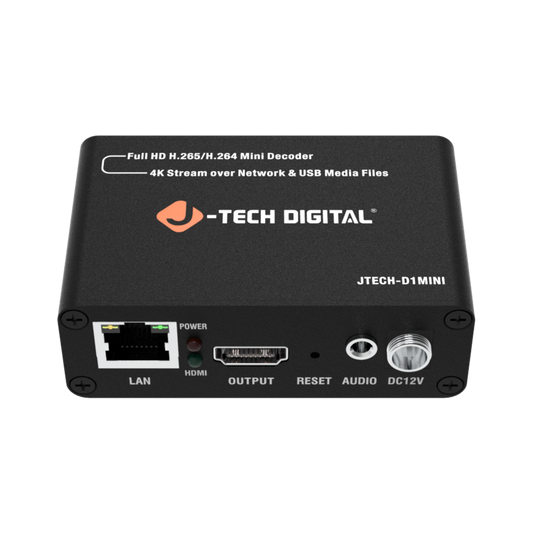
In practical terms, IP encoders power live streaming workflows, contribution feeds between locations, and content distribution systems. Before these devices became accessible, broadcasting required expensive satellite uplinks or dedicated fiber connections. Today, a single encoder connected to a standard internet connection can deliver broadcast-quality video to thousands of simultaneous viewers—a democratization of technology that has particularly benefited small organizations.
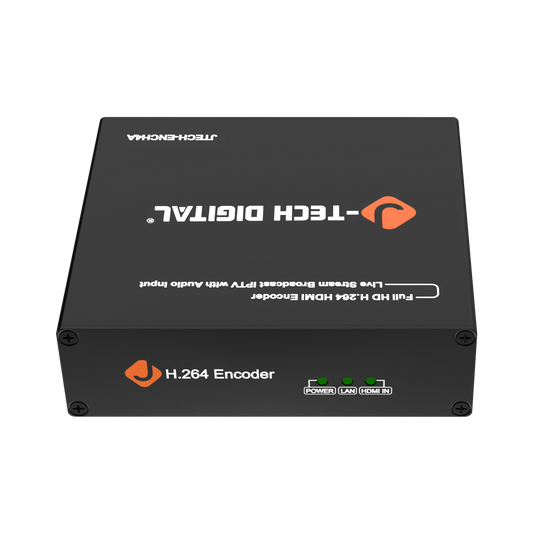
Two codec standards dominate the current landscape. H.264 encoders remain the workhorse of the industry, offering near-universal compatibility with players, platforms, and receiving devices. They deliver excellent quality at reasonable bitrates and represent the safest choice for most general-purpose streaming applications. H.265 encoders, meanwhile, achieve roughly 50% better compression efficiency, meaning they can deliver equivalent quality at half the bandwidth—or significantly superior quality (including 4K and HDR content) at the same bitrate. This makes them increasingly attractive for businesses pushing higher-resolution content or working with limited upload bandwidth.
For small businesses running webinars, streaming church services, broadcasting local events, or producing training content, the encoder selection directly shapes three critical outcomes: operational cost through bandwidth requirements, viewer experience through stream quality, and business continuity through hardware reliability. A poorly chosen encoder creates a cascade of problems—buffering streams that drive away audiences, excessive bandwidth costs that strain budgets, and hardware failures that interrupt revenue-generating activities. The right choice, conversely, becomes an invisible workhorse that simply delivers, day after day, broadcast after broadcast.
Beyond the Price Tag: Evaluating Warranty and Support for Your Investment
When a small business purchases an IP encoders, the transaction doesn’t end at checkout—it’s just beginning. For organizations without dedicated IT teams or spare equipment sitting on shelves, the warranty and support backing that encoder represent something far more valuable than a piece of paper: they represent operational insurance. A solo videographer streaming weddings, a church broadcasting weekly services, or a small marketing agency producing client content cannot afford to wait weeks for a repair or navigate labyrinthine support systems while their revenue stream sits idle.
Understanding warranty components requires looking beyond the headline “covered for X years” claim. Duration matters, certainly—a one-year warranty versus a three-year warranty represents meaningfully different levels of manufacturer confidence in their product. But equally important is what falls within that coverage window. Does the warranty cover parts only, or does it include labor? Who pays shipping when a unit needs to return for repair? Are power supplies and accessories included, or just the main board? These details, often buried in fine print, determine whether your warranty functions as genuine protection or merely a marketing gesture.
Support quality extends beyond warranty repairs into day-to-day operational assistance. Responsive technical support—available through multiple channels like phone, email, and live chat—can resolve configuration issues, compatibility problems, and performance optimization questions that don’t involve hardware failure but still threaten your broadcast quality. Equally valuable are ongoing firmware updates that address security vulnerabilities, add protocol support, and improve stability. A vendor that actively maintains and improves their products post-sale demonstrates commitment to their customers’ long-term success, not just the initial transaction.
Consider the true cost of inadequate support. A failed encoder during a paid live event doesn’t just mean the repair bill—it means refunding ticket holders, apologizing to sponsors, and rebuilding audience trust. Third-party repair services for specialized broadcast equipment often charge premium rates, and generic IT consultants rarely possess the streaming-specific expertise to diagnose encoder issues efficiently. When you factor in lost revenue, emergency replacement purchases, and reputation damage, the difference between a vendor offering robust support and one offering the bare minimum can easily exceed the original purchase price of the encoder itself. This calculus makes warranty evaluation not a secondary consideration but a primary purchasing criterion for any budget-conscious operation.
Red Flags vs. Green Flags in Warranty Policies
Spotting problematic warranty policies before purchase saves enormous frustration later. Warning signs include vague “limited warranty” language without clear definitions of what’s actually limited, coverage periods shorter than twelve months, requirements that buyers pay all shipping costs for RMA returns, and support channels restricted to email-only with no guaranteed response times. Vendors who make their warranty terms difficult to find on their website—or who require contacting sales to obtain warranty details—are often hiding unfavorable terms.
Positive indicators, conversely, signal manufacturers who stand behind their products with confidence. Look for multi-year comprehensive warranties that explicitly cover parts and labor, advance replacement programs that ship a working unit before you return the defective one, clearly published support contact information with stated response time commitments, and active user communities or forums where both staff and experienced users contribute solutions. Vendors offering free firmware updates throughout the product lifecycle and maintaining accessible knowledge bases with setup guides, troubleshooting articles, and video tutorials demonstrate an investment in customer success that extends well beyond the point of sale.
A Small Business Owner’s Guide to Choosing the Right IP Encoders Solution
Selecting an IP encoders that serves your business reliably for years requires a structured approach that weighs immediate needs against long-term operational security. Rather than impulse-buying based on a single feature or the lowest price, follow a deliberate process that accounts for the full picture of ownership.
Start by assessing your specific needs and establishing a realistic budget. Define your primary use case—are you streaming weekly worship services at 1080p, producing multi-camera corporate events in 4K, or feeding contribution-quality video between locations? This determines whether an H.264 encoder meets your requirements or whether the bandwidth savings and resolution capabilities of H.265 justify the investment. Calculate total cost of ownership rather than sticker price alone: factor in potential bandwidth savings from better compression, the value of included software licenses, and the cost implications of warranty coverage length. A slightly more expensive encoder with a three-year warranty and free firmware updates often costs less over its operational life than a bargain unit you’ll need to replace or repair out-of-pocket within eighteen months.
Next, research and shortlist products by seeking out reviews and testimonials that specifically mention post-purchase experiences. Technical specifications tell you what a device can do on day one; user reviews reveal what happens on day three hundred. Look for patterns in feedback—consistent praise for responsive support teams or recurring complaints about unanswered tickets tell you more than any marketing page. Industry forums, streaming community groups, and professional videographer networks often contain candid assessments that vendor websites never will. Companies like J-Tech Digital Inc, which specialize in AV transmission and processing equipment, are worth investigating for how their support infrastructure serves smaller operations alongside their product offerings.
With your shortlist in hand, scrutinize each vendor’s warranty and support offerings using the framework established earlier. Contact their support channels before purchasing—ask a technical question and evaluate response time, knowledge depth, and willingness to help a prospective buyer. This pre-sale interaction reliably predicts post-sale treatment. Compare advance replacement policies, shipping cost responsibilities, and firmware update commitments side by side.
Finally, plan for implementation and long-term support. Evaluate available documentation: does the vendor provide detailed setup guides, video walkthroughs, and troubleshooting resources that your team can follow without specialized training? Consider scalability—if your streaming needs grow, does the vendor offer compatible products that integrate seamlessly, or will expansion require starting from scratch with a different ecosystem? The strongest choice balances capable hardware with a vendor relationship that functions as a genuine safety net, ensuring that your upfront investment continues delivering value long after the initial setup is complete.
Warranty-Backed Broadcasting: Protecting Your Small Business Investment
IP encoders—whether built on the universally compatible H.264 standard or the bandwidth-efficient H.265 codec—have become indispensable tools for small businesses seeking to reach audiences through live and on-demand video. They transform what was once an enterprise-only capability into an accessible, affordable operation that any organization can deploy. But the hardware itself tells only half the story. The most cost-effective encoder isn’t necessarily the cheapest one on the shelf; it’s the one backed by transparent, comprehensive warranty coverage and responsive technical support that shields your business from the hidden costs of downtime, emergency repairs, and lost revenue opportunities.
As you evaluate your options, prioritize vendors who treat the relationship as a partnership rather than a transaction. Look for multi-year warranties, advance replacement programs, active firmware development, and accessible support teams who understand streaming workflows. These commitments signal a manufacturer invested in your long-term success—not just your initial purchase. In a landscape where a single failed broadcast can cost more than the encoder itself, robust after-sale protection isn’t an optional extra. It’s the foundation of a reliable, stress-free broadcasting setup that lets you focus on what matters most: delivering great content to your audience, every single time.
FAQs Related to IP Encoders and Warranty Support
What is an IP encoders and how does it work?
An IP encoders converts video and audio signals from cameras or mixers into compressed digital streams for transmission over IP networks, enabling live streaming and remote broadcasting.
Why are IP encoders important for small businesses?
They allow small businesses to stream events, webinars, and training sessions affordably, replacing costly satellite or fiber setups with internet-based broadcasting.
What’s the difference between H.264 and H.265 IP encoders?
H.264 offers broad compatibility and solid quality, while H.265 provides up to 50% better compression efficiency—ideal for 4K or bandwidth-limited streaming.
How does warranty coverage affect IP encoders reliability?
Comprehensive warranties covering parts, labor, and shipping ensure minimal downtime and protect small businesses from costly interruptions during live broadcasts.
What should small businesses look for in IP encoder support?
Look for multi-channel support (phone, email, chat), fast response times, firmware updates, and advance replacement programs that keep operations running smoothly.