The CBSE Class 12 Biology syllabus is often underestimated by students who focus solely on rote memorization. Yet, a 2026 study by the National Institute of Education found that students who integrated conceptual understanding with practical application scored 23% higher in board exams compared to those who relied solely on textbook learning. This disparity highlights a critical gap in how Biology is taught and learned at the higher secondary level.
The Anatomy of the Class 12 Biology Syllabus
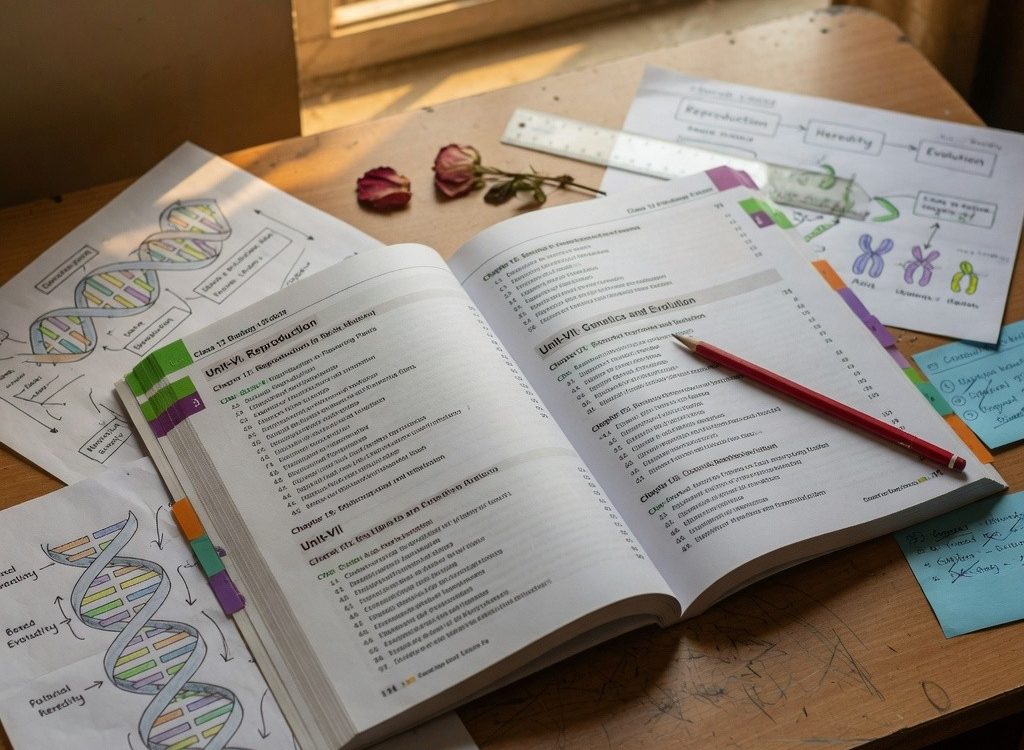
The CBSE Class 12 Biology syllabus is structured around five core units: Reproduction, Genetics and Evolution, Biology and Human Welfare, Biotechnology, and Ecology. Each unit is designed to build on foundational concepts introduced in Class 11, but with an emphasis on real-world applications. For instance, the Biotechnology unit delves into gene editing techniques like CRISPR-Cas9, which have revolutionized medical research since their inception.
Reproduction: More Than Just Diagrams
Many students treat the Reproduction unit as a series of diagrams to memorize. However, understanding the physiological processes behind human reproduction, such as hormonal regulation and gametogenesis, is crucial. A 2026 report by the Indian Council of Medical Research emphasized that students who linked these processes to clinical applications, like IVF treatments, performed better in both theory and practical exams.
Genetics: The Heart of Modern Biology
The Genetics unit is often considered the most challenging, yet it is also the most rewarding. Concepts like Mendelian inheritance, DNA replication, and genetic disorders are not just academic topics—they are the backbone of modern medicine. For example, understanding the molecular basis of sickle cell anemia can provide insights into gene therapy advancements reported in 2026.
Practical Applications: Bridging Theory and Reality
The practical component of Class 12 Biology is often neglected, yet it is where students can truly grasp the subject’s relevance. Experiments like DNA isolation, studying mitosis in onion root tips, and analyzing ecological pyramids are not just academic exercises—they are foundational skills for careers in medicine, biotechnology, and environmental science.
The Role of AI in Biology Education
Recent advancements in AI have begun to transform Biology education. For instance, OpenAI’s biology-focused AI model has been used to simulate complex biological processes, allowing students to visualize concepts like protein synthesis in real-time. This integration of technology into the curriculum is reshaping how Biology is taught and understood.
Common Misconceptions in Class 12 Biology
One of the most pervasive misconceptions is that Biology is a “soft” science requiring only memorization. In reality, the subject demands analytical thinking and problem-solving skills. For example, interpreting genetic crosses or understanding the biochemical pathways of photosynthesis requires logical reasoning akin to solving mathematical problems.
The Myth of Last-Minute Preparation
Another misconception is that Biology can be mastered through last-minute cramming. However, the subject’s depth and breadth make consistent study essential. A 2026 survey by the Central Board of Secondary Education revealed that students who followed a structured study plan scored significantly higher than those who relied on last-minute preparation.
Career Pathways After Class 12 Biology
Class 12 Biology opens doors to diverse career opportunities, from medicine and biotechnology to environmental science and genetics. For students aspiring to study medicine abroad, exams like the GAMSAT offer a pathway to prestigious institutions. Additionally, the growing demand for biotechnologists in sectors like pharmaceuticals and agriculture highlights the subject’s relevance in the job market.
Tips for Excelling in Class 12 Biology
To excel in Class 12 Biology, students should adopt a multi-faceted approach:
- Focus on understanding concepts rather than memorizing facts.
- Use visual aids like diagrams and flowcharts to simplify complex processes.
- Practice solving previous years’ question papers to familiarize yourself with the exam pattern.
- Engage in hands-on experiments to reinforce theoretical knowledge.
The Future of Biology Education
As Biology continues to evolve, so too must the way it is taught. Innovations like smart projectors and virtual labs are making the subject more interactive and accessible. These tools not only enhance learning but also prepare students for the challenges of a rapidly advancing scientific landscape. The Class 12 Biology curriculum is not just a stepping stone to higher education—it is a foundation for understanding the complexities of life itself. By embracing a holistic approach to learning, students can unlock their full potential and contribute meaningfully to the scientific community.