RingConn Gen 3 Review: A Refined Smart Ring That Delivers
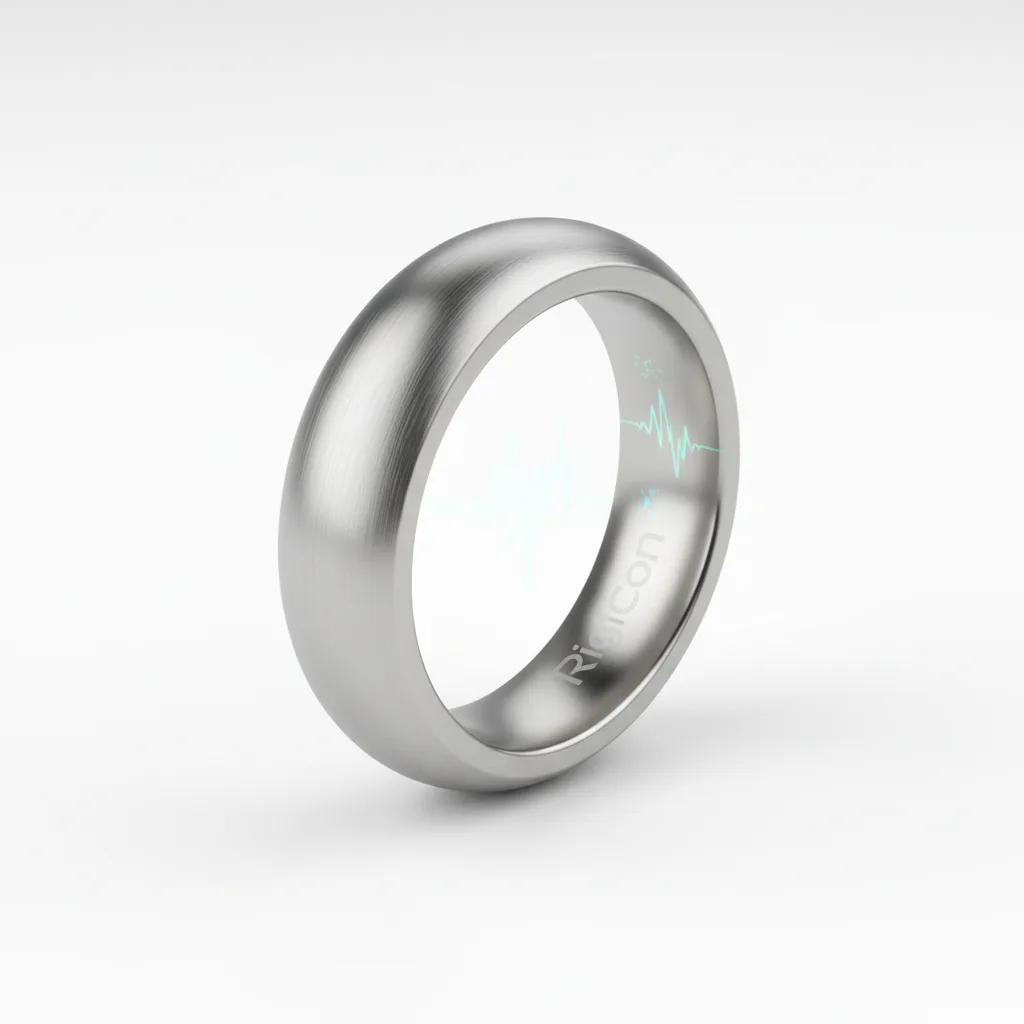
The RingConn Gen 3 is the most capable subscription-free smart ring available in 2026, adding a built-in vibration motor and vascular health trend insights over its predecessor while retaining the category-leading battery life of 11–14 days (vibration off) or 10–12 days (vibration on). Priced at $349 with zero ongoing fees, it undercuts the total 2-year cost of ownership of the Oura Ring 4 by several hundred dollars. The titanium and medical-grade epoxy construction weighs just 2.5–3.5 grams depending on size and sits comfortably overnight. The only meaningful downsides are a slightly thicker profile than the Gen 2 and a blood pressure feature that requires an external cuff calibration and should not be treated as a clinical measurement tool. Ideal for health-conscious professionals, athletes, and anyone who refuses to pay smart ring subscription fees.
Performance Analysis
The RingConn Gen 3’s sensor array consists of an optical PPG heart rate monitor, 3-axis accelerometer, skin temperature sensor, and the newly added vibration motor. RingConn claims heart rate accuracy above 98% and SpO2 mean error under 1.9%, figures consistent with what independent reviewers have observed in short-term testing. The Gadgeteer’s hands-on review noted realistic battery performance — 34% remaining after seven days of full use with vibration alerts active — which places real-world endurance comfortably within the 10–12 day vibration-on specification.
Sleep tracking is a standout performer. The ring’s sleep apnea detection runs a patient three-night baseline before surfacing any flags, reducing false positives compared to devices that alarm on the first night of unusual data. Independent testing at The Gadgeteer recorded AHI readings that progressed logically over multiple nights before triggering a “Suspected Mild” flag, suggesting the algorithm is calibrated for genuine utility rather than engagement. REM, deep, and light sleep staging, plus nap detection, are all included without paywalls.
The new Vascular Health Trend Insights feature tracks nighttime blood pressure patterns using optical sensor data and proprietary algorithms. RingConn is clear that this is a trend-monitoring tool, not a clinical blood pressure measurement — the feature requires a validated external cuff reading as a baseline, and results are positioned as lifestyle guidance. Buyers should treat it as a useful longitudinal indicator rather than a replacement for medical-grade equipment. HRV tracking, stress monitoring, respiratory rate, skin temperature deviation, and readiness scoring round out the health metrics available continuously throughout the day and night.
The addition of a vibration motor is the most significant hardware upgrade over the Gen 2. Alerts support short, medium, and long vibration patterns for different notification types, enabling discreet on-finger feedback without a connected phone screen. The motor adds marginal thickness (2.3mm vs 2.0mm on Gen 2) and slightly reduces maximum battery life, but the practical utility of wrist-free haptic alerts is a meaningful quality-of-life improvement for meetings, sleep tracking reminders, and inactivity nudges.
Design and Build Quality
The RingConn Gen 3 maintains the premium material profile of its predecessor — titanium alloy outer shell, medical-grade epoxy resin on the inner surface, and PVD coating across all five finish options. The interior resin provides a smooth contact surface that reduces the skin irritation some users experience with bare titanium or stainless steel rings over extended wear. The edges are reportedly slightly more rounded than on the Gen 2, creating a narrower visual profile despite the fractionally increased 2.3mm thickness.
Weight remains negligible: 2.5–3.5 grams depending on size, with a verified real-world weight of 2.7 grams for a size 10 ring per The Gadgeteer’s kitchen scale measurement. Gadgets and Wearables’ review noted the difference in thickness versus the Gen 2 was imperceptible on the finger during day-to-day wear. The ring disappears within hours of first wear for most users — a critical factor for sleep tracking accuracy, since rings that cause discomfort tend to be removed overnight, breaking data continuity.
Five finish options are available: Future Silver, Royal Gold, Matte Black, Brushed Silver, and Brushed Rose Gold. The two brushed finishes are new for Gen 3 and represent a step toward jewelry-grade aesthetics that sit more naturally in formal settings. Sizing has expanded from the Gen 2’s 6–14 range to 6–15, covering a wider spread of finger dimensions. RingConn provides a free sizing kit with dummy rings, which remains essential since smart ring sizing does not map directly to standard ring sizing. Note that Gen 3 uses a different sizing system from Gen 2, so existing RingConn users should re-measure.
The charging case has been redesigned as a universal wireless unit, eliminating the size-specific compatibility issues of the Gen 2 charging dock. This is a practical improvement that matters for households with multiple ring sizes or users who upgrade rings over time. The case holds 15+ full charges, stretching total untethered runtime beyond 150 days — useful for travellers who want to go weeks without access to a USB-C port.
Software and User Experience
The Gen 3 ships with RingConn app version 4.0, a significant interface overhaul from the 3.x series that powered the Gen 2. The main dashboard receives a visual refresh and adds a Health Trends view that aggregates longitudinal data across sleep, HRV, readiness, and vascular patterns in a single scrollable surface. The practical impact is that users can now spot multi-week patterns — sleep debt accumulation, sustained HRV suppression during a stressful period — without digging through individual metric pages.
Apple Health and Google Health Connect integration are supported, allowing Gen 3 data to feed into the broader health ecosystem without manual export. For users who consolidate health data across multiple wearables, this integration reduces friction meaningfully. The Bosch Flow app equivalent does not exist here — RingConn’s own app handles all display and analysis, and the experience is entirely self-contained.
RingConn has maintained a consistent record of delivering feature updates via firmware and app patches on existing hardware. The vascular health tracking feature, for example, arrived as a software update after the initial May 2026 launch rather than requiring new hardware. This post-launch update pattern is evidence of an active development cadence, though the app ecosystem remains less mature than Oura’s or Samsung’s in terms of third-party integrations and coaching depth. The ring is compatible with iOS 17.0 or later and Android 10.0 or later, covering the vast majority of current smartphones in active use.
Battery Life
Battery performance is the RingConn Gen 3’s strongest quantifiable advantage over the competition. Official specifications state 11–14 days without vibration and 10–12 days with vibration alerts active, assuming approximately 20 seconds of vibration feedback per day. Independent testing at The Gadgeteer confirmed 34% battery remaining after seven full days of use with vibration active, placing real-world performance squarely within the 10–12 day vibration-on spec. The Gadgets and Wearables review reached the same conclusion after a two-week test period, requiring only a single charge.
For context, the Oura Ring 4 is rated for approximately 8 days under typical use, the Samsung Galaxy Ring for 7 days, and the Ultrahuman Ring Air for around 6 days. The Gen 3 leads the category by a meaningful margin — a 30–40% battery advantage over the next closest competitor — and this difference has a compounding effect on data quality. Uninterrupted tracking for 11+ days means baselines are established without charging gaps, which improves the accuracy of trend-based metrics like HRV and vascular health insights.
The charging case extends this advantage substantially. With 15+ full charges stored in the case — which itself charges via USB-C — the total untethered runtime exceeds 150 days. A traveller who packs the case alongside the ring essentially removes battery anxiety from the equation entirely for trips of any reasonable length. The universal wireless charging design of the Gen 3 case is also a quality-of-life upgrade over the Gen 2’s size-specific dock, eliminating the alignment fussiness some users experienced with the earlier accessory.
Value for Money and Competition
At $349 with no subscription, the RingConn Gen 3 competes directly against the Oura Ring 4, which retails at $349 plus $5.99 per month after a six-month trial. Over 24 months, Oura users pay approximately $493 in total; Gen 3 users pay $349, a saving of $144 at equivalent entry price. The Oura Ring 4 retains advantages in app maturity, coaching depth, and a longer track record of sensor validation, but for buyers who value data access over guided interpretation, the RingConn offers a compelling financial argument.
The Samsung Galaxy Ring ($399, no subscription) sits slightly above the Gen 3 in price but lacks the vibration motor, offers shorter battery life (around 7 days), and is limited to Samsung Health integration. The Ultrahuman Ring Air ($349, no subscription) is the closest direct competitor — similar price, no subscription, titanium construction — but its 4–6 day battery life is significantly shorter than the Gen 3, and it does not offer vibration feedback or vascular health trend tracking.
The RingConn Gen 2 Air ($199, no subscription) remains available as an entry-level option with 8–10 day battery life and no vibration motor. For buyers who do not need haptic alerts or blood pressure trend monitoring, the Gen 2 Air represents even stronger value. But for users who want the complete RingConn experience with the newest sensor suite and vibration feedback, the $150 premium of the Gen 3 over the Gen 2 Air is justified by the meaningful hardware additions.
Verdict
The RingConn Gen 3 delivers on its core promise more convincingly than any previous model in the lineup. The addition of a vibration motor and vascular health trend insights address the two most-requested feature gaps from Gen 2 users, while the battery life advantage over every major competitor remains firmly intact. At $349 with no subscription, the total cost of ownership over two years is lower than the Oura Ring 4 despite a near-identical entry price — and that maths will resonate strongly with buyers who have already done the subscription calculus on wearables.
The honest caveats are minor but worth stating clearly. The blood pressure trend feature is not clinical measurement; it is a directional wellness indicator that requires an external cuff baseline and should not drive medical decisions. The app, while improved in v4.0, lacks the coaching depth and third-party integration breadth of the Oura ecosystem. And buyers who need GPS, payment, or emergency features should look at smartwatches rather than any smart ring.
For health-focused users who want accurate overnight tracking, long battery life, and access to every metric without a monthly bill, the RingConn Gen 3 is the clearest recommendation in the smart ring market right now. Check current pricing for the RingConn Gen 3 on Amazon or the official RingConn store.
Rating: 4.5 / 5 — The smartest subscription-free smart ring available in 2026.
Specs verified from official RingConn product pages (ringconn.com, ringconn.jp), Gizmochina hands-on (May 2026), The Gadgeteer review (June 2026), Gadgets and Wearables review (June 2026), AndroidHeadlines pre-order coverage (May 2026), Tom’s Guide CES 2026 hands-on, and idevice.com RingConn roadmap tracker. Prices accurate as of August 2026. Contains affiliate links.
Frequently Asked Questions
Is the RingConn Gen 3 worth buying in 2026?
What is the battery life of the RingConn Gen 3?
How does the RingConn Gen 3 compare to the Oura Ring 4?
Where can I buy the RingConn Gen 3 at the best price?
Does the RingConn Gen 3 measure blood pressure?
Does the RingConn Gen 3 require a subscription?
Is the RingConn Gen 3 waterproof?
+Pros
- Best battery life in the smart ring category: 11–14 days (vibration off), 10–12 days (vibration on) — confirmed by independent testing
- Zero subscription fees: all features including blood pressure trends, sleep apnea monitoring, and HRV permanently unlocked at $349
- Built-in vibration motor enables discreet on-finger health alerts — a first for RingConn and rare in the category
- Universal wireless charging case extends total runtime to 150+ days without a power outlet
- Five finish options including new brushed silver and brushed rose gold for formal wear contexts
- Transparent blood pressure tracking — clearly positioned as a trend tool, not clinical measurement
- Three-night sleep apnea baseline reduces false positives and improves screening credibility
−Cons
- 2.3mm thickness is marginally greater than Gen 2's 2.0mm due to vibration motor — noticeable on paper, not perceptible in most wears
- Blood pressure trend feature requires external cuff calibration and is not a substitute for medical equipment
- App ecosystem less mature than Oura or Samsung Health in terms of third-party integrations and coaching features
- Heart rate accuracy claims (>98%) are manufacturer-stated — independent clinical validation is not yet available for Gen 3
- No built-in GPS, NFC payment, or emergency SOS — pure health tracking only
- Sizes use a new sizing system incompatible with Gen 2; users must re-measure using the provided sizing kit