Artificial intelligence has moved video creation from a specialized production task to something that individuals, marketers, educators, and small businesses can increasingly handle with simple prompts and reference files. The latest developments are focused not only on generating attractive clips, but also on creating longer sequences, maintaining visual consistency, understanding multiple types of creative input, and making precise edits.
One of the notable developments in this space is Seedance 2.5, a new audio-video generation model developed by ByteDance’s Seed team. Officially launched in July 2026, the model is designed around longer storytelling, multimodal references, and more controlled editing.
For creators exploring an Seedance 2.5 AI video generator, the most important question is not simply whether the technology can generate video. The bigger question is how these capabilities can improve an existing creative workflow.
What Is Seedance 2.5?
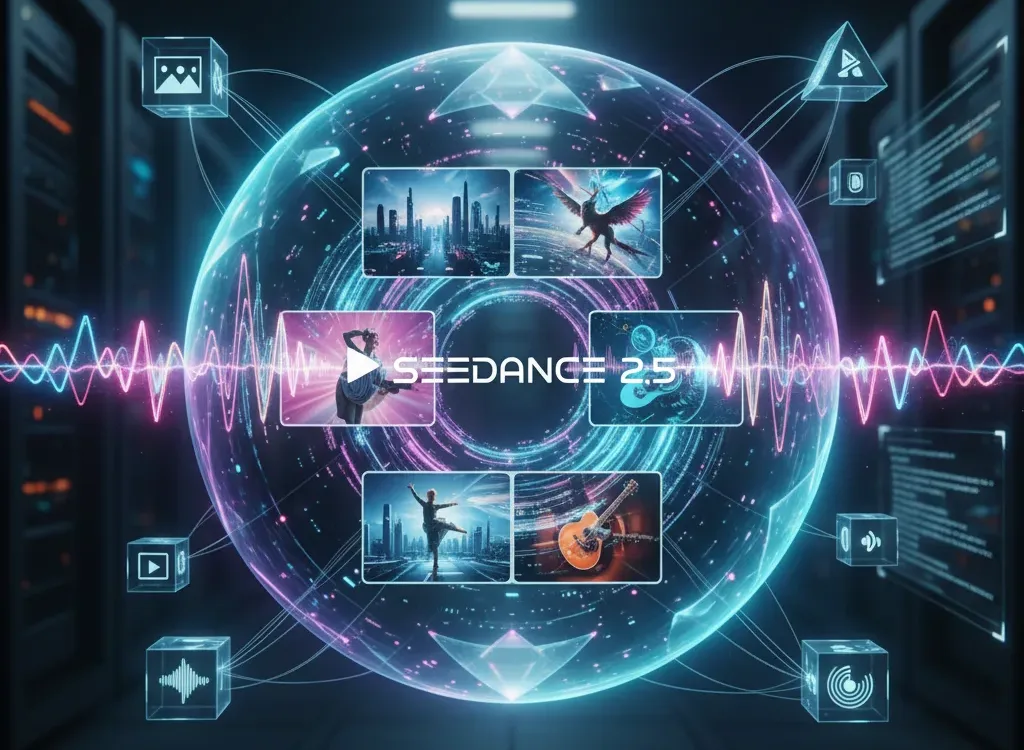
Seedance 2.5 is an AI video generation model designed to create audiovisual content from combinations of text instructions and reference materials. Instead of relying exclusively on a written prompt, creators can provide visual, video, and audio references to communicate more precisely what they want.
According to ByteDance, Seedance 2.5 can generate video and audio together, produce clips of up to 30 seconds in a single generation, support multiple rounds of extension, and provide improved scene transitions and audiovisual consistency.
This represents an important change in how AI video tools are being developed. Earlier systems often focused on producing short visual clips. Newer models are increasingly attempting to understand the broader creative objective behind a scene.
For example, a creator might want to show a product being introduced, demonstrate how it works, and finish with a particular camera movement. Instead of creating several unrelated clips and manually assembling them, a longer generation can potentially preserve more continuity throughout the sequence.
Why Longer AI Video Generation Matters
Video length may sound like a simple specification, but it has a major impact on the creative process.
Short AI-generated clips can work well for individual visual effects, transitions, social posts, or experimental concepts. However, longer storytelling usually requires multiple generations. When those clips are stitched together, differences in lighting, character appearance, camera movement, or background details can become noticeable.
Seedance 2.5 addresses part of this challenge by supporting up to 30 seconds of generation in one pass, compared with the shorter generation capabilities of earlier versions. ByteDance says the model also improves shot transitions and scene changes to support more coherent longer-form content.
A 30-second generation can be useful for:
- Product demonstrations
- Social media advertisements
- Short storytelling sequences
- Educational explainers
- Concept videos
- Music-related visuals
- Brand presentations
- Film and commercial previsualization
The benefit is not that every 30-second generation will automatically be perfect. AI video still requires creative direction and review. The advantage is having more room to establish a complete idea before needing another generation.
Multimodal References Give Creators More Control
One of the most interesting aspects of Seedance 2.5 is its emphasis on reference-based generation.
ByteDance states that the model can accept up to 30 images, 10 video clips, and 10 audio clips as references in a single pass. These references can help communicate elements such as characters, movement, composition, style, sound, and creative direction.
This approach can be particularly useful for commercial content.
Imagine a business wants to create a short promotional video for a new product. Instead of describing the product entirely through text, the creator could provide product images, brand visuals, motion references, and audio material. The AI can then use those assets as additional context.
This is an important development because creative direction is often difficult to express through words alone.
A sentence such as “make the product look premium and cinematic” can have many interpretations. A collection of reference images, video clips, and audio examples provides much more concrete information about the intended result.
Improved Editing Can Reduce Rework
Generating a video is only one part of production. Editing and correcting mistakes can consume significant time.
Seedance 2.5 includes more precise editing capabilities, including timestamp-level control for targeted audio and video modifications. ByteDance also highlights capabilities involving green-screen editing, camera perspective, and reference-based editing.
This matters because AI-generated content rarely arrives exactly as intended on the first attempt.
A creator may like 95% of a generated sequence but notice a problem in one particular moment. If the entire video has to be regenerated, the improved version could introduce new problems elsewhere.
More targeted editing can make the workflow more practical. Instead of treating every imperfect generation as a failed attempt, creators can increasingly approach AI video as an iterative production process.
How Seedance 2.5 Can Be Used for Marketing
Marketing is one area where longer, more controllable AI video could have a significant impact.
A small business, for example, may not have the budget to produce a traditional commercial for every campaign. AI video generation can provide another way to experiment with concepts before investing in full-scale production.
A marketer could create:
Product Videos
Product images can be transformed into active scenes that demonstrate how an item might be used in real life.
Social Media Content
Short-form platforms require a constant stream of visual content. AI video tools can help teams test multiple creative concepts without filming every variation.
Advertising Concepts
Marketing teams can use AI-generated scenes to visualize different advertising ideas before committing resources to a professional shoot.
Brand Storytelling
Companies can experiment with narrative sequences that communicate a brand’s personality, values, or product benefits.
The important distinction is that AI should not automatically replace human creative strategy. Strong campaigns still depend on understanding the audience, developing a compelling message, and choosing the right visual language.
AI can accelerate production, but it does not eliminate the need for good ideas.
Seedance 2.5 for Social Media Creators
Social media creators face a different challenge: speed.
Trends can change quickly, and creators often need to produce content while an idea is still relevant. Traditional video production can involve filming, lighting, editing, sound design, and multiple revisions.
AI video generation can shorten some of these stages.
Seedance 2.5’s ability to work with multiple reference types can also help creators maintain a recognizable visual identity. A creator could use character images, style references, music, and other assets to provide more context before generating a sequence.
The model’s support for different aspect ratios and video workflows can also make AI-generated content easier to adapt for different platforms. Third-party implementations may offer different resolution, duration, and export options, so creators should always check the capabilities of the specific platform they use.
AI Video Is Becoming More of a Production Workflow
The broader significance of Seedance 2.5 is that AI video generation is moving beyond the idea of “type a prompt and get a clip.”
Modern AI video workflows increasingly involve several stages:
- Develop a creative concept.
- Prepare reference images, video, and audio.
- Write a detailed generation instruction.
- Generate an initial sequence.
- Review the result.
- Correct specific problems.
- Extend or refine the sequence.
- Export the finished material for editing or publishing.
This resembles a lightweight production workflow rather than a simple image-generation process.
That distinction is important for businesses. A useful AI video system needs to provide consistency and control, not just impressive demonstrations.
What Makes a Good Seedance 2.5 Prompt?
Even advanced AI models benefit from clear instructions.
A useful prompt should explain the most important elements of the scene instead of relying on vague descriptions.
For example, a creator might specify:
- Subject: What should appear in the scene?
- Environment: Where does the action take place?
- Movement: What should the subject or camera do?
- Camera: Should the shot be wide, close, handheld, tracking, or cinematic?
- Lighting: What atmosphere or lighting style is required?
- Audio: Should there be dialogue, environmental sound, music, or effects?
- Mood: Should the scene feel energetic, dramatic, calm, futuristic, or humorous?
- Duration: How should the action develop during the clip?
Reference materials can then provide additional visual information that would be difficult to communicate through text alone.
The goal is not to make prompts unnecessarily long. It is to make them specific enough that the model understands the creative priorities.
Limitations Creators Should Consider
Despite rapid improvements, AI video generation is not a replacement for every part of professional production.
Creators should still evaluate:
Consistency
AI-generated characters and objects can occasionally change in unexpected ways. Reference-based workflows can help, but careful review remains important.
Accuracy
For educational, technical, medical, or product-related content, generated visuals should be checked carefully. A visually convincing scene can still contain inaccurate information.
Editing Requirements
Even a strong AI-generated video may require conventional editing, color correction, captions, sound mixing, or branding before publication.
Rights and Permissions
Creators should make sure they have appropriate rights to use uploaded images, audio, video, characters, logos, and other reference material. AI generation does not remove existing intellectual-property responsibilities.
Human Oversight
AI can accelerate production, but people still need to make decisions about storytelling, brand identity, accuracy, audience expectations, and final quality.
Seedance 2.5 and the Future of AI Video
The direction of AI video development is becoming increasingly clear. Models are moving toward longer outputs, richer multimodal understanding, better consistency, and more precise editing.
Seedance 2.5 is part of this transition. Its 30-second generation capability, expanded reference inputs, audiovisual generation, and editing features demonstrate how AI video systems are evolving from experimental clip generators toward more complete creative tools.
For creators, the biggest opportunity may not be simply generating videos faster. It may be the ability to experiment more frequently.
A marketing team can test more concepts. A filmmaker can visualize more ideas. An educator can create more engaging demonstrations. A small business can explore professional-looking promotional content without organizing a complete production for every experiment.
Final Thoughts
Seedance 2.5 illustrates how quickly AI video technology is evolving in 2026. Its focus on longer storytelling, multimodal references, synchronized audiovisual generation, and targeted editing makes it more relevant to practical creative workflows than systems designed only for short experimental clips.
However, the quality of the final result still depends heavily on the person directing the process. Good references, clear prompts, thoughtful storytelling, careful editing, and human review remain essential.
The most effective approach is therefore not to think of AI as a replacement for creativity. Instead, tools such as Seedance 2.5 can be viewed as production assistants that help creators turn ideas into visual concepts faster and explore possibilities that would otherwise require more time and resources.
As these models continue to improve, the competitive advantage may belong to creators who learn how to combine AI generation with strong storytelling, original ideas, and responsible production practices.