This post is sponsored by Semrush. When you purchase through links in this article, we may earn an affiliate commission from Semrush.
If you have checked your analytics recently and noticed impressions increasing while clicks continue falling, you are not imagining things.
Many businesses across nearly every industry are seeing the same pattern:
- Rankings remain stable
- Search impressions increase
- Organic traffic declines anyway
For years, SEO teams treated rankings as the clearest indicator of visibility.
That assumption is becoming less reliable.
The search landscape has changed dramatically over the past two years as AI-powered search experiences become more common across:
- Google AI Overviews
- ChatGPT
- Gemini
- Perplexity
- Conversational search assistants
Users increasingly get answers directly inside AI-generated summaries without ever clicking through to a website.
According to industry research, nearly 60% of Google searches now end without a click. Gartner also predicts traditional search volume could decline significantly as AI-assisted discovery becomes more mainstream.
This has created growing confusion for brands.
Many companies are asking:
- “Why is traffic dropping if rankings are improving?”
- “Are customers discovering us through AI instead?”
- “Are competitors being cited more often than us?”
- “How do we measure visibility beyond clicks?”
The reality is that search is not disappearing.
It is expanding.
Brands now need visibility across:
- Traditional organic rankings
- AI-generated answers
- Conversational search experiences
- Citation-based discovery
- AI-powered recommendation systems
That shift has created demand for a new category of AI SEO platforms designed to help businesses understand visibility beyond blue links.
Some focus heavily on AI citations.
Others specialize in content optimization.
A few combine traditional SEO workflows with AI visibility tracking in one ecosystem.
Here are the platforms worth considering in 2026.
Quick Comparison Table
| Platform | Best For | AI Visibility Tracking | Traditional SEO Features |
| Semrush One Solution | Full SEO + AI visibility workflows | Yes | Yes |
| Ahrefs | Backlink analysis and competitor SEO | Partial | Yes |
| Profound | Enterprise AI citation monitoring | Yes | Limited |
| Surfer SEO | Content optimization workflows | Limited | Partial |
| Peec AI | AI visibility reporting | Yes | Limited |
1. Semrush One Solution: Best Overall for Understanding Visibility Loss
One of the biggest problems businesses face right now is incomplete visibility data.
Traditional SEO platforms still focus heavily on:
- Rankings
- Keywords
- Backlinks
- Traffic trends
Those metrics still matter, but they no longer explain the entire customer journey.
A brand may lose clicks even while maintaining rankings because users now get answers directly from AI systems before reaching the website.
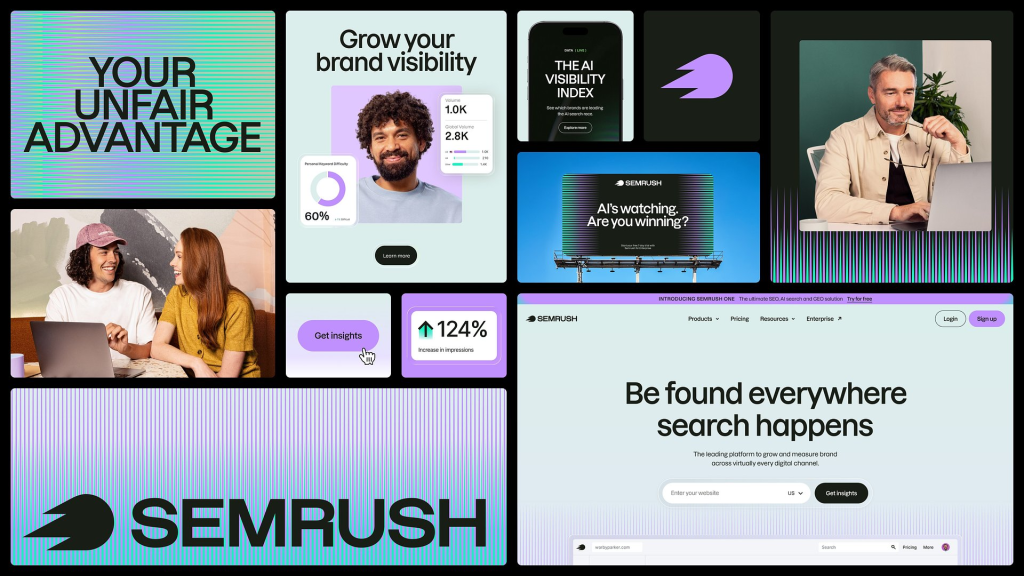
Semrush One Solution stands out because it connects traditional SEO performance with AI visibility tracking inside one platform.
Instead of only showing where your pages rank, the platform helps businesses understand:
- Where AI systems mention their brand
- Which competitors dominate AI-generated answers
- How AI platforms describe products and services
- Which citations influence AI responses
- Where visibility gaps exist
That broader visibility perspective is becoming essential for diagnosing unexplained traffic declines.
Best For
- Businesses losing organic traffic
- Marketing teams measuring AI visibility
- Brands wanting centralized reporting
- Organizations adapting to AI-driven search behavior
Key Strengths
AI Visibility Toolkit
Semrush One includes an AI Visibility Toolkit designed specifically for modern search environments.
Businesses can monitor:
- Prompt mentions
- AI citations
- Share of voice
- Competitor visibility
- Brand sentiment
- AI-generated brand representation
Coverage includes:
- ChatGPT
- Google AI Overviews
- Google AI Mode
- Gemini
- Perplexity
This allows brands to see whether visibility is shifting away from clicks and into AI-generated discovery.
Unified SEO + AI Workflow
Most AI monitoring platforms only track citations.
Semrush combines:
- Keyword research
- Backlink analysis
- Technical SEO audits
- Rank tracking
- Content optimization
- Competitive intelligence
- AI visibility monitoring
Inside one ecosystem.
That centralized workflow makes it easier to connect SEO strategy with AI search behavior.
Large Search and AI Dataset
Semrush tracks:
- 27.5 billion global keywords
- 43 trillion backlinks
- 808 million domains
- 239 million+ AI prompts
Larger datasets help provide stronger competitive visibility analysis across both traditional and AI-driven search environments.
Better Visibility Diagnostics
One of the biggest advantages is understanding why traffic changes happen.
Instead of relying only on ranking data, teams can analyze:
- AI citation shifts
- Visibility overlap
- Competitor gains
- Brand mention trends
- Search ecosystem fragmentation
That additional context can help explain performance declines traditional SEO tools may miss.
Limitations
- More advanced than beginner SEO platforms
- Some smaller businesses may not use every feature
- AI search measurement continues evolving across the industry
Bottom Line
For businesses struggling to understand why traffic is declining despite stable rankings, Semrush One Solution currently offers one of the clearest views into both traditional SEO visibility and AI-generated discovery.
2. Ahrefs: Best for Competitor SEO and Backlink Intelligence
Ahrefs remains one of the strongest traditional SEO platforms available.
Its reputation was built around:
- Backlink analysis
- Competitive research
- Technical SEO auditing
- Content opportunity discovery
Many SEO professionals still rely heavily on Ahrefs because of the depth of data available through Site Explorer and Keywords Explorer.
Best For
- Backlink-focused SEO campaigns
- Competitive SEO analysis
- International SEO
- Content gap analysis
Key Strengths
Excellent Backlink Analysis
Ahrefs maintains one of the industry’s largest backlink databases with approximately 35 trillion tracked links.
This helps teams uncover:
- Competitor backlinks
- Link-building opportunities
- Authority gaps
- Content performance trends
Strong Competitive Research
Ahrefs excels at helping businesses understand:
- Which competitors dominate rankings
- Which pages drive traffic
- Where content gaps exist
Growing AI Visibility Features
Tools like Brand Radar show that Ahrefs is moving toward AI visibility monitoring, though these capabilities are still less integrated than platforms designed specifically for AI discovery.
Limitations
- AI visibility tracking remains secondary
- Requires supplementary tools for deeper AI analysis
- Less focused on AI citation ecosystems
Bottom Line
Ahrefs remains one of the best tools for traditional SEO intelligence and competitor analysis, especially for teams focused heavily on organic search growth.
3. Profound: Best for Enterprise AI Citation Monitoring
Profound was built specifically around AI search visibility rather than traditional SEO.
Instead of functioning as a complete SEO suite, the platform focuses almost entirely on:
- AI citations
- Prompt visibility
- Brand representation
- AI-generated answers
That specialization makes it especially attractive for enterprise teams already using separate SEO software.
Best For
- Enterprise organizations
- AI search monitoring
- Brand citation analysis
- AI reputation tracking
Key Strengths
Dedicated AI Focus
Profound specializes in understanding how AI systems reference brands and sources.
Useful Citation Monitoring
Businesses can analyze:
- Citation frequency
- AI-generated mentions
- Share-of-voice trends
- Competitor visibility
Helpful for Executive Reporting
The platform is particularly useful for organizations wanting broader AI visibility reporting at scale.
Limitations
- Not a full SEO platform
- No deep backlink or technical SEO capabilities
- Requires additional SEO tools alongside it
Bottom Line
Profound fills an important niche for enterprise AI visibility tracking, especially for businesses already operating mature SEO workflows elsewhere.
4. Surfer SEO: Best for Content Optimization
Surfer SEO continues to be one of the most popular platforms for search-focused content optimization.
Its primary goal is helping businesses create content aligned with:
- Search intent
- Competitive benchmarks
- Top-ranking content structures
Rather than guessing what Google prefers, users receive recommendations based on existing ranking patterns.
Best For
- Content marketing teams
- SEO writers
- Editorial optimization workflows
Key Strengths
Data-Driven Content Recommendations
Surfer analyzes ranking pages and provides guidance around:
- Keyword usage
- Content structure
- Headings
- Semantic coverage
Faster Optimization Workflows
The platform helps streamline large-scale content production.
Useful for Existing SEO Teams
Many businesses pair Surfer with broader SEO platforms to improve content efficiency.
Limitations
- Not a complete SEO management system
- Limited AI visibility monitoring
- Requires additional tools for broader SEO analysis
Bottom Line
Surfer SEO works best as a content optimization layer alongside a broader SEO or AI visibility platform.
5. Peec AI: Best for Simple AI Visibility Reporting
Peec AI has gained attention from marketers looking for easier ways to monitor AI search performance.
The platform focuses primarily on:
- AI visibility tracking
- Brand mentions
- Competitor comparison
- AI-generated search analysis
Its accessibility is one of its biggest advantages.
Best For
- Smaller marketing teams
- AI visibility reporting
- Simpler AI analytics workflows
Key Strengths
Easy-to-Understand Reporting
Peec AI simplifies AI visibility analysis for businesses without enterprise analytics teams.
Competitor Visibility Insights
Businesses can identify where competitors are gaining stronger AI-generated exposure.
Focused AI Monitoring
The platform keeps workflows relatively lightweight and manageable.
Limitations
- Limited traditional SEO functionality
- Smaller ecosystem than enterprise platforms
- Requires additional SEO tools for broader workflows
Bottom Line
Peec AI is useful for businesses wanting accessible AI visibility insights without overwhelming complexity.
Why Rankings Alone No Longer Explain Traffic Declines
One of the biggest misconceptions in SEO right now is assuming rankings automatically equal traffic.
That relationship is becoming weaker as AI-generated answers continue expanding.
A page may:
- Rank highly
- Generate impressions
- Receive fewer clicks anyway
Because users already found the answer inside:
- AI Overviews
- ChatGPT
- Gemini
- Perplexity
That means businesses now need to monitor:
- AI citations
- Brand mentions
- Conversational visibility
- Share of voice
- AI-generated recommendations
Not just rankings alone.
This is why many marketing teams are expanding beyond traditional SEO reporting and adopting platforms designed for modern search visibility.
Frequently Asked Questions
Why is organic traffic dropping even when rankings improve?
AI-generated answers increasingly satisfy user intent directly inside search platforms, reducing clicks to websites even when rankings remain strong.
What are AI SEO tools?
AI SEO tools help businesses monitor visibility across AI-powered search environments like ChatGPT, Gemini, Perplexity, and Google AI Overviews.
Can AI visibility replace SEO?
No. AI visibility is becoming an extension of SEO rather than a replacement for it.
Which platform combines AI visibility and SEO best?
Semrush One Solution currently offers one of the most complete workflows combining traditional SEO intelligence with AI visibility monitoring.
Should businesses still invest in SEO in 2026?
Yes. But SEO strategies now need to account for both traditional rankings and AI-generated search discovery.
Final Thoughts
Most SEO tools are not outdated because they stopped working.
They are struggling because search itself evolved faster than many platforms expected.
The future of search visibility is becoming increasingly distributed across:
- Google Search
- AI-generated summaries
- Conversational assistants
- Recommendation engines
- Large language models
That means businesses can no longer rely only on rankings to measure visibility.
They need to understand:
- Where customers discover them
- How AI systems represent their brand
- Which competitors dominate AI citations
- Why traffic patterns are changing
The brands adapting fastest to this new search environment will likely gain a significant advantage over the next few years.
Because in 2026, visibility is no longer only about ranking.
It is about being discoverable wherever people search for answers.