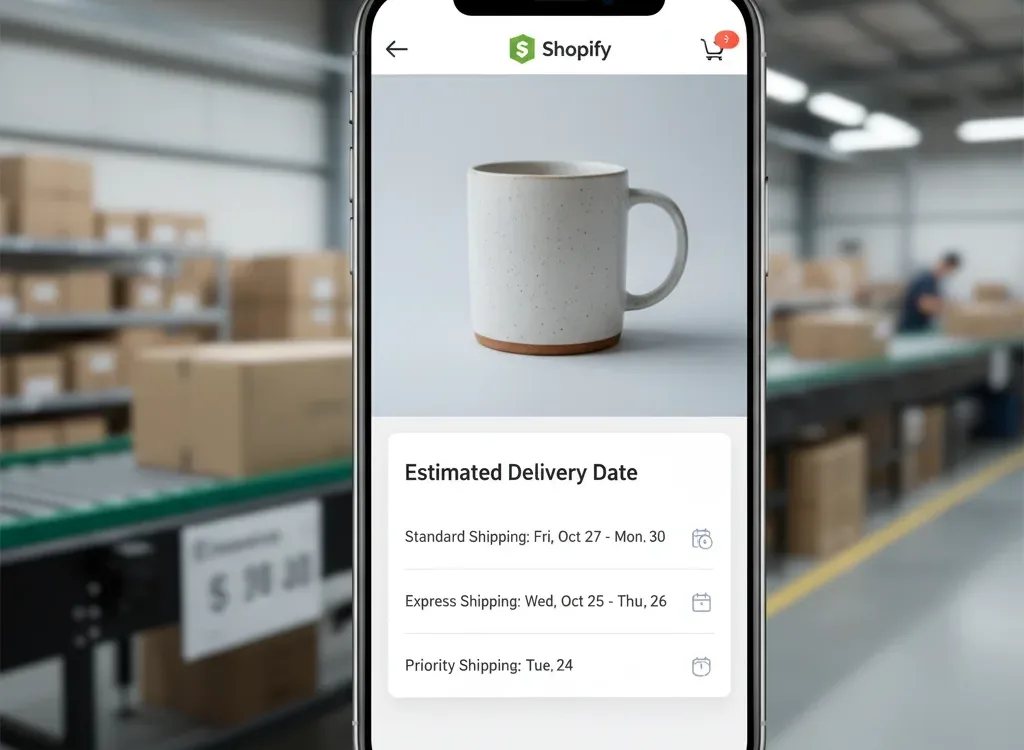
Delivery transparency is now one of the most important parts of the Shopify checkout experience. Customers do not only compare product prices; they also compare how quickly and predictably the order can arrive. A store may offer competitive shipping rates, but if the delivery promise is unclear, many buyers hesitate before completing the purchase.
For Shopify merchants, estimated delivery dates are especially important because the platform is used by stores with very different fulfillment models. Some ship from one warehouse. Others use dropshipping, third-party logistics, local delivery, multiple carriers, or international shipping. In each case, the delivery estimate should reflect something real, not just a generic message like “3–7 business days.”
This ranking looks at Shopify tools and broader shipping solutions that help merchants improve delivery date visibility, shipping option clarity, or checkout decision-making.
1. Calcurates
Calcurates ranks first because it connects delivery dates with broader shipping calculation logic. This is important for Shopify stores where the delivery promise depends on more than one variable. A simple ETA widget can show a nice message, but it may not account for carrier service, shipping zone, warehouse processing time, cart contents, restrictions, or international conditions.
For merchants looking for a shopify estimated delivery date solution, Calcurates is useful because it is not limited to displaying a visual message. It is built around shipping methods, rates, rules, and checkout logic. That makes the delivery estimate more meaningful because it can appear in the same context where the customer chooses a shipping method.
This matters in practical terms. If checkout shows “Economy Shipping” and “Express Shipping” without dates, the buyer may not understand the real difference. If the same methods show expected arrival dates, the customer can decide whether the faster method is worth paying for. This supports conversion without making the checkout feel aggressive.
Calcurates is especially strong for merchants that also need international shipping, table rates, multi-origin logic, shipping restrictions, or carrier-based calculations. The more complex the shipping setup becomes, the more important it is for delivery dates to be connected to the actual shipping rules.
2. ShipperHQ
ShipperHQ is one of the strongest advanced shipping platforms for Shopify and other ecosystems. It is a serious competitor because it focuses on shipping rates, delivery dates, restrictions, pickup options, and carrier logic in one system.
Its estimated delivery date functionality is useful for merchants that need to account for lead times, blackout dates, shipping cut-off times, and fulfillment rules. These operational details are often the difference between a reliable date and an unrealistic promise.
ShipperHQ is a strong fit for larger Shopify stores or merchants with more advanced checkout requirements. The main trade-off is that the setup can require careful configuration. It is not the simplest tool, but it is one of the most complete options for complex shipping logic.
3. Intuitive Shipping
Intuitive Shipping is a Shopify-focused app known for custom shipping rates and advanced shipping scenarios. It is useful for merchants who want to create conditions based on product type, order value, customer location, vendor, tags, or other checkout variables.
For delivery date strategy, Intuitive Shipping is relevant because shipping methods must be accurate before delivery promises can be accurate. If a merchant shows the wrong method to the wrong customer, any ETA attached to that method becomes less reliable.
It is best suited for Shopify merchants who want detailed control over checkout shipping options. Its limitation is that it is not a cross-platform solution, so it is less relevant for businesses that also run Magento or WooCommerce stores.
4. Easyship
Easyship is more of a multi-carrier shipping and fulfillment platform than a pure estimated delivery date app. Still, it is relevant because it helps merchants compare shipping options, access courier services, and provide clearer delivery expectations to customers.
The main strength of Easyship is practical shipping operations. It can be useful for Shopify merchants that need international shipping support, rate comparison, label generation, and carrier access in one place.
From an ETA perspective, Easyship is strongest when the merchant wants to improve shipping visibility broadly. However, stores with very specific checkout date rules may still need a specialized shipping calculation platform.
5. ShipStation
ShipStation is widely used for order management, shipping labels, carrier connections, and fulfillment automation. It is not mainly a delivery date calculator, but it often appears in the same competitive space because merchants compare shipping software broadly.
For Shopify stores, ShipStation can improve the post-purchase shipping process. Orders are easier to process, tracking can be managed more consistently, and fulfillment workflows become more structured.
The limitation is that ShipStation is more operational than checkout-focused. It helps after the order is placed, while delivery date tools are most valuable before payment. For merchants focused specifically on checkout ETA accuracy, ShipStation may need to be paired with another solution.
6. Sendcloud
Sendcloud is another shipping platform that helps with carrier connections, labels, tracking, returns, and shipping workflows. It is especially relevant for European merchants or stores that need access to multiple delivery services.
Sendcloud can support better delivery communication because it helps merchants manage shipping options in a more organized way. Customers benefit when the store can show clearer shipping services and provide better post-purchase updates.
However, Sendcloud is not primarily a Shopify delivery date engine. It is better for merchants who want broad shipping automation. For advanced checkout ETA logic, it may not replace a dedicated rate and delivery date system.
7. Starshipit
Starshipit is a shipping automation platform used by merchants that need to connect carriers, generate labels, manage fulfillment, and reduce manual shipping work. It can be helpful for Shopify stores with growing order volume.
Its contribution to delivery date reliability is indirect. A store that processes shipments faster and more consistently can support more accurate delivery promises. If fulfillment is chaotic, even the best checkout ETA may become unreliable.
Starshipit is strongest for operational shipping management. It is less focused on pre-purchase delivery date calculation, so it is most relevant as part of a broader shipping stack.
8. Advanced Shipping Rules
Advanced Shipping Rules is a Shopify app focused on rate logic. It allows merchants to build custom shipping rules based on different order conditions. This can be useful when Shopify’s native shipping settings are too limited.
For estimated delivery dates, the tool is relevant because rate logic and delivery logic are connected. If the store needs different shipping methods for different product groups or destinations, the rules must be structured correctly.
It may not be the most complete ETA solution, but it can be useful for stores that mainly need better control over available shipping methods.
9. Parcelify
Parcelify is another Shopify-focused shipping rates app. It helps merchants create custom shipping rates based on address, cart value, product conditions, and other variables.
Its strength is simplicity compared with larger shipping platforms. Smaller Shopify merchants may prefer a focused tool that improves shipping rates without requiring a complex implementation.
Parcelify is less suitable for stores that need advanced delivery date calculation, multi-origin fulfillment, or deep international shipping logic. But as part of the Shopify shipping app landscape, it remains a relevant competitor.
10. ShipMagic
ShipMagic is focused on shipping calculations and checkout shipping customization for Shopify. It can be useful for merchants that want more control over how shipping options appear to buyers.
Its role in delivery transparency depends on the merchant’s configuration. If the store uses it to make shipping options clearer and more conditional, it can support better checkout decisions.
Compared with Calcurates or ShipperHQ, ShipMagic is narrower. It may be a good option for merchants who need a lightweight Shopify app rather than a broader shipping calculation platform.
11. Boxify
Boxify helps Shopify merchants calculate shipping based on product dimensions and packaging logic. It is not mainly an estimated delivery date app, but it solves an important problem: inaccurate shipping calculations caused by packaging assumptions.
This is relevant because delivery options can depend on package size and carrier service availability. If packaging logic is wrong, the rate or method shown at checkout may also be wrong.
Boxify is strongest for dimensional shipping accuracy. It is less relevant for merchants whose main goal is to show delivery dates, but it can support a more accurate shipping setup.
12. Shopify Native Delivery Features
Shopify’s native delivery settings can be enough for merchants with simple fulfillment models. If a store has predictable processing times and limited shipping zones, native functionality may provide a basic level of clarity.
The main advantage is simplicity. Merchants avoid adding another app and can keep basic delivery messaging inside the platform.
The limitation is flexibility. Native tools may not be enough for stores with complex carrier rules, multi-origin logic, international shipping, or advanced checkout conditions.
Final Analysis
Shopify merchants should choose estimated delivery date tools based on shipping complexity. If the store has simple fulfillment, native Shopify settings or lightweight apps may be enough. If the store needs custom shipping rules, apps like Intuitive Shipping, Advanced Shipping Rules, or Parcelify can help.
For stores where delivery dates must reflect real shipping logic, Calcurates and ShipperHQ are stronger choices. They connect checkout shipping methods with more advanced conditions, making the delivery promise more reliable. The key question is not whether a tool can display a date. The real question is whether that date reflects how the order will actually be shipped.