Network Design
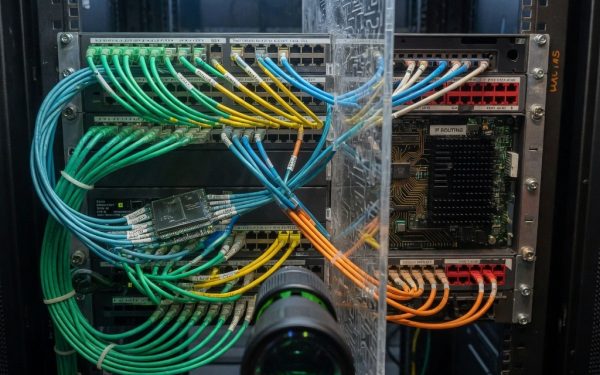
The Anatomy of a Networking Halfway House: Where Layer 2 Meets Layer 3
Halfway house configurations occur when network devices operate between Layer 2 and Layer 3 functions, creating instability and security risks.
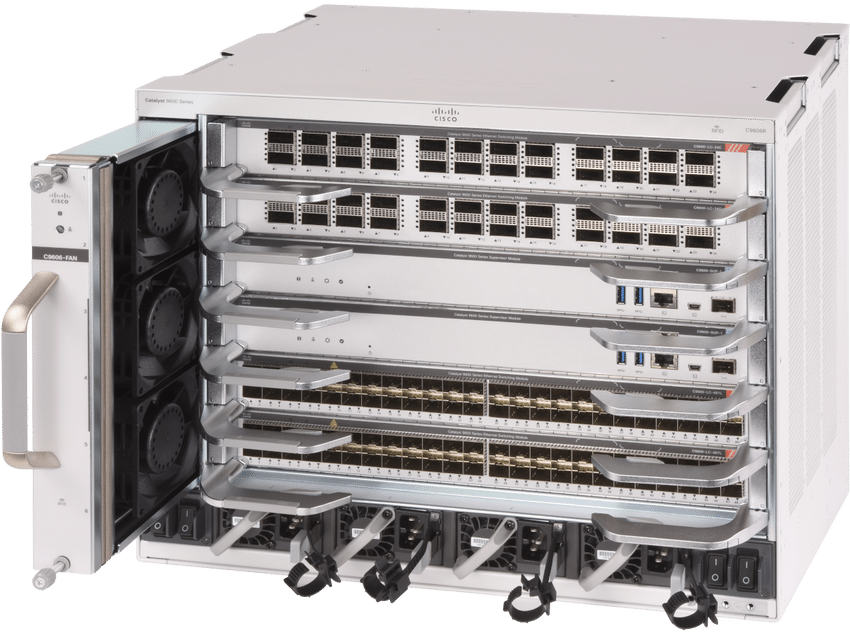
Hierarchical Network Design
Physical and Logical Addresses A person’s name is typically a constant identifier, much like a MAC address in computer networking. A MAC address is a unique, hardware-based identifier assigned to a network interface card (NIC) and remains unchanged regardless of where the host is connected on the network. It serves as the host’s physical address,...
How Stay At A Halfway House Should Be Like?
A halfway house in networking isn’t what most IT professionals think it is. Ask a CCNA candidate what sits between a standard Layer 2 switch and a full Layer 3 router, and they’ll describe a device that does a bit of both but excels at neither. That conceptual gray zone is exactly where the term...
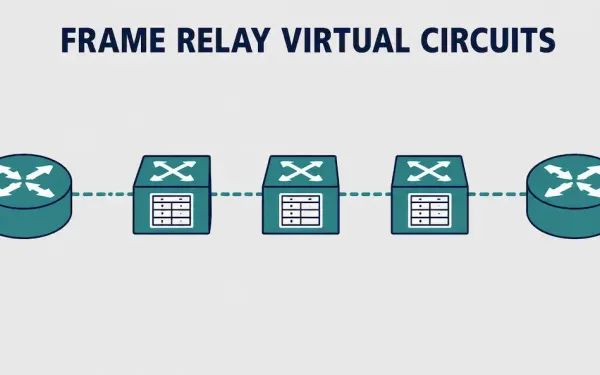
Frame Relay Virtual Circuits (VCs): PVCs, SVCs, and DLCIs Explained
We’ve already covered the fundamentals of Frame Relay as a WAN encapsulation protocol. This guide goes deeper into the mechanism that makes Frame Relay work: the virtual circuit. Frame Relay provides connection-oriented data link layer communication specifically through virtual circuits, and understanding exactly how those circuits get established, identified, and torn down is what separates...
What is RSTP and Rapid PVST+: Exclusive Details
RSTP- IEEE 802.1w is the advanced version of STP, providing faster convergence than CST but holding with the same single root bridge in the topology. Most parameters in RSTP are the same as STP, so users who understand STP can effortlessly configure the RSTP. Rapid PVST+ is Cisco’s proprietary implementation of RSTP that operates on...
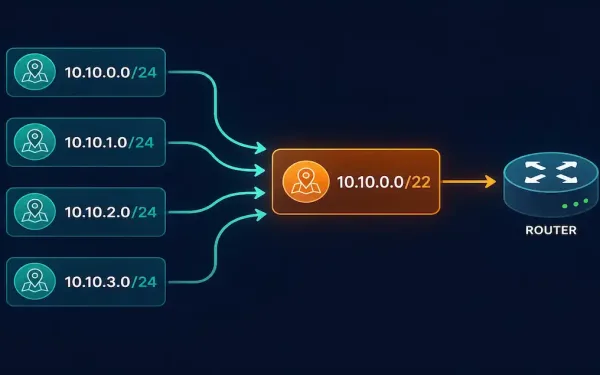
Summary Static Routes: How to Calculate and Configure Them
Static routes are manually configured entries in a router’s routing table that direct traffic to specific destinations. Unlike dynamic routing protocols such as OSPF or EIGRP, static routes offer simplicity and precise control, which makes them a natural fit for small networks, stub networks, or default gateways. For CCNA and CCNP study, mastering static routes...
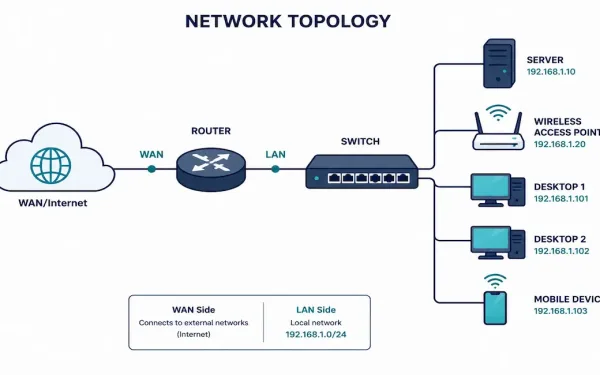
Small Network Topologies: Design, Configuration, and Growth Planning
Most businesses don’t run sprawling enterprise networks — they run small ones: a single router, one or two switches, a handful of access points, and a modest number of users. Understanding how to design, secure, and eventually grow a small network well is one of the most practically useful skills in networking, precisely because it’s...
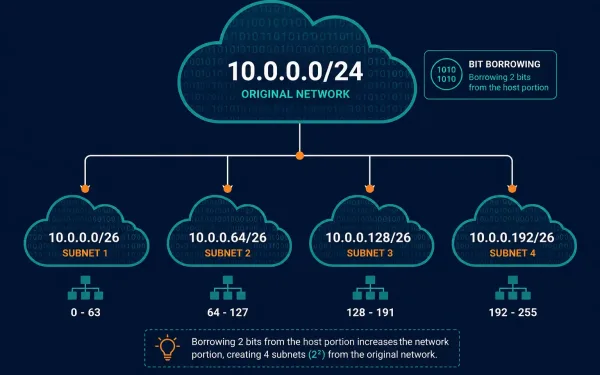
Introduction to Subnetting: How and Why to Divide a Network
Subnetting lets a network administrator divide a large network into smaller, more manageable sub-networks by borrowing bits from the host portion of an IP address. Rather than running one enormous flat network, subnetting adds a third level to the addressing hierarchy, network, subnetwork, and host, giving administrators far more control over how a network actually...