point-to-point link
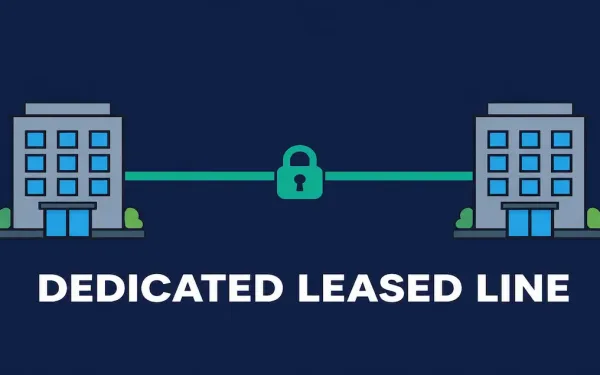
Leased Lines: What They Are and How They Work
A leased line is a dedicated communication channel between two or more locations. It’s usually a pre-established WAN connection running from a customer’s premises to a service provider’s network, reserved exclusively for that customer’s traffic in exchange for a fixed recurring fee. Because the connection isn’t shared with other subscribers, it delivers guaranteed, consistent bandwidth...
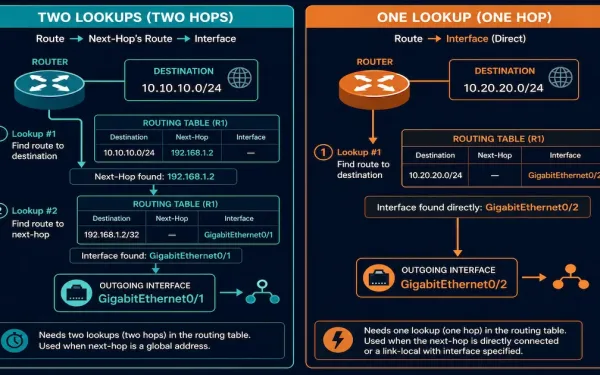
Static IPv6 Routes: Next-Hop Address vs. Directly Connected (Exit Interface)
A static IPv6 route can be built two different ways: pointing only at a next-hop IPv6 address, or pointing at an exit interface directly. These aren’t just two syntax options — they produce genuinely different lookup behavior in the router, and understanding that difference is core CCNA and CCNP material. This guide covers both forms,...
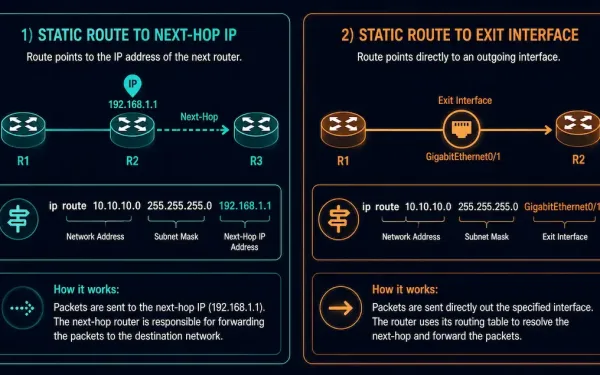
Directly Connected Static Routes: Configuration and When to Use Them
A static route can point to a destination in one of two ways: by specifying the next-hop IP address, or by specifying the exit interface directly. This second form — using the exit interface — is what’s called a directly connected static route, and understanding when and why to use it is a useful piece...