Prefix Length
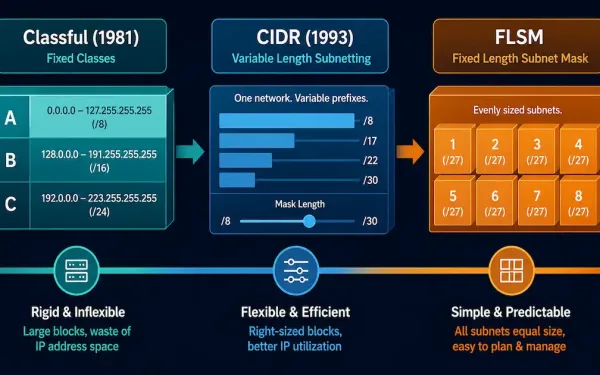
From Classful Network Addressing to CIDR and Fixed-Length Subnet Masking
IPv4 addressing didn’t arrive in its modern form all at once. It started as a rigid, class-based system, was replaced by a far more flexible scheme called CIDR, and along the way developed subnetting techniques — starting with Fixed-Length Subnet Masking (FLSM) — for splitting a network into smaller pieces. Understanding this progression matters for...
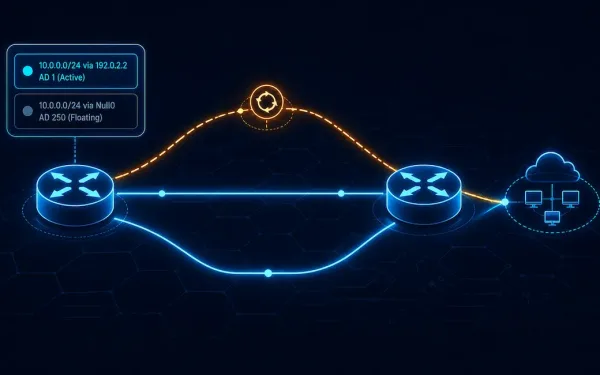
IPv6 Route Command: Configuring Static Routes on Cisco Routers
If you already know how to configure a static route for IPv4, configuring IPv6 static routes will feel familiar — the syntax and underlying logic are nearly identical, with only minor differences. IPv6 static routes are configured using the ipv6 route command in global configuration mode. The general syntax is: The parameters here map almost...
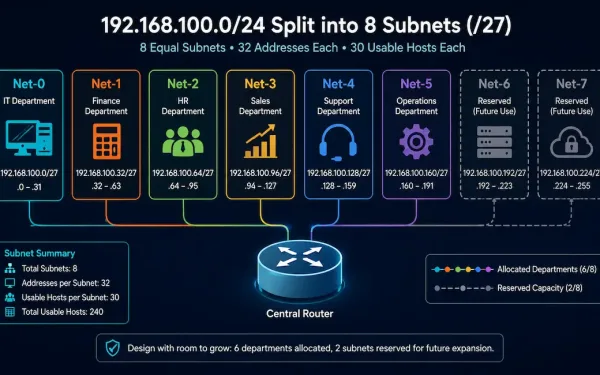
Subnetting Based on Network Requirements
Sometimes the number of subnets an organization needs matters more than the number of hosts each one supports. A company separating traffic by department, for instance, cares primarily about ending up with enough distinct subnets, one per department, even if that means each subnet has more host capacity than strictly necessary. This guide works through...
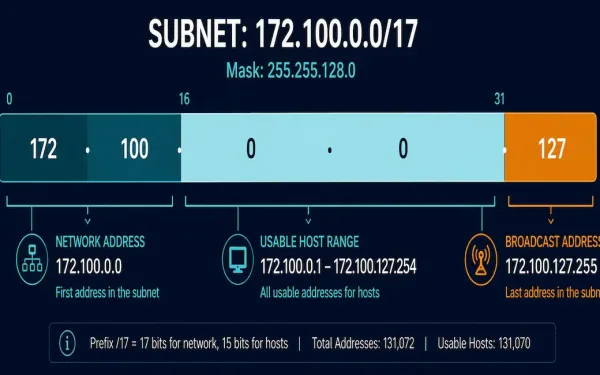
Network Prefix, Network Address, Broadcast Address, and Host Address Explained
Every IPv4 subnet has a handful of specific addresses with fixed roles: one identifies the network itself, one is reserved for broadcasting to every device on it, and the rest are available for hosts. This guide covers exactly how to calculate each one, using prefix notation and binary math, with one consistent worked example carried...