route summarization
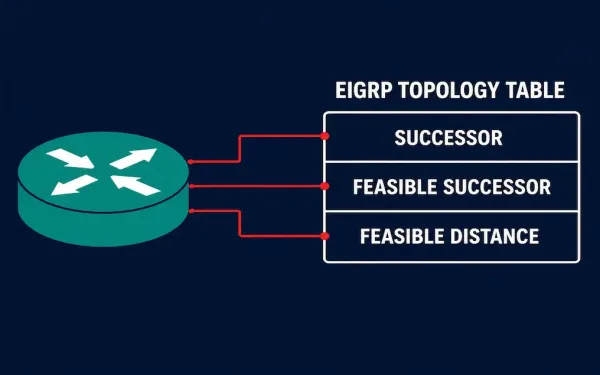
EIGRP Topology Table: The Complete Guide to Successors, Feasible Successors, and DUAL
The EIGRP topology table is the database that separates EIGRP from every distance-vector protocol that came before it. It holds every loop-free route an EIGRP router learns from its neighbors, not just the one it currently uses. That single design choice is why EIGRP can recover from a link failure in milliseconds instead of waiting...
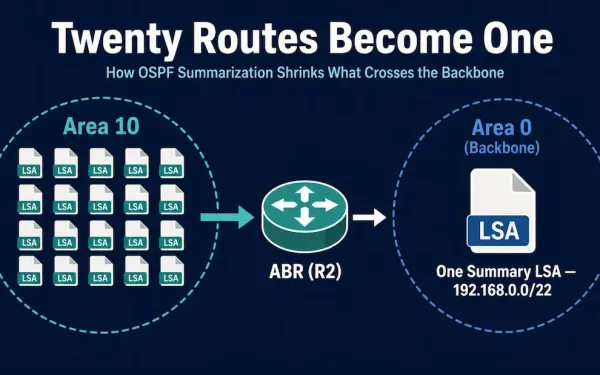
OSPF Route Summarization: Inter-Area and External, with Both Commands
Route summarization converts multiple specific routes into a single, condensed route, shrinking routing tables and reducing the volume of routing updates that need to flood through a network. This guide covers both types of OSPF summarization — inter-area (at an ABR) and external (at an ASBR) — including the specific command for each, since one...
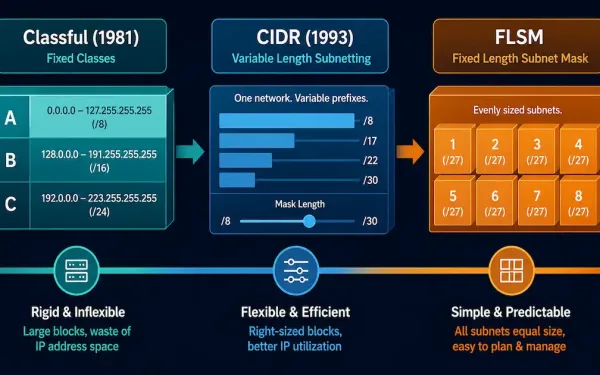
From Classful Network Addressing to CIDR and Fixed-Length Subnet Masking
IPv4 addressing didn’t arrive in its modern form all at once. It started as a rigid, class-based system, was replaced by a far more flexible scheme called CIDR, and along the way developed subnetting techniques — starting with Fixed-Length Subnet Masking (FLSM) — for splitting a network into smaller pieces. Understanding this progression matters for...
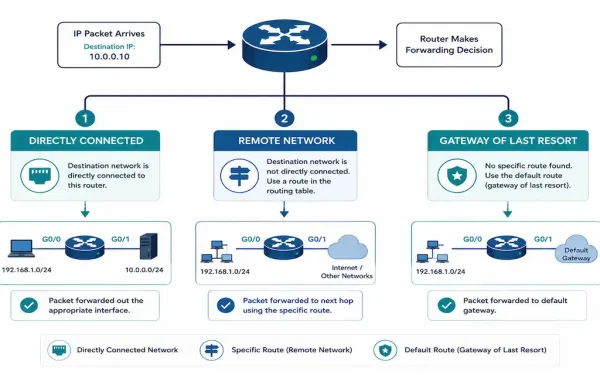
Router Path Selection: How Routers Determine the Best Path
Every time a router receives a packet, it runs through the same basic decision sequence: is the destination directly connected, is it a remote network reachable through a known route, or is there no known route at all? Understanding this sequence — and exactly how a router picks between multiple valid paths when more than...