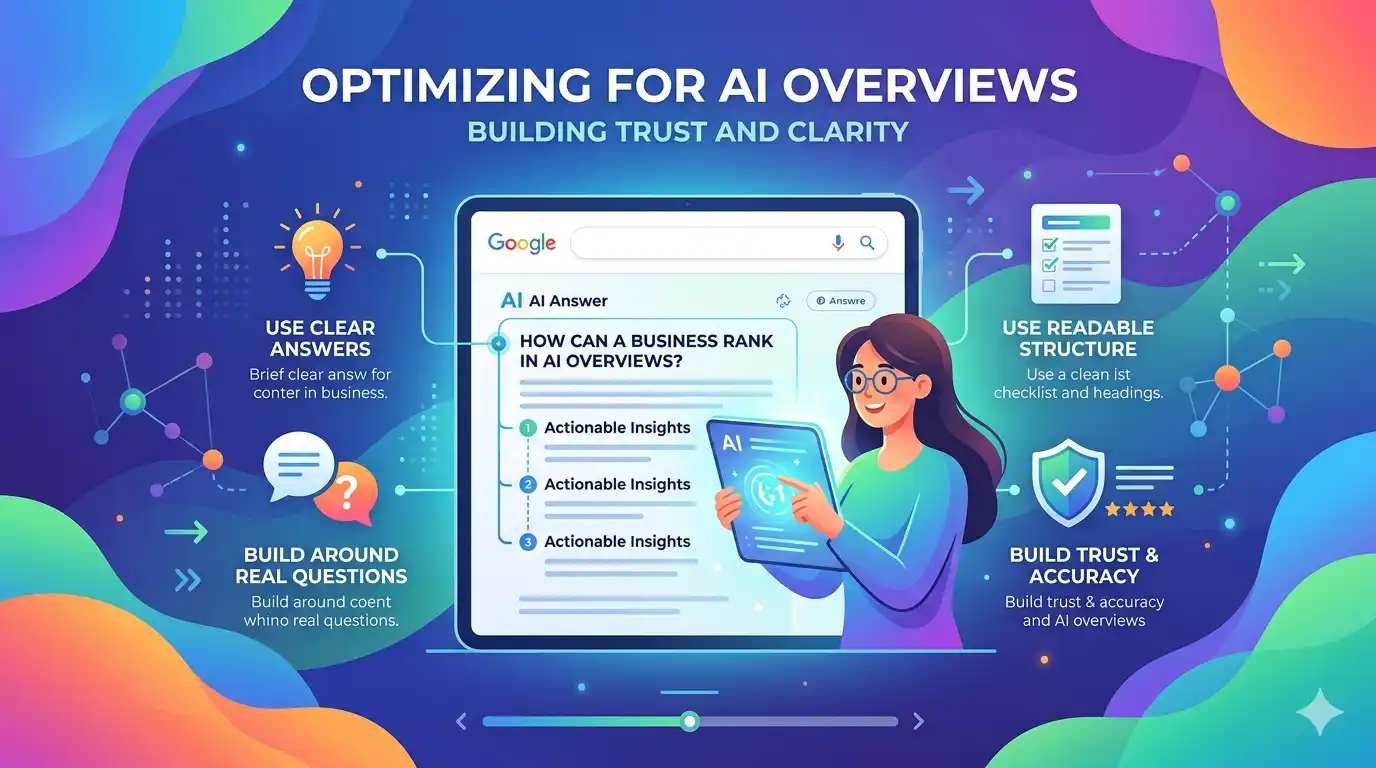
AI Overviews have changed how people meet search results. A website may appear there when its content gives clear, trusted answers. That does not happen through keywords alone. It takes structure, accuracy, and useful content that search systems can read with ease.
Start With Clear Answers
People use search because they want a direct answer. To show up in AI overviews, a website needs content that responds with clarity. Short sections, plain language, and strong topic focus can help with this. The goal is to make each answer easy to understand.
A page should not hide the main point deep in the copy. It helps to answer the main question near the top. Then the rest of the content can add detail and context. This may improve how search systems judge the value of the page.
Build Content Around Real Questions
Content works better when it reflects how people ask questions. A service page, FAQ, or blog can answer one main topic at a time. This helps keep the message focused and useful. It also helps readers find what they came for faster.
Helpful Content Areas to Review
Useful areas to check include:
FAQs that answer common customer questions
Service pages with clear details
Blog posts that explain one topic well
Location content with accurate business facts
These sections can help search systems understand the site better. They also make the content easier for people to scan. Clear answers may help improve the chance to show up in AI overviews. The key is useful detail without clutter.
Use Structure Search Systems Can Read
Search systems need signals that explain what a page is about. Headings, internal links, schema, and clean formatting can support that. A simple layout helps the content feel organized. It also helps connect related topics across the site.
Structured data can help define services, reviews, FAQs, and business details. It may help improve how search tools understand the content. That makes the page easier to match with a clear question.
Build Trust Through Accurate Details
AI Overviews often rely on content that appears useful and reliable. That makes accuracy important across service details, contact data, and claims. If facts change, old content can weaken the signal. Regular review helps keep the website more dependable.
Trust can also come from clear author details and useful examples. Reviews, citations, case details, and local facts may support credibility. The content should avoid vague promises or inflated claims. A steady, factual tone can make the page feel more reliable.
Keep the Website Easy to Use
A helpful website should be fast, clear, and simple to move through. Slow load times or crowded layouts can hurt the user experience. Mobile design matters because many searches start on phones. Easy access to answers can support better site value.
A professional digital marketing service can also help with content audits, technical fixes, and answer-focused structure. This may help improve the chances of visibility without relying on guesswork or forced keywords. It also helps keep content, design, and technical SEO on the same practical path.
Websites may gain more visibility in AI overviews when content is clear, useful, and well-structured. Strong answers, clean layout, accurate facts, and helpful links all play a role.
There is no single trick that guarantees inclusion. A practical content plan gives search systems and readers better reasons to trust the site.