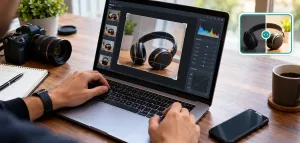
Why Visual Design Still Determines Whether Anyone Pays Attention
The modern marketing environment is built almost entirely on visual attention. Before a potential customer reads a headline, clicks a call-to-action button, or shares a social post, they decide within milliseconds whether the visual presentation warrants their time. That decision happens faster than any written message can intervene. For small businesses, startups, solopreneurs, and content creators, the practical consequence is clear: investing in design is no longer optional, but it does not need to be expensive.
The good news is that the market for affordable online graphic design services has expanded considerably. In 2026, you can access professional design support through three distinct models: self-service DIY tools with drag-and-drop editors, freelance marketplaces where you hire designers per project, and flat-rate subscription services where a dedicated designer handles ongoing work for a monthly fee. Each model suits different use cases, budgets, and levels of creative involvement from the buyer.
The five platforms covered in this guide represent the most widely used and most accessible options across all three categories. They vary significantly in price, quality ceiling, and time investment required from you. Understanding which model fits your actual workflow — not just your current project — is the most important decision before committing to any of them.
Fiverr — Freelance Marketplace for One-Off Projects
Fiverr is a global freelance marketplace where independent designers set their own prices, publish service packages, and deliver completed work directly to clients through the platform’s project management interface. The platform hosts tens of thousands of designers across every visual discipline, including logo design, social media graphics, infographics, packaging, web UI, and print materials.
Pricing on Fiverr spans an exceptionally wide range. Entry-level gigs from less experienced sellers start as low as $5 to $25, though quality at that tier is inconsistent and buyers should review portfolios carefully. Mid-level designers typically charge $50 to $200 per project for work such as logos, business cards, and marketing banners. Fiverr Pro — the platform’s verified tier featuring designers who have passed a vetting process — starts around $100 to $300 for logo work and can reach $5,000 for comprehensive brand identity packages. Browse graphic design services on Fiverr.
The primary advantage of Fiverr is access to global design talent at highly competitive prices. The main risk, particularly at the lower price tiers, is receiving template-based work rather than original design. Before hiring, request that the designer confirm all assets will be provided in editable vector formats (AI, EPS, or SVG), check whether the gig includes source files in the package pricing, and reverse-image-search portfolio samples to verify they are not resold stock assets. For one-off projects where budget is tight and you have the time to review options carefully, Fiverr is one of the most cost-effective routes to professional design output.
Canva — DIY Design Tool for Non-Designers
Canva is a browser-based design platform that enables anyone to create professional-quality visual content without any prior design knowledge or software experience. It operates on a template-first model: you select a layout sized for your intended output — social post, presentation slide, logo, email header, brochure, or over a thousand other formats — and customise text, colours, fonts, and imagery using a drag-and-drop interface. Start designing on Canva.
Canva’s pricing in 2026 has been restructured from its earlier tiers. The Free plan remains genuinely useful, providing access to a large template library, over one million free photos and graphics, real-time collaboration, and 50 monthly AI credits at no cost. The Pro plan is priced at $15 per month billed monthly, or $120 per year (equivalent to $10 per month on annual billing), and adds brand kits, a background remover tool, Magic Studio AI features, premium template access, and 500 monthly AI credits. The Business plan (formerly Canva Teams) costs $20 per user per month and adds approval workflows, team brand governance, and multi-user administration. Canva Enterprise is available at custom pricing for organisations with 150 or more seats.
For small business owners, bloggers, content marketers, and social media managers, Canva’s Free plan covers the majority of day-to-day content creation needs. The Pro plan becomes worthwhile as soon as you need consistent brand colours across multiple content formats, the background remover for product photography, or access to the expanded premium asset library. The platform’s key limitation is that it produces polished template-based design rather than bespoke creative work — if your brand requires genuinely original visual identity, Canva is a content production tool, not a replacement for a professional designer.
PicMonkey — Photo Editing and Design for Small Business Content
PicMonkey is a Seattle-based online design and photo editing platform that sits between a basic template tool and a full-featured image editor. It is particularly strong for photo-heavy content — social media posts that incorporate real photographs, promotional graphics built around product images, and retouched photography for business profiles. Unlike Canva, which leans heavily on illustration-based templates, PicMonkey gives users more direct control over photo editing tools including selective colour adjustments, skin smoothing and touch-up features, and filter stacks.
Pricing is subscription-based with no permanent free plan, though PicMonkey does offer a free trial period. The Basic plan starts at $7.99 per month or $72 per year and covers photo editing, design tools, and 1GB of cloud storage. The Pro plan costs $12.99 per month or $120 per year and adds higher-quality image output, unlimited storage, premium fonts, and access to Shutterstock’s stock image library. The Business plan, aimed at small teams, is priced at $23 per user per month and adds team collaboration features and brand management tools. PicMonkey integrates with Instagram, Google Drive, OneDrive, Meta for Business, and Buffer.
PicMonkey suits small company websites and bloggers who produce photo-centric social media content regularly and want more photo editing depth than Canva’s standard toolkit provides. Its absence of a free tier is a meaningful competitive disadvantage relative to Canva — buyers who are still evaluating design tools should use the free trial to assess whether PicMonkey’s photo editing strengths justify the subscription cost before committing. For teams that primarily need template-based design with minimal photography work, Canva’s free plan delivers comparable output at no cost.
Upwork — Freelance Marketplace for Ongoing or Complex Design Needs
Upwork is a professional freelance platform that operates on a fundamentally different model from Fiverr. Where Fiverr is product-centric — designers publish fixed service packages that buyers purchase directly — Upwork is talent-centric. Clients post job descriptions specifying their project scope, timeline, and budget, and qualified freelancers apply with proposals. Alternatively, clients can search Upwork’s talent pool directly and extend private invitations to specific freelancers.
Graphic designers on Upwork set their own hourly or project-based rates. Entry-level designers typically charge $15 to $35 per hour, mid-level designers with three to five years of experience range from $35 to $75 per hour, and senior specialists in areas such as brand identity, packaging, or UI design can exceed $100 to $150 per hour. Upwork enforces identity verification for freelancers, requires real names, and builds a job success score from client reviews — a metric that covers both quality of output and reliability of communication. This verification layer makes Upwork’s reputation system meaningfully more trustworthy than platforms where anonymous handles are the norm.
Upwork works best when you have ongoing design needs that benefit from building a relationship with a specific designer over time — someone who learns your brand guidelines, visual style, and revision preferences and can apply them consistently across multiple deliverables. It is less suited for quick, budget-constrained one-off projects where the client selection and proposal evaluation process adds time you do not want to spend. For companies with defined design requirements and sufficient project scope to justify a proper brief and onboarding investment, Upwork provides access to professional design talent at rates that are competitive with local agencies. Post a design project on Upwork.
Design Pickle — Flat-Rate Subscription for High-Volume Design Output
Design Pickle is a productized creative service founded in 2015 and headquartered in Scottsdale, Arizona. It operates on a subscription model rather than per-project billing: clients pay a fixed monthly fee and submit an unlimited queue of design requests through the platform’s project portal, receiving completed work on a one to two business day turnaround per active request. The practical ceiling on throughput is set by the number of creative hours included in your subscription tier — a single request is worked on at a time, so volume depends on how quickly you can submit, review, and close each brief.
Pricing as of 2026 has shifted toward a consultation-based quote model, and Design Pickle no longer publicly publishes standardised tier pricing. Historical advertised tiers ranged from approximately $499 to $1,918 per month before the pricing model changed; current monthly rates are negotiated based on the volume of creative hours required by the client. Annual billing delivers a meaningful discount relative to monthly billing — one published reference puts the annual rate at approximately $1,279 compared to a $1,918 monthly rate for a comparable tier. Design Pickle markets its service to small and mid-market businesses that need consistent, high-volume design output and would otherwise rely on a mix of freelancers, an in-house junior designer, or a local agency.
The flat-rate model’s main strength is budget predictability and the absence of per-project negotiation overhead. Its main limitation is throughput: because requests are handled sequentially rather than in parallel, companies with multiple simultaneous urgent deadlines will encounter bottlenecks. The service works most efficiently for marketing teams or business owners who have a steady, predictable stream of similar design assets — social media graphics, ad creatives, presentation slides, and print materials — rather than sporadic large projects. For companies producing ten or more design assets per week, Design Pickle’s model can undercut the combined cost of freelancers on a per-deliverable basis. For companies with occasional design needs, Fiverr or Canva will be more economical.
How to Get the Most From Any Online Graphic Design Service
Choosing a platform is only part of the equation. How you engage with it determines the quality of output you receive, regardless of which service you use.
The single most important variable is brief quality. Every design platform — whether you are using a template editor, hiring a freelancer, or working with a subscription service — produces better results when the creative brief is specific. A brief that states “design a social media banner for our product launch in navy and white, targeting millennial professionals, with the headline ‘Work smarter from anywhere’ and our logo in the top left” will consistently outperform one that says “make something for our launch.” Specific briefs reduce revision cycles, reduce wasted time, and ensure the final output actually serves the business purpose it was created for.
If you are working with freelancers on Fiverr or Upwork, the following practices improve outcomes consistently. First, prioritise designers who request a brief or ask clarifying questions before beginning — this signals professional practice rather than template-first execution. Second, if you find a designer whose style and communication match your needs, aim to build a long-term working relationship rather than treating every project as a separate hire; the time savings on briefing and the quality lift from familiarity with your brand are tangible over multiple projects. Third, provide feedback in design language where possible — reference specific colours with hex codes, reference existing designs you want to match in tone, and specify exactly which elements are working and which are not, rather than simply saying “redo it.”
For subscription services and DIY tools, the most important practice is maintaining a centralised brand kit — documented colour palettes, font pairings, logo files in all required formats, and examples of approved design styles. Every minute spent assembling these assets once saves repeated effort across dozens of future projects. Most platforms, including Canva Pro, Design Pickle, and PicMonkey Business, include built-in brand kit functionality that makes this even easier to maintain and share with collaborators.
Which Platform Is Right for Your Business?
Matching the right platform to your actual needs requires honest assessment of three variables: design volume, budget, and how much time you can spend directing or creating the work yourself.
For businesses with occasional one-off needs — a new logo, a set of business cards, a one-time campaign banner — Fiverr offers the widest talent range at the lowest entry cost, with quality scaling predictably from budget tiers upward. For businesses that produce regular social media content and want to control the creative process themselves, Canva’s Free or Pro plan is the most efficient starting point in 2026. For teams that need photo-editing depth alongside template design, PicMonkey’s Pro plan adds meaningful capability over Canva at a comparable price point. For businesses hiring a designer for ongoing or complex work who want professional accountability and vetting, Upwork offers a more verified talent pool than most freelance alternatives. For marketing teams with consistent, high-volume graphic design needs and the budget to sustain a subscription, Design Pickle’s flat-rate model provides predictable output at lower per-asset cost than hiring freelancers for equivalent volume.
The platforms are not mutually exclusive. Many small businesses use Canva for day-to-day social content, Fiverr for one-time brand or print projects, and Upwork for anything that requires senior design expertise. Understanding the strengths and limitations of each model — rather than expecting one platform to solve all design needs — produces better outcomes than committing exclusively to a single service.
Conclusion
The availability of affordable online graphic design services in 2026 means that professional visual output is no longer a barrier to entry for small businesses and independent creators. The platforms in this guide cover every practical use case: self-service creation, on-demand freelance hiring, and dedicated subscription-based design capacity. Pricing is more competitive than at any previous point, with genuinely capable options available starting from free.
The decision is not which platform is objectively best — it is which model matches how your business actually creates and uses design. A solopreneur creating content three times a week should not be on Design Pickle. A marketing team producing thirty assets a month should not be relying exclusively on Fiverr one-off gigs. Matching the model to the workflow is what converts a graphic design service from an occasional expense into a consistent competitive advantage.
Whichever platform you begin with, start with a clear brief, document your brand guidelines before your first project, and treat your first few outputs as calibration — not finished product. The quality of online design services rewards clients who invest in the upfront work of articulating what they need.