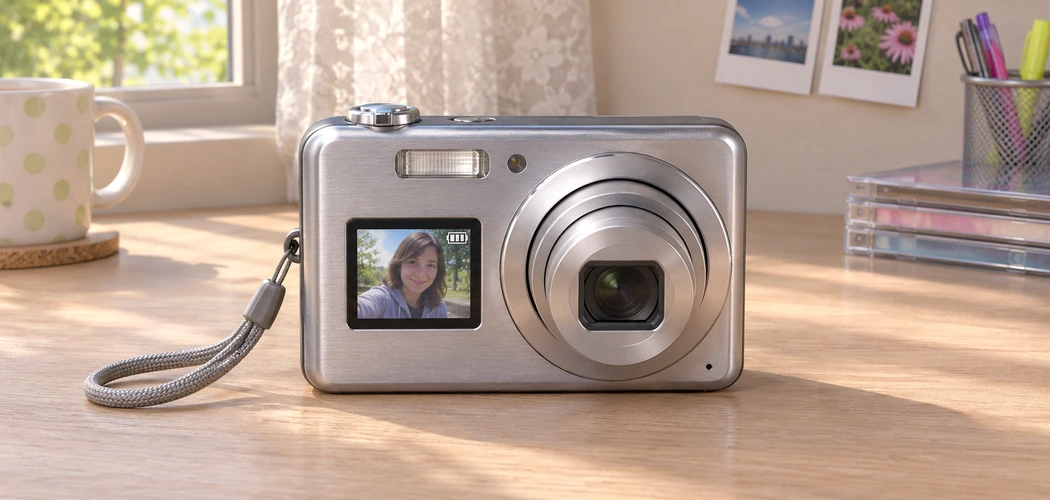
The Samsung PL120 is an early-2010s compact digital camera with a small front display for framing self-portraits. It has a 14.2-megapixel CCD sensor, a fixed 5× optical zoom lens, and a conventional rear screen. It saves still photos as JPEGs and records video at up to 720p. Its main appeal today is the combination of a pocket-sized body, optical zoom, physical controls, and a second screen you can see from in front of the lens.
If you are buying one used, put condition and included accessories first. Test both displays, confirm the zoom works through its full range, and make sure the seller supplies a battery and a working way to charge it. An example that has only been shown powering on can still have a faulty lens, a worn battery, or a card slot that fails to save photos.
Samsung PL120 Specs at a Glance
| Feature | Samsung PL120 |
|---|---|
| Image sensor | 1/2.3-inch CCD, about 14.2 effective megapixels |
| Lens | Fixed 5× optical zoom, 26–130 mm equivalent |
| Lens aperture range at the zoom extremes | f/3.3 at wide angle, f/5.9 at full telephoto |
| Displays | 2.7-inch rear LCD and 1.5-inch front LCD |
| Still-image format | JPEG |
| Maximum still-image size | 4320 × 3240 pixels |
| Maximum video resolution | 1280 × 720 |
| Removable storage | microSD-format card, with microSD and microSDHC listed in contemporary specifications |
| Battery | Rechargeable Samsung BP70A-type battery |
Samsung’s PL120 support page hosts documentation for the camera. The DPReview product listing offers a second reference for the model. When a seller lists an accessory or card, check the instruction manual and ask for a photograph of the camera’s model label. Similar Samsung compacts can look alike in a listing, and the “DualView” name alone does not identify which one you are buying.
Use the lens specifications for a realistic idea of framing. At the wide end, there’s room for a group at a table or a building across a narrow street. At the telephoto end, you can frame a distant detail more tightly. Optical zoom changes the lens framing. Digital zoom enlarges a portion of what the sensor captures, which can reduce detail. For a used unit, check where the camera switches from optical to digital zoom so that you know what you are evaluating.
How the Front and Rear Screens Work
The front screen is the feature that distinguishes the PL120 from many ordinary compact cameras. Put the camera down on a stable surface, activate the appropriate front-display option, and look toward the lens while using the small screen to check framing. The rear screen is more useful when you are behind the camera, adjusting controls, or reviewing what you captured.
If you are buying used, ask for a short video showing the front LCD turning on and a photo being taken with it active. A still photo of the body can show scratches but tells you little about how either screen works. Check whether the displays flicker, have dark areas, or respond inconsistently. A scratched front cover might be tolerable for rough framing. A dead panel is more significant if you want the camera for self-portraits.
The front display is small, so use it to check whether heads and shoulders fit within the frame. Review focus and facial expressions afterward on the rear display. For a group photo, start with the lens at its wide setting, leave some space around the edges, and use the self-timer if a stable surface is available. A quick test shot can catch someone being cut off before the group disperses.
What the Shooting Modes Can Do
The PL120 offers modes such as Smart Auto, Program, scene settings, and Movie. Smart Auto can be a starting point for quick snapshots. Program gives access to camera settings such as white balance or exposure compensation, subject to the selected mode. The mode list does not include dedicated aperture-priority and shutter-priority modes, and the camera saves JPEG stills.
In daylight, start at the wide end of the lens and use a half-press to confirm autofocus before taking a picture. If a bright window makes a person’s face look dark, change your position or use an available exposure setting and check the result. The display can help you judge framing and obvious blur, but it is worth reviewing a sample at a larger size on another device before deciding how much detail the camera captures.
When light is limited, the camera may choose settings that show more noise or leave moving subjects blurred. At full zoom the lens admits less light than it does at the wide end. You can often improve the practical result by moving closer, zooming out, or finding better light. A steady surface can help with camera shake when the subject is still. For moving subjects, test several shots and judge the result on the actual device you’re buying.
A newer phone and an old compact offer different shooting experiences. A phone is usually the more convenient choice for sharing files right away. If you’re comparing the kinds of camera controls available today, NetworkUstad’s Huawei Pura 90s Pro Max review provides an example of a modern camera-focused phone. The PL120 is more relevant if you specifically want a small dedicated camera with physical zoom and a front LCD.
Storage, Battery, and Transferring Files
Bring a known-working, supported microSD-format card if the seller agrees to let you test it. The camera uses the small card itself, rather than the full-size SD adapter that some cards ship with. Check the documentation for compatible formats and capacities. If the camera offers to format a card, use a spare or back it up first because formatting erases its contents.
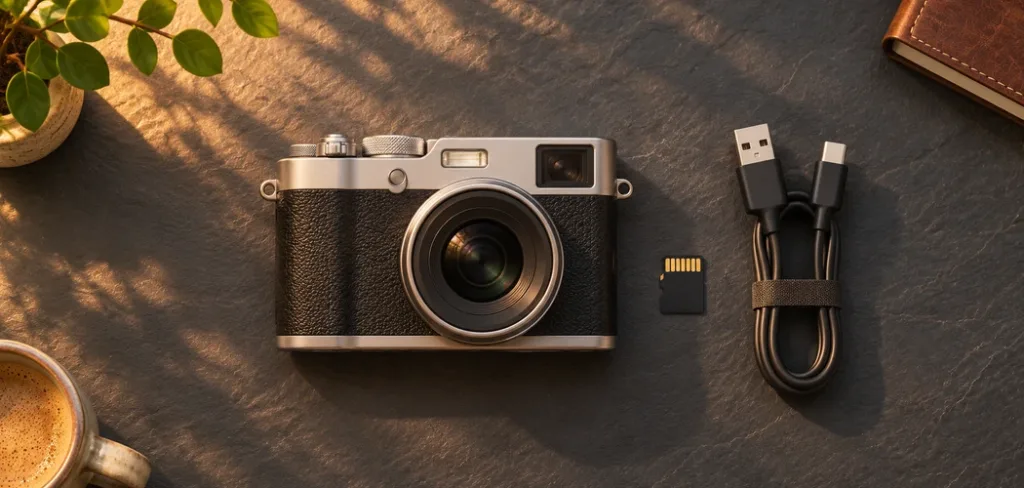
A simple way to transfer files is to remove the card after turning the camera off, then read it with a compatible card reader. You can also use the supported cable if the seller includes it and your device can read the camera that way. If you intend to edit on a phone, check what card reader or adapter it accepts before you buy. The PL120’s documentation does not describe Wi-Fi or smartphone remote control, so plan for a wired transfer or card reader.
Battery condition varies with age, storage, and use. An old battery that reaches the full indicator may still run down much faster than expected. Ask whether the battery is original, whether the charger or cable is included, and whether the camera turns off unexpectedly when zooming or using flash. Price any missing accessories separately so you can judge the total cost of getting the camera ready to use.
If you intend to record video, ask the seller for a short original clip with sound and try playing it on the device you plan to use for editing. The manual lists AVI with Motion JPEG video. A player or editor may handle that format differently than a newer phone’s clips. Testing an original file also lets you check for problems that may be invisible in a compressed preview posted to the sales listing.
Used Samsung PL120 Buying Checklist
- Confirm the model. Ask for a clear picture of the model label and make sure the accessories shown are included.
- Start it more than once. Watch the lens extend and retract. Listen for repeated grinding or hesitation and check whether it reaches both ends of the optical zoom range.
- Check focus and the sensor. Save a photo of a detailed subject and another of a plain, evenly lit surface. View them on a separate screen if possible.
- Test both LCDs. Check the rear display in playback and the front display in a supported capture mode.
- Check storage. Take a photo and a short video, play them back, and confirm they can be read from the card outside the camera.
- Inspect the doors and controls. Check that the battery and card door latches, the buttons respond, and the charging or data connection works with the supplied cable.
- Decide based on total cost. Add any replacement battery, cable, or card. If you cannot test in person, check the return conditions and ask for sample files before ordering.
Ask for useful samples when buying online
Ask for a few recent files taken with the camera for sale. A daylight photo at the wide setting and a second example at full optical zoom will give you more context than a single image of the camera on a table. For a lens check, ask for a subject with detail near the centre and toward the edges. A clip demonstrating the zoom and front display can help confirm those parts move or switch on as expected. Ask for the original files where possible so you can view them at full size.
Compare the samples with the seller’s condition notes and ask about anything that would affect your use. If defects appear only in a particular lighting condition or zoom position, ask whether the seller can reproduce them. Save the listing and any written promises about included accessories so you can inspect the same items when the camera arrives.
The PL120 is worth considering if you want a small dedicated camera with an optical zoom and a front display. For a used purchase, prioritize a working lens, two usable screens, and a verified way to save and transfer photos. Those details will matter more in daily use than minor scratches or an original box.
Factory specifications come from published documentation. Battery life, included accessories, and condition depend on the individual camera. Confirm the model and test the unit before buying where possible. The images are illustrations.