Asad Ijaz
Asad Ijaz Khattak is the lead networking architect and Editor at NetworkUstad. A Cisco Certified Network Professional (CCNP) and CCNA, he writes in-depth networking and cybersecurity tutorials to help readers build secure connections.
OSPF Route Summarization – Exclusive
Route summarization helps convert multiple routes into a single route, which reduces routing tables. After converting a large routing table into a small routing table, it is propagated into the backbone area. We have already discussed the type of LSAs in the previous article. The LSA types 1 and 2 are generated inside each area,...
How to Configure Multiarea OSPF
OSPF can be implemented as single-area OSPF or multiarea OSPF. The basic steps for a single area or multiarea OSPF implementation are the following:- Gather the network requirements and parameters – The first step for implementing multiarea OSPF is the collecting network requirement and important parameters. The requirement includes the number of hosts and required...
OSPF LSA Types – Exclusive Explanation
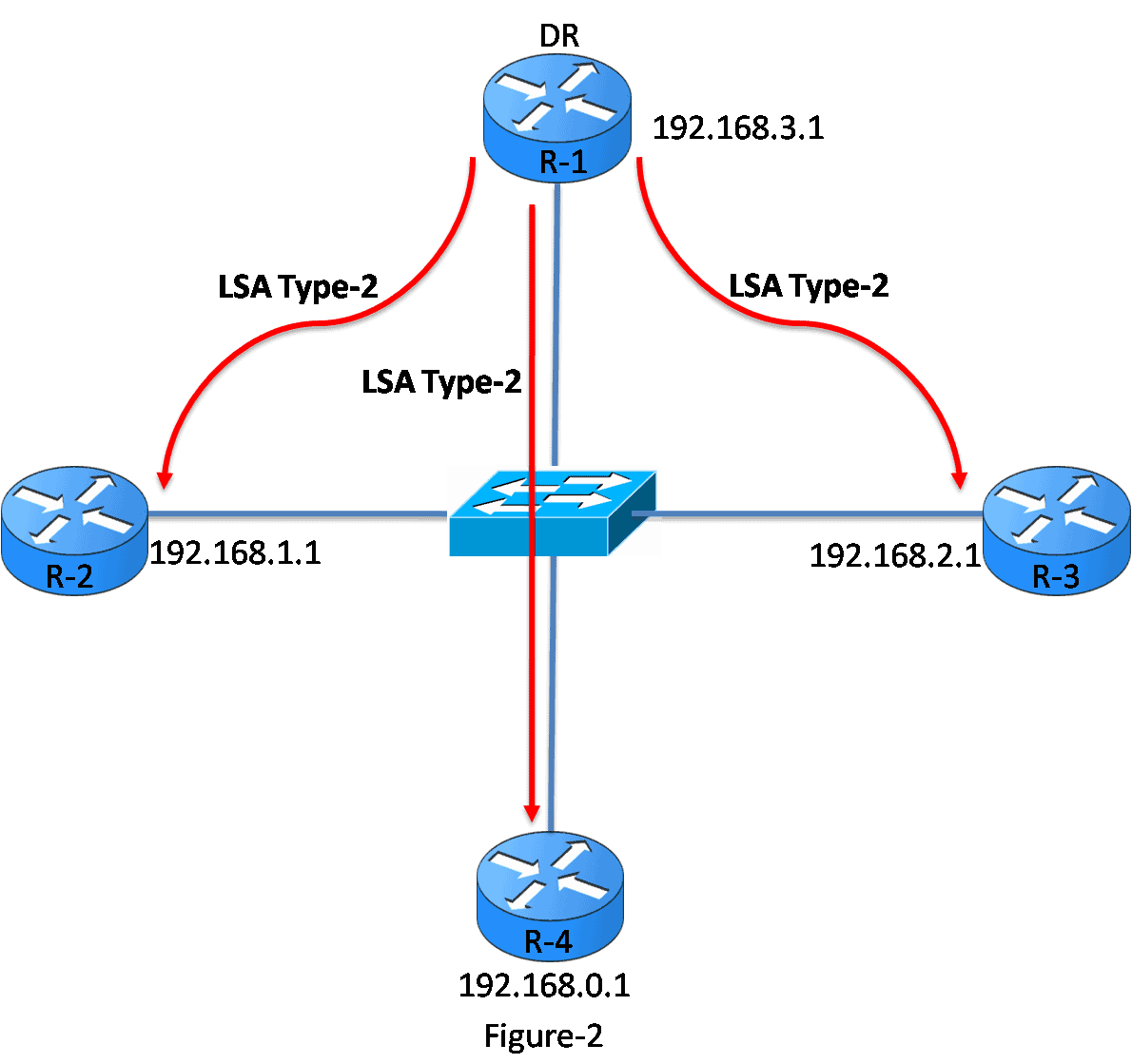
OSPF is a link-state routing protocol that is used to find the best path between the source and the destination. The SPF algorithm is used to determine the best path. OSPF enabled routers exchange LSAs to update and maintain LSDBs. LSAs act as database records and provide specific OSPF network details. Currently, 11 different types...

Types of Routers in OSPF – Exclusive
OSPF uses four different types of routers with a unique role and set of defining characteristics within the hierarchy. The routers control the traffic that goes in and out of areas. The OSPF routers are categorized based on the function they perform in the routing domain. The four types of routers are following:- Internal router–...
How to OSPF MD5 Authentication
OSPF supports routing protocol authentication using MD5 Authentication. It is more secure than plain text authentication. It uses the MD5 algorithm to calculate a hash value from the contents of the OSPF packet and a password and then the hash value is transmitted in the packet. The receiver side, which knows the password, calculates its...
Introduction to OSPF Authentication
An attacker with a laptop and a copy of Wireshark can inject false LSAs into an OSPF domain in under 30 seconds if the network uses null authentication. This is not a theoretical attack. A 2024 SANS survey found that 38% of enterprise OSPF deployments still run with no authentication configured, despite RFC 5709 and...
OSPF Hello and Dead Intervals – Exclusive Details
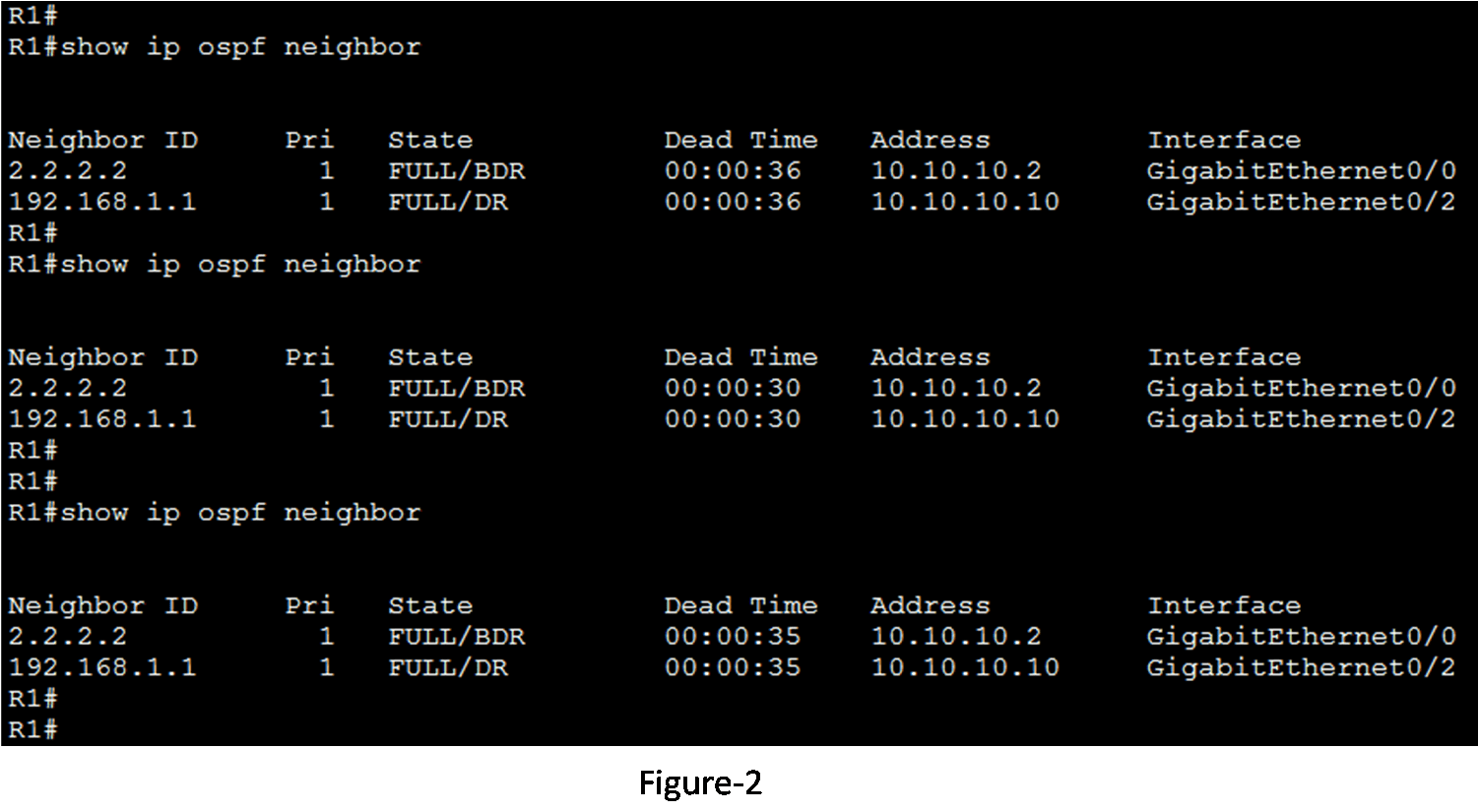
Devices enable OSPF to constantly track the status of their neighbors, sending and receiving hello packets. Hello, packets show whether each neighbour still is functioning, and sending and receiving link-state advertisement and acknowledgment packets. OSPF sends hello packets and expects to receive Hello packets at particular intervals. The Hello and Dead Intervals timer is included...

Propagating a Default Static Route in OSPF
We have already discussed the Default route Propagation in “Propagate Default Route in RIP”. In this article, I am going to discuss propagating a default static route in OSPFv2 and OSPFv3. The route propagation is useful when there is a single exit point in the network to reach the internet or any other service. The...
What is OSPF Priority – Exclusive Explanation
Each broadcast and Non-Broadcast Multi-Access (NBMA) network has a designated router. This router is the central point for collecting and distributing LSAs, so it must have enough CPU and memory capability to handle the workload. Configurations can be used to control the DR/BDR election process. The designated router decreases routing protocol traffic by enabling a...
What is OSPF Designated Router
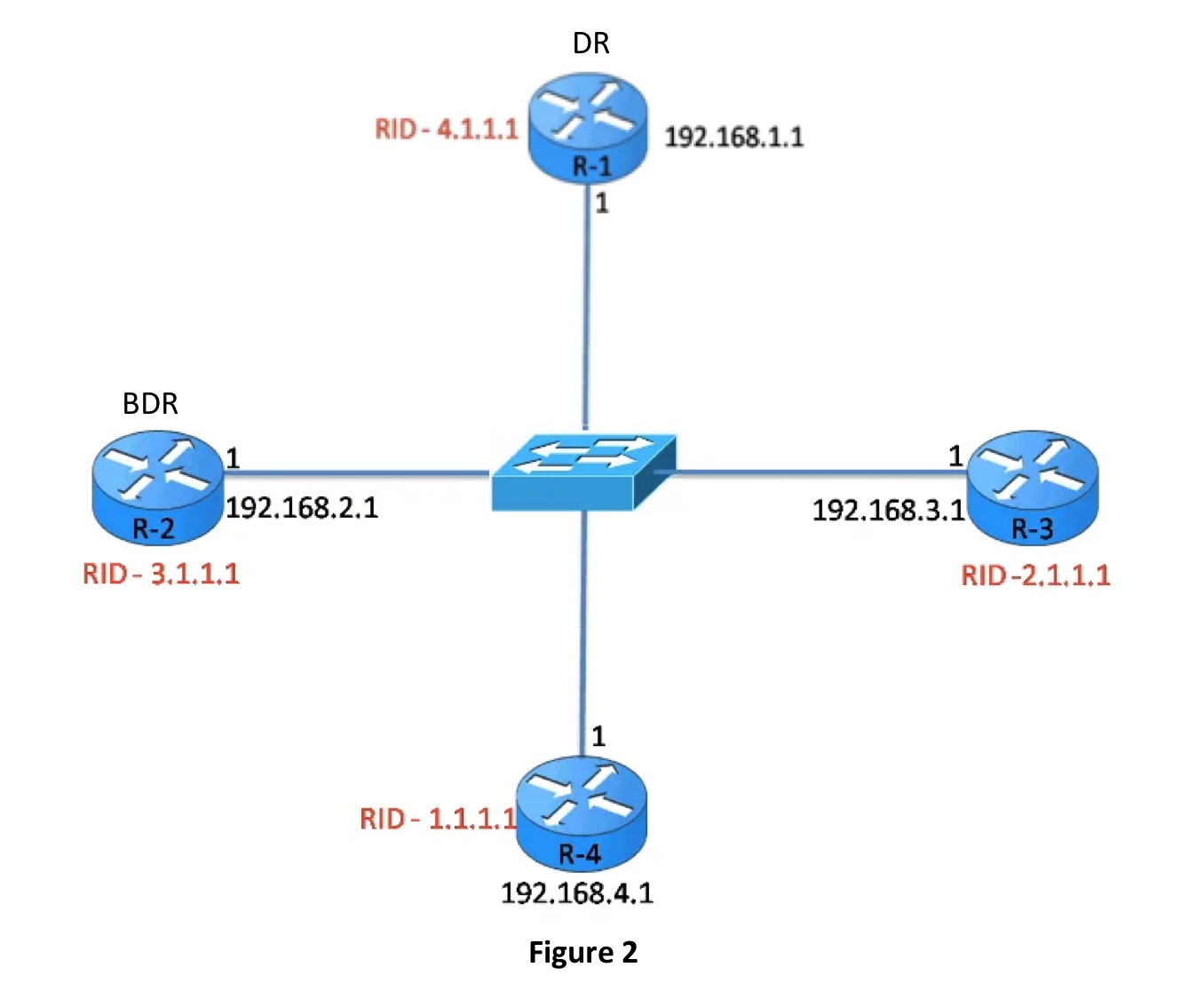
In the previous lesson, we discussed the challenges of the OSPF Multi-access network. The two challenges are unwanted adjacencies and the flooding of LSAs. The solution is the Designated Router (DR). DRs are designated to coordinate topology updates. On multiaccess networks, at initialization, a Designated Router (DR) and a backup designated router (BDR) are elected....