If you’ve searched “is RomsFun safe,” you’re asking exactly the right question before downloading anything from a site like it. RomsFun is one of many websites offering free downloads of console game ROMs — files that let you play retro games on an emulator. The short answer to whether it’s safe: from both a security and a legal standpoint, sites like RomsFun carry real risks, and there are safer, legal ways to play the games you’re after. This guide explains the risks honestly and points you to legitimate alternatives.
What RomsFun is
RomsFun hosts downloadable ROM files for a wide range of classic consoles — the kind of Nintendo, Sega, PlayStation, and arcade titles people grew up with. A ROM is a copy of a game originally stored on a cartridge or disc. To play one, you use emulator software that runs the ROM on a PC, phone, or handheld.
Two separate things determine whether using a site like this is “safe”: the security of the files and the site itself, and the legal status of what you’re downloading. They’re different questions, and RomsFun raises concerns on both.
The security risks
Free ROM download sites are a well-documented vector for malware, and the reasons are structural, not incidental:
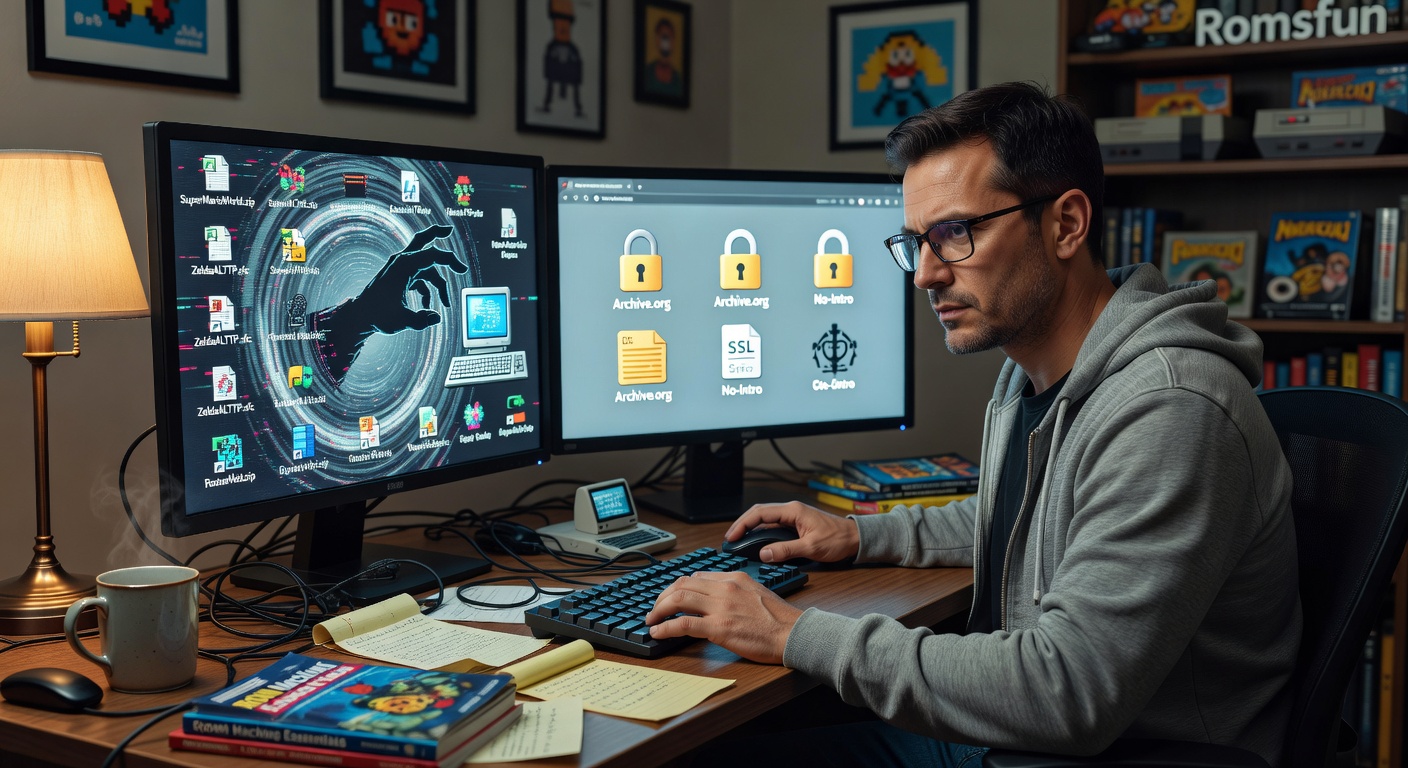
Bundled malware and fake files. Security researchers and the retro-gaming community have repeatedly found that unofficial ROM sites bundle malware, adware, or spyware into downloads, or serve outright fake files. A genuine ROM is a small game file with an extension like .nes, .sfc, .gba, or a disc image like .iso or .cue/.bin. If a “ROM” download arrives as an .exe, .msi, .apk, or a password-protected archive, treat it as a serious red flag — malware campaigns deliberately disguise installers as game files, because users expect ROMs to be quick and easy to open.
Deceptive ads and download buttons. Sites in this category typically rely on aggressive advertising: multiple fake “Download” buttons, forced redirects, pop-ups, and push-notification scams. It’s easy to click the wrong thing and pull down something you didn’t intend.
No accountability. These sites are anonymous and unregulated. There’s no vendor to complain to, no security guarantee, and no recourse if a download harms your device or data. You’re trusting an unknown operator with what runs on your machine.
The practical reality, echoed across the retro community: search results for “download free ROMs” are overwhelmingly ad farms or malware vectors, and a polished-looking site is no guarantee of safety.
The legal risks
Here’s the part that’s often muddled, so let’s be precise about it:
Emulators are legal. Reputable emulators like RetroArch, Dolphin, and PCSX2 were built through legal reverse-engineering and don’t contain copyrighted console code. Running an emulator is not the problem.
The ROM files are the problem. Nearly every commercial game remains under copyright for decades, even if the original cartridge is long out of production. Downloading a copyrighted ROM that someone else uploaded is copyright infringement — and “abandonware” is not a real legal status in most countries; it just means a publisher no longer sells the title.
The “I own the cartridge” idea is widely misunderstood. In some jurisdictions you may be permitted to make a personal backup of a game you own — but that generally means dumping the file yourself from your own cartridge or disc, not downloading a copy someone else posted online. Owning the cartridge doesn’t grant permission to download a stranger’s upload.
Enforcement is real, and it targets the sites, not usually individual players. Nintendo’s lawsuits have shut down major ROM sites with substantial penalties — the operators of LoveROMs/LoveRETRO settled for over $12 million, and RomUniverse’s owner was ordered to pay $2.1 million and destroy all Nintendo ROMs. While individual downloaders are rarely pursued, downloading unauthorized ROMs is still infringement, and uploading or sharing them (including seeding via torrents) carries meaningfully higher risk.
So, is RomsFun safe? The verdict
Putting it together: a site like RomsFun exposes you to genuine malware risk through bundled files and deceptive ads, and the ROMs it offers are, in the vast majority of cases, copyrighted works distributed without authorization. It isn’t a safe or legitimate way to get games. The good news is that you don’t need it — there are legal options that are also safer for your device.
Legal, safer ways to play retro games
You have more legitimate choices than most people realize:
Official subscription services and re-releases. This is the easiest route for well-known titles. Nintendo Switch Online offers rotating libraries of NES, SNES, Game Boy, N64, and Genesis games; PlayStation Plus includes PS1/PS2/PSP classics; Xbox offers backward-compatible titles; and Steam and GOG sell DRM-free retro collections. Publisher bundles from Capcom, Konami, SEGA, SNK, and Atari package classic games with official, licensed emulation.
Antstream Arcade. A legal, cloud-based subscription service focused on licensed arcade and classic-console games — a legitimate all-you-can-play option.
Evercade and mini-consoles. Evercade sells cartridge-based, officially licensed retro collections, and the various “Classic Mini” consoles (NES Classic, SNES Classic, Genesis Mini) come preloaded with licensed games.
Homebrew and freeware. Sites like itch.io, Homebrew Hub, and PDRoms host games made specifically for free distribution — genuinely legal ROMs with clear licensing, and a great way to discover new retro-style games.
Preservation archives and self-dumping. The Internet Archive hosts large, openly accessible preservation collections. And the cleanest legal path to a ROM of a game you actually own is to dump it yourself from the physical cartridge using a hardware reader (such as a Retrode). That gives you a file from a known-clean source, with no malware and no third-party involved.
The bottom line
“Is RomsFun safe?” — no, not really, on either count that matters: it carries real malware risk, and it distributes copyrighted games without authorization. You’re better served, and better protected, by an official subscription, a licensed collection, a homebrew library, or a backup you dump yourself. Keep a good antivirus running, be suspicious of any “ROM” that arrives as an executable, and treat any site that presents entire commercial game libraries as free downloads as a risk to both your device and your legal standing.
This article is general information, not legal advice. Copyright rules and personal-backup exceptions vary by country — check the law in your own jurisdiction, and when in doubt, choose a clearly licensed source.
Sources and further reading
- Reporting on Nintendo’s ROM-site litigation (LoveROMs/LoveRETRO settlement; RomUniverse judgment)
- Security and retro-gaming community analyses of malware risks on unofficial ROM sites
- Guidance on emulator legality and personal-backup copyright nuance (Sega v. Accolade; US Copyright Act §117)
- Official legal alternatives: Nintendo Switch Online, PlayStation Plus, Antstream Arcade, Evercade, Internet Archive, itch.io