Metal roofs are valued for strength, clean appearance, and long service life. Yet even durable roofing systems can develop problems after years of heat, rain, wind, or poor maintenance. Small defects may spread fast when owners ignore stains, loose panels, or noise after severe weather.
A timely inspection helps protect the roof, the building, and the assets stored inside. Professional Metal Roof Repair Services can locate damage that may not be clear during a basic visual check. Expert repair also helps owners avoid repeat leaks, unsafe sections, and higher replacement costs later, especially on commercial sites.
Leaks and Water Entry
Leaks are a common reason property owners seek help for metal roofs. Water may enter through weak seams, cracked sealant, loose screws, or damaged flashing. Even a small leak can harm insulation, ceilings, wall paint, and electrical areas inside the property.
Repair specialists trace the water path before they seal the visible spot. This matters because water may travel far before it appears indoors, far from the actual defect. A proper repair can stop the leak at its source and protect hidden layers under the panels.
Loose or Damaged Fasteners
Fasteners keep metal panels secure during wind, rain, and daily temperature changes. Over time, screws may loosen as panels expand and contract under heat. Worn washers can also create small gaps that allow moisture to pass through during rain or humid weather.
Technicians check fasteners across the roof and replace parts that no longer seal well. They also confirm that panels remain aligned after the repair work. This step reduces movement, panel lift, water entry, and noise during extreme weather at the property.
Rust and Surface Corrosion
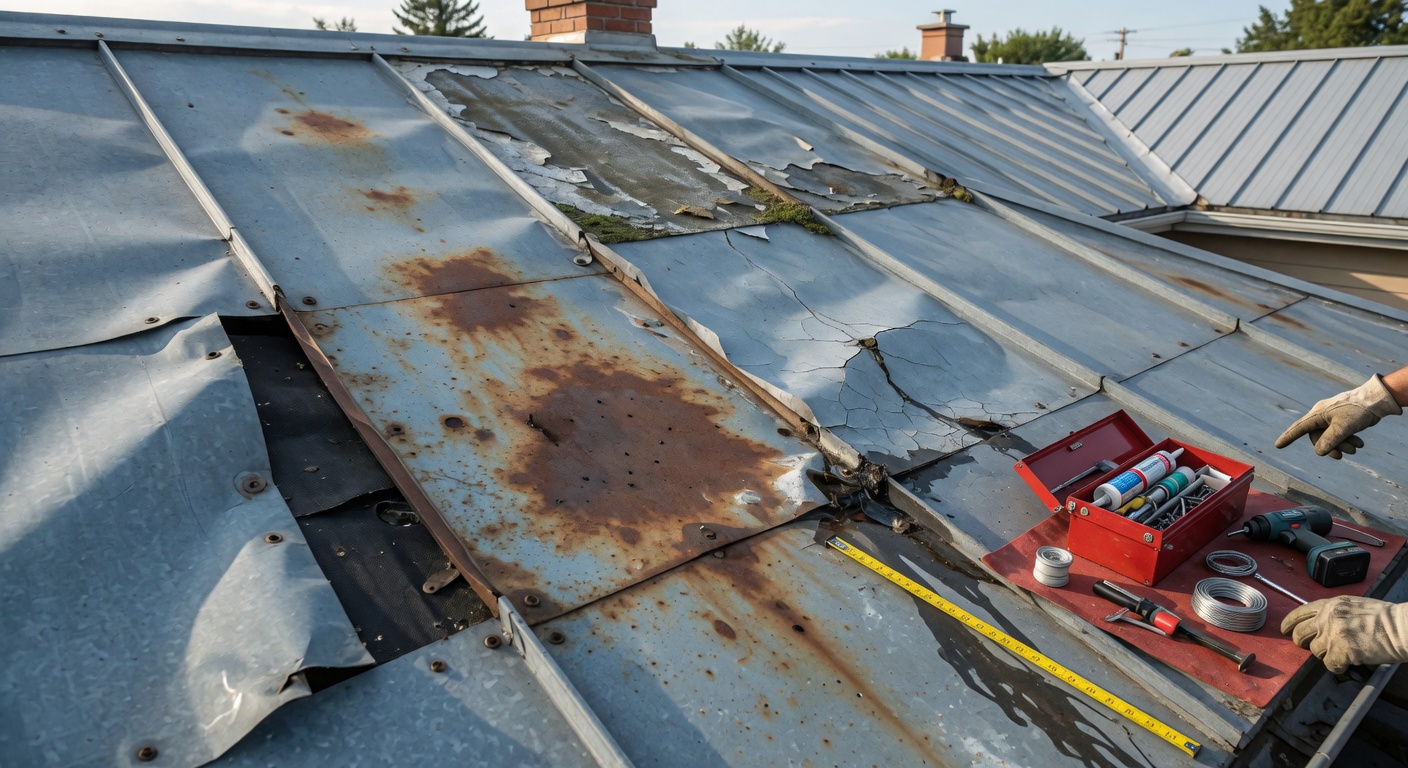
Rust can appear when a protective roof coating wears down or gets damaged. Scratches, trapped debris, standing moisture, and coastal air can speed up corrosion. Once rust spreads, metal panels may lose strength and become easier to puncture.
A repair team studies the depth of corrosion before it chooses the best fix for that roof. Light surface rust may need cleaning, primer, and a protective coating. Severe damage may require a panel patch or panel replacement to keep it safe.
Seam and Flashing Problems
Seams and flashing protect roofing where panels meet edges, vents, walls, or skylights. These points handle water flow and movement, so they face constant stress. When they fail, leaks can enter corners and closed spaces that owners rarely inspect.
A skilled metal roof repair team checks these details with care during service. They can reseal joints, secure lifted sections, and replace cracked flashing. Correct repair helps direct rainwater away and keeps vulnerable areas protected for longer periods.
Storm and Wind Damage
Storms can bend metal edges, loosen panels, and damage trim or ridge caps. Hail may dent panels and weaken the coating that protects the roof surface. Windblown branches can scratch the metal or leave punctures that invite water entry.
After rough weather, a professional inspection can reveal damage that is easy to miss. Repair teams look for gaps, dents, torn sealant, and weak attachments. Fast action can prevent new leaks and reduce the chance of larger structural trouble after the next storm.
Poor Drainage and Standing Water
Metal roofs need clear routes for rainwater to leave the surface. Blocked gutters, trapped leaves, and low spots can cause water to collect. Standing water can strain seams, speed up rust, and place extra stress on certain sections.
Repair professionals review drainage paths and correct the cause of water buildup. They may clear debris, repair gutters, or improve areas where water remains after rain. Professional Metal Roof Repair Services can also advise owners on simple maintenance steps that reduce repeat drainage issues.
Metal roof problems can start with small signs, yet they can affect comfort, safety, and property value. Leaks, loose fasteners, rust, storm damage, seam failure, and drainage trouble all need prompt care. With expert repair support, property owners can extend roof life, protect interiors, and avoid costly damage in the future. Regular care also helps preserve energy performance, property value, insurance records, and long-term safety for many years ahead.