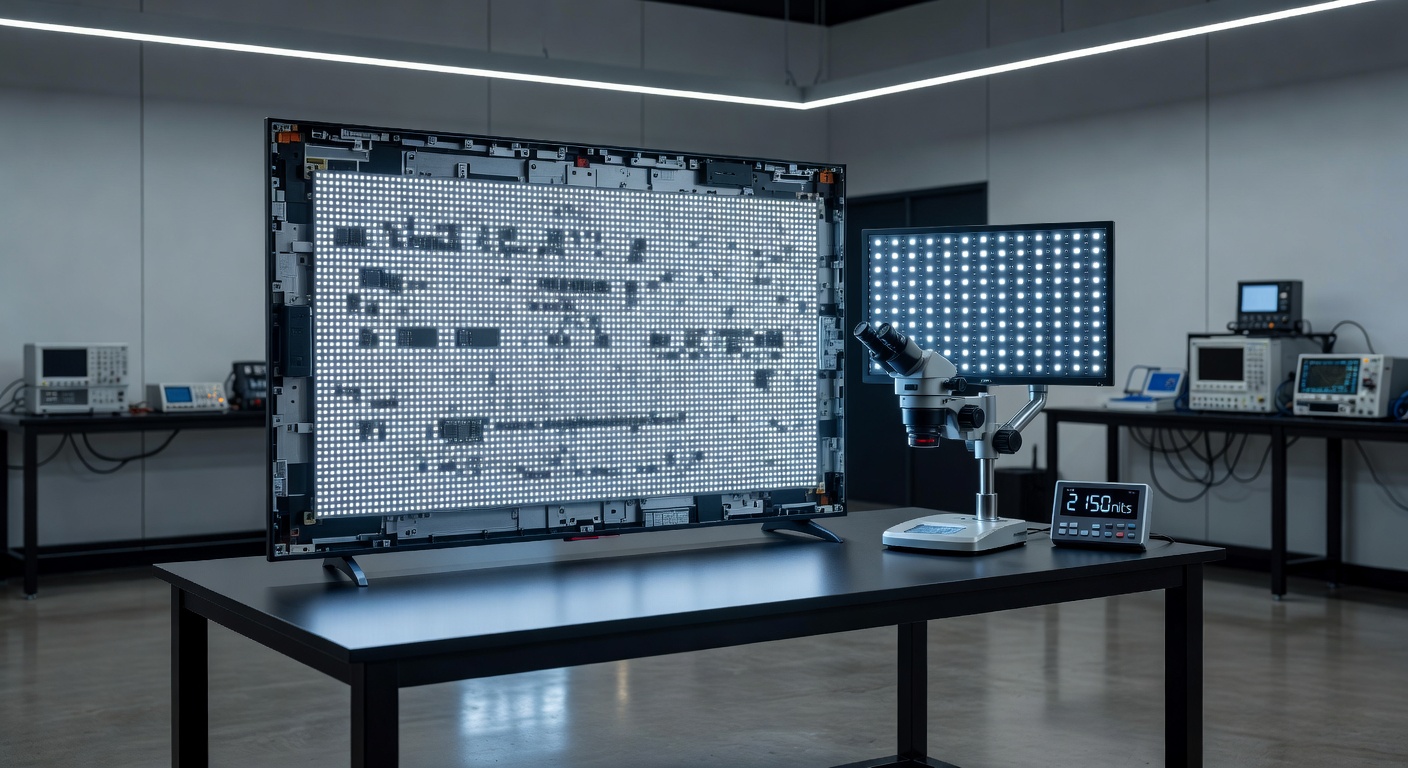
Mini-LED TVs deliver peak brightness levels exceeding 2,000 nits, according to a 2024 DisplayMate analysis, surpassing traditional LED displays by up to 50% in high-dynamic-range (HDR) performance.
This technology packs thousands of tiny LEDs—often smaller than 0.2mm—into local dimming zones, enabling precise control over light and shadow. Consumers upgrading from older LCDs report 30-40% better contrast ratios, per user surveys from RTINGS.com. As mini-LED TVs dominate premium segments in 2026, they offer cinema-quality visuals at accessible prices starting under $1,000.
How Mini-LED TVs Work: Precision Backlight Technology Explained
Mini-LED TVs enhance LCD panels with a backlight array of minuscule LEDs, typically numbering 10,000 to 30,000 per screen. Unlike full-array local dimming (FALD) in conventional LEDs, mini-LEDs create thousands of dimming zones—up to 3,000 in high-end 65-inch models—for granular light control.
Each zone dims or brightens independently, reducing halo effects around bright objects. A TCL study cited by FlatpanelsHD shows mini-LED achieving black levels rivaling OLED at 0.01 nits, while maintaining superior brightness for daytime viewing.
Core Components of Mini-LED Backlights
- Tiny LED Size: LEDs measure under 200 microns, allowing dense packing without bulk.
- Local Dimming Zones: 500-5,000 zones per TV, compared to 100-200 in standard LEDs.
- Quantum Dot Enhancement: Pairs with QLED layers for 95% DCI-P3 color gamut coverage, per Samsung’s lab tests.
Experts like Dr. Raymond M. Soneira of DisplayMate praise this setup for blooming reduction, noting a 70% improvement over edge-lit TVs in zone transitions.
“Mini-LED represents the optimal evolution of LCD technology, bridging the gap to self-emissive displays.” — Dr. Raymond M. Soneira, DisplayMate
Mini-LED TVs vs OLED and QLED: Detailed Performance Comparison
Mini-LED TVs excel in brightness and longevity, hitting 3,000+ nits in flagships like the Samsung Neo QLED QN90D, per Rtings measurements. OLEDs cap at 1,500 nits but offer perfect blacks without blooming; mini-LED closes the gap with 95% less haloing than older LCDs.
| Feature | Mini-LED | OLED | QLED |
|---|---|---|---|
| Peak Brightness (nits) | 2,000-4,000 | 1,000-1,800 | 1,500-2,500 |
| Dimming Zones (65″) | 1,000-3,000 | Pixel-level | 200-500 |
| Contrast Ratio | 10,000,000:1 | Infinite | 5,000:1 |
| Burn-in Risk | None | Low-Moderate | None |
| Price (65″) | $1,200-$3,000 | $2,000-$4,000 | $1,000-$2,500 |
Data sourced from RTINGS.com 2026 TV reviews. Mini-LED wins for bright rooms and gaming, while OLED suits dark-room cinephiles. QLED lags in contrast but offers value.
Integrating with smart tech investments like AI upscaling elevates mini-LED performance further for content creators.
Top Mini-LED TV Models and Brands Leading in 2026
Samsung leads with Neo QLED series, featuring 8K upscaling and 4,000 dimming zones. The 85-inch QN900D achieves 3,500 nits, earning What Hi-Fi?’s 5-star rating for motion handling.
TCL’s QM8 series undercuts premiums at $1,499 for 75 inches, with 5,000 zones and Google TV integration. Hisense U8N pushes 3,000 nits and 144Hz refresh for gamers.
Standout Specifications Comparison
- Samsung QN90D: 144Hz, Dolby Vision IQ, $2,600 (65″).
- TCL QM851G: 120Hz VRR, Mini-LED Pro, $1,200 (65″).
- LG QNED90: webOS, 1,200 zones, $1,800 (65″).
- Sony Bravia 9: XR processor, 3,000 nits, $3,000 (65″).
IDC reports mini-LED TV shipments grew 45% in 2025, with TCL capturing 25% market share. Brands like Panasonic enter with MLA (Micro Lens Array) hybrids for enhanced efficiency.
Benefits of Mini-LED TVs for Gaming, Movies, and Everyday Use
Gamers prioritize mini-LED’s low input lag—under 10ms at 120Hz—plus VRR and ALLM support. Nvidia’s G-Sync compatibility shines in titles like Cyberpunk 2077, per Digital Foundry tests.
For movies, HDR10+ and Dolby Vision deliver vivid colors; a Netflix engineering report notes 25% better shadow detail than standard LEDs. Daily viewing benefits from anti-glare coatings and wide angles up to 178 degrees.
- Bright Room Performance: Excels in 1,000+ lux environments.
- Energy Efficiency: 20% less power than plasma equivalents, per Energy Star ratings.
- Longevity: 100,000-hour lifespan, no burn-in per LG Display studies.
Pair with wireless audio systems, much like optimizing Bluetooth connectivity for seamless home theater setups.
Drawbacks of Mini-LED TVs and How to Mitigate Them
Blooming persists in extreme scenes, though reduced by 80% versus FALD, notes AVS Forum experts. Higher costs—20-30% above standard LEDs—limit entry-level options.
Power draw spikes to 400W in bright modes, but eco settings cut usage by 25%. Firmware updates address early quirks; check manufacturer sites pre-purchase.
Compared to emerging Micro-LED, mini-LED lacks pixel-level control but costs 10x less. Vincent Teoh of HDTVTest advises calibrating with tools like Calman for optimal results.
“The blooming in mini-LED is now a minor issue—far outweighed by brightness advantages.” — Vincent Teoh, HDTVTest
Businesses eyeing bulk buys should factor in hidden costs of premium features like cloud gaming integration.
Buying Guide: Essential Factors for Choosing Mini-LED TVs
Prioritize zone count: Aim for 1,000+ in 65-inch models. Verify HDR certifications and HDMI 2.1 ports for 4K@120Hz.
Room size matters—pair 55-65 inches with 8-10ft viewing distance. Budget $1,500+ for value; sales drop prices 30% post-CES.
Checklist for Smart Purchases
- Dimming zones: 500 minimum.
- Refresh rate: 120Hz+ for gaming.
- OS: Google TV or webOS for apps.
- Warranty: 3+ years with burn-in protection.
- Calibration: ISF-ready panels.
Test in-store for off-axis viewing. Omdia forecasts mini-LED hitting 20% market penetration by 2027.
Enhance your setup with secure streaming, drawing from data protection essentials for family media servers.
Future of Mini-LED TVs: Innovations and Market Trends
2026 brings tandem OLED-mini-LED stacks from LG, boosting brightness 50%. AI processors like Samsung’s NQ4 AI Gen2 upscale 1080p to near-4K flawlessly.
Micro-LED prototypes loom, but mini-LED’s scalability wins short-term. Display Supply Chain Consultants projects $15B market by 2028.
Expect 8K mini-LEDs under $2,000 and wall-sized tiles for homes. Sustainability improves with recycled LED materials, per TCL’s green initiatives.
Mini-LED TVs redefine home entertainment with unmatched brightness, contrast, and value. Key takeaways: Choose 1,000+ dimming zones for top performance, calibrate for perfection, and target sales for savings. Upgrade now to future-proof your setup—research models on RTINGS and What Hi-Fi? for the best fit.