network performance

Where Bandwidth Lives in the Routing Table Decision
Bandwidth metric underpins routing decisions and QoS guarantees. This article covers EIGRP composite calculation, OSPF cost, BGP limitations, and CLI troubleshooting — essential for CCNA through CCIE.

What Separates a Premium ISP Proxy Provider From a Cheap One?
The ISP proxy market hides big differences in quality despite similar claims. Premium providers offer direct telecom IPs, global distribution, and sub-0.6s response times, while cheap ones risk shared blocklists and poor performance. Check ASN data and test metrics to choose wisely.
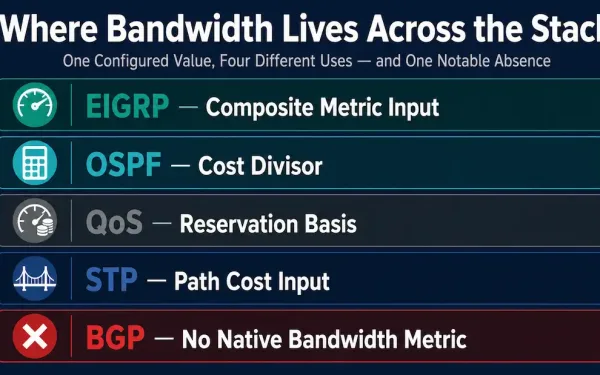
Bandwidth Metric: How Routing Protocols and QoS Use It
A network engineer stares at a traceroute that defies logic — traffic flows across a 10 Mbps satellite link while a 1 Gbps fiber path sits idle. The root cause isn’t a hardware fault. It’s a misconfigured bandwidth metric. Across every major routing protocol and QoS framework, the bandwidth metric quietly dictates which path packets...
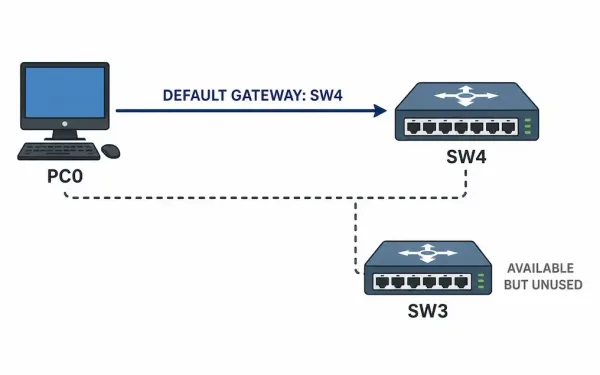
Default Gateway Limitations: Why One Static Gateway Isn’t Enough
A host doesn’t route. It knows its own subnet, and for everything outside that subnet, it sends traffic to exactly one configured address: its default gateway. That single point of dependency is the limitation this article covers — and understanding it is what motivates every First Hop Redundancy Protocol (FHRP) that exists, from HSRP to...
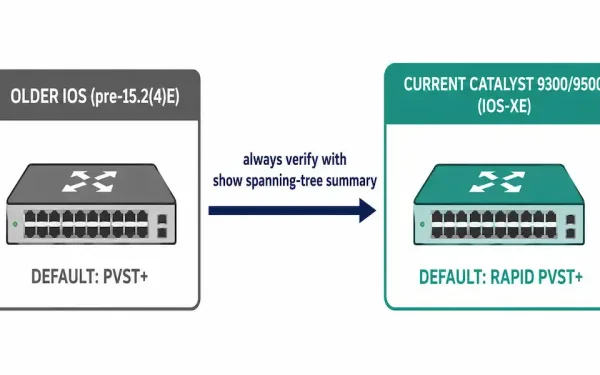
How to Configure Spanning-Tree Mode: Rapid PVST+
Rapid Per-VLAN Spanning Tree Plus (Rapid PVST+) is Cisco’s per-VLAN implementation of RSTP, and it’s the default spanning tree mode on current Cisco Catalyst hardware, including the 9300 and 9500 series running IOS-XE. This guide walks through configuration, verification, and troubleshooting on Cisco Catalyst switches — whether simulating in Packet Tracer or deploying in production....
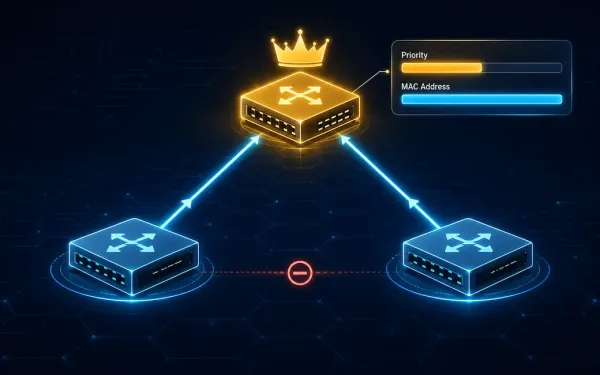
Spanning Tree Bridge ID Configuration: Root Primary and Root Secondary Explained
When configuring a specific switch as the root bridge, its bridge ID priority value must be lower than the bridge priority values of all other switches on the network — in Spanning Tree Protocol (STP), a lower priority value always wins the root bridge election. There are two different methods for configuring the bridge priority...
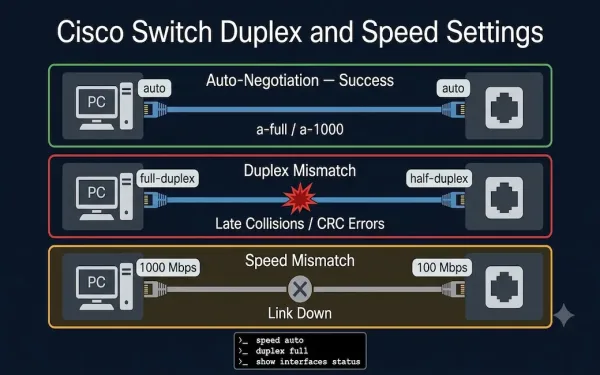
Duplex and Speed Settings on Cisco Switches: Complete Configuration Guide
Duplex and speed settings are the most fundamental configuration parameters for each switch port. By default, Cisco switches auto-negotiate both speed and duplex with connected devices. When this negotiation works correctly, both ends of the link establish the highest common speed and the best available duplex mode without any manual intervention. When it fails —...