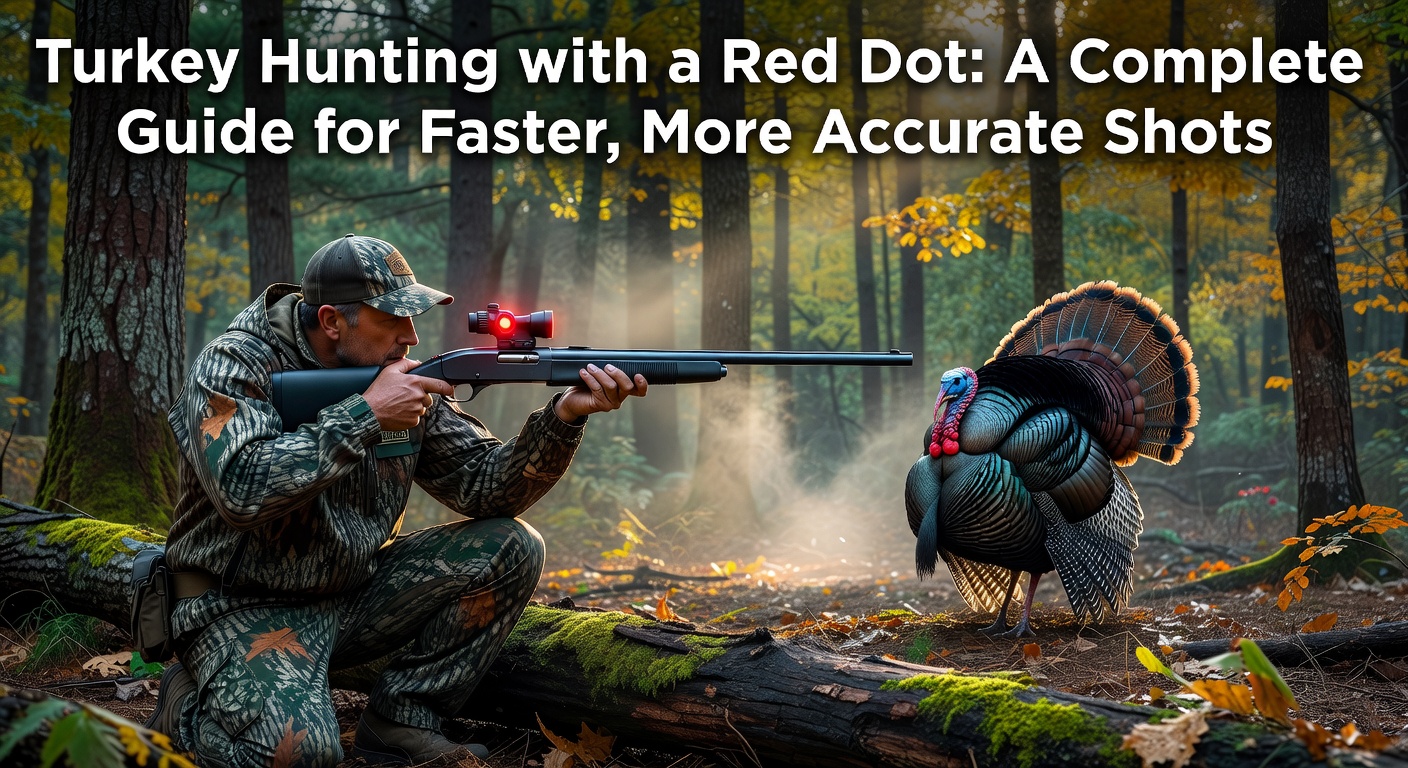
Turkey hunting is one of the most challenging and rewarding forms of upland hunting. Turkeys are extremely alert, have excellent eyesight, and rarely give hunters a second chance. Because of this, precision and speed are everything. In recent years, more hunters have switched from traditional bead sights or scopes to red dot optics—and for good reason.
A red dot sight can dramatically improve target acquisition, shooting confidence, and overall success in the field. Whether you are a beginner or an experienced turkey hunter, understanding how to use a red dot effectively can elevate your performance during the season.
Why Use a Red Dot for Turkey Hunting?
Traditional shotgun sights, such as a bead or fiber optic front sight, require the shooter to align the barrel carefully with the target. While this works at very close range, it becomes less effective when turkeys are partially hidden, moving, or at varying distances.
A red dot sight simplifies this process.
Instead of aligning multiple points (front bead, rear sight, and target), you only need to place a single illuminated dot on the turkey and shoot. This provides several key advantages:
1. Faster Target Acquisition
Turkeys often appear suddenly and may not stay still for long. A red dot allows you to quickly bring the sight onto the bird without worrying about perfect alignment.
2. Improved Accuracy Under Pressure
When adrenaline kicks in, fine motor control decreases. A red dot removes the need for precise sight alignment, helping you focus on the target instead of the gun.
3. Better Performance in Low Light
Turkey hunting often happens early in the morning or late in the afternoon when lighting conditions are poor. A red dot remains visible in dim environments, giving you a clear aiming point.
4. Increased Confidence
Knowing exactly where your shot will land helps reduce hesitation, especially for newer hunters.
Choosing the Right Red Dot for Turkey Hunting
Not all red dots are created equal, and selecting the right one is crucial for success in the field.
MOA Size Matters
One of the most important factors is dot size, measured in MOA (Minute of Angle):
-
2 MOA dot: Best for longer-range precision shots
-
3–4 MOA dot: Ideal balance for most turkey hunters
-
4–6 MOA dot: Faster target acquisition at close range
For turkey hunting, most experts recommend a 3–4 MOA red dot, as it provides a good mix of speed and precision.
Durability and Weather Resistance
Turkey hunting often involves walking through brush, kneeling in wet grass, and dealing with unpredictable weather. Your optic must be able to handle:
-
Rain and moisture
-
Recoil from shotgun loads
-
Temperature changes
-
Field impacts and rough handling
A rugged housing and shockproof design are essential.
Battery Life
Long battery life is critical. You don’t want your optic dying during a hunt. Many modern red dots offer thousands of hours of runtime, but always carry a spare battery just in case.
How to Sight In a Red Dot for Turkey Hunting
Proper zeroing is essential before heading into the field.
Step 1: Choose Your Distance
Most turkey hunters zero their shotgun at 25 to 40 yards, depending on their expected hunting environment.
-
25 yards: Dense woods and close-range setups
-
40 yards: Open fields or longer shooting lanes
Step 2: Use the Same Ammunition
Always sight in using the exact turkey loads you plan to hunt with. Different loads can significantly affect point of impact.
Step 3: Stable Shooting Position
Use a bench rest or sandbags to eliminate movement while sighting in.
Step 4: Adjust Windage and Elevation
Fire a 3-shot group, evaluate impact, and adjust your red dot accordingly. Repeat until the point of impact matches the point of aim.
Step 5: Confirm at Hunting Distance
Once zeroed, confirm accuracy at your expected hunting range.
Shooting Techniques with a Red Dot
Using a red dot is simple, but proper technique will maximize effectiveness.
Keep Both Eyes Open
Unlike traditional scopes, red dots are designed for both-eyes-open shooting. This improves situational awareness and helps you track moving targets.
Focus on the Target, Not the Dot
Your attention should remain on the turkey. The dot simply guides your shot placement.
Maintain Proper Gun Mount
A consistent cheek weld ensures the dot appears instantly in your field of view when you shoulder the shotgun.
Practice Quick Shouldering
Speed matters in turkey hunting. Practice bringing the shotgun up smoothly and acquiring the dot quickly.
Field Advantages of a Red Dot in Turkey Hunting
Better Camouflage Situations
Turkeys often hide behind brush or partially obstructed terrain. A red dot allows you to quickly adjust your aim without losing sight of the bird.
Easier Shot Placement on Head and Neck
For ethical turkey hunting, precise shot placement is critical. A red dot helps you focus on the small kill zone instead of the entire body.
Reduced Missed Opportunities
Many turkey misses occur due to hesitation or misalignment. Red dots reduce both issues significantly.
Common Mistakes to Avoid
Even with a red dot, mistakes can reduce effectiveness:
1. Improper Zeroing
A poorly sighted optic will lead to missed shots. Always double-check your zero before the season.
2. Using Too Large a Dot
A 6–8 MOA dot may cover too much of the turkey’s head at longer ranges, reducing precision.
3. Ignoring Parallax or Eye Alignment Issues
Always ensure your sight picture is consistent when mounting the shotgun.
4. Overlooking Battery Checks
A dead optic in the field renders your advantage useless—always check battery life before hunting.
Recommended Red Dot for Turkey Hunting
For hunters looking for a reliable and affordable option, the Pinty red dot sight is a popular choice.
It is widely used by beginners and intermediate hunters because it offers:
-
Clear illuminated reticle for fast targeting
-
Lightweight and compact design
-
Shock resistance for shotgun recoil
-
Adjustable brightness settings for different lighting conditions
-
Budget-friendly performance without sacrificing reliability
While premium optics exist, many hunters find that a well-mounted PINTY red dot performs more than adequately for turkey hunting scenarios.
Final Thoughts
Turkey hunting demands patience, precision, and quick decision-making. A red dot sight enhances all three by simplifying the aiming process and allowing hunters to react instantly when a bird steps into range.
From faster target acquisition to improved accuracy in low light, the benefits are clear. When properly sighted in and paired with good shooting fundamentals, a red dot can significantly improve your success rate in the field.
Whether you are calling in your first gobbler or refining your hunting strategy, upgrading to a red dot may be one of the most effective changes you can make to your setup.