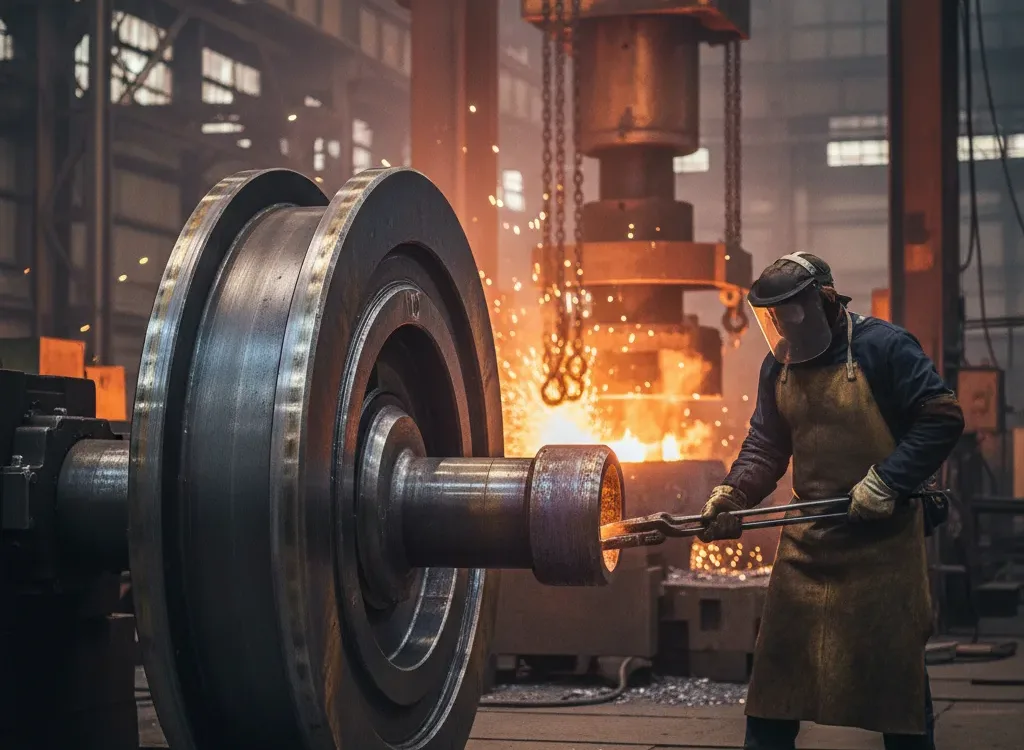
Steel is one of the most useful materials in the world. It is found in buildings, machines, vehicles, tools, and many industrial products. Steel is used for various purposes and is formed in various types. There are certain jobs where extremely strong, durable steel is required. The manufacturers have been using the quenched and tempered steel for these jobs.
Quenched and tempered steel is a special type of steel that goes through a heat treatment process. This process helps improve the strength and toughness of the steel. As a result, the steel is strong and can withstand heavy loads and hardworking conditions.
In this article, we’ll take a look at quenched and tempered steel in the simplest terms. If you would like to learn more about its properties and uses, read more about this important material and how it is used in different industries.
What Is Quenched and Tempered Steel?
Quenched and tempered steel, steel heated and cooled in a special manner.
There are two key steps in the process:
Quenching
Tempering
The two steps alter the internal structure of the steel. This makes the steel stronger, harder, and tougher.
Many industries use this steel as it outperforms ordinary steel.
For more information on the heat-treated steel products, you can read more about Quench and Tempering Steel Bar – Dajin Steel and its applications in industry.
What Is Quenching?
The first step in the process is to quench.
The temperature of the steel is raised to extremely high levels. Once it reaches the correct temperature, it is cooled off rapidly.
The cooling can be provided by:
Water
Oil
Air
Special cooling liquids
Harder and stronger steel results from the high rate of cooling.
But once quenched, the steel may become too hard. May be more prone to cracking if heavily impacted.
That is why there’s another step to take.
What Is Tempering?
Tempering is the second step.
The steel is reheated after the quenching process. This time the temperature is much lower.
This temperature is maintained for a certain amount of time and then slowly cooled down.
The tempering is to reduce some of the quench temper brittleness.
In this process, the steel is made by:
Tougher
Safer
More durable
More reliable
The final product is a tough and strong steel.
Why Is Quenching and Tempering Important?
In many industries, materials are required that can withstand heavy labour.
High stress may bend, wear out, or break normal steel.
Quenching and tempering are used to enhance the performance capability of steel.
The process helps:
Increase strength
Improve toughness
Reduce cracking
Extend service life
Improve wear resistance
Due to these advantages, the quenched and tempered steel is broadly used all over the world.
Main Features of Quenched and Tempered Steel
High Strength
This steel can handle heavy pressure and loads.
It’s commonly used when you need a strong material.
Good Toughness
Tough steel is more resistant to impact and is unlikely to break easily.
This makes it appropriate for challenging applications.
Long Service Life
Steel stays are long-lasting.
This makes maintenance and replacement much less costly.
Better Wear Resistance
The surface is more resistant to damage caused by friction.
This is important for transferring parts of machines.
Reliable Performance
The steel is suitable for use in tough working places.
Where Is Quenched and Tempered Steel Used?
Due to the excellent properties of this steel, it has been applied in various industries.
Construction Industry
It is used by construction companies in:
Heavy equipment
Structural parts
Fasteners
Support systems
Automotive Industry
It is used by the vehicle manufacturers for:
Gears
Axles
Shafts
Suspension parts
Reliability and safety are enhanced with strong steel.
Mining Industry
The working conditions for the mining equipment are very severe.
Machines last longer when they’re made of strong steel.
Agriculture Industry
Farm machinery requires parts that are long-lasting and can be used every day.
These applications can be successfully used with quenched and tempered steel.
Manufacturing Industry
This is the steel that is used in factories to make:
Machine parts
Rollers
Industrial tools
Equipment components
Energy Industry
High-strength steel is often employed in many energy projects due to its ability to withstand heavy loads and challenging conditions.
Benefits of Quenched and Tempered Steel
This type of steel has a number of benefits.
Stronger than steel is regular steel.
The heat treatment process greatly improves strength.
Better Safety
The ability of steel to be strong and tough decreases the likelihood of failure.
Lower Costs Over Time
The steel with which they are built lasts longer, and this equates to lower capital expenditure for repair and replacement.
Ideal for heavy-duty jobs and applications.
Does well in challenging environments.
Wide Range of Uses
It can be used in various industries and applications.
How Is Quality Checked?
The quality of quenched and tempered steel is carefully monitored by the manufacturer.
They perform different tests, such as:
Hardness testing
Strength testing
Impact testing
Size inspection
The tests ensure that the steel conforms to industry standards.
Safe and reliable products can be achieved through good quality control.
How to Choose the Right Steel
The selection of the proper steel is dependent on the job.
You should think about:
Required strength
Working conditions
Load requirements
Wear resistance needs
Expected service life
The proper steel can enhance performance and safety.
Conclusion
Quenched and tempered steel is one of the significant materials applied in various industries. Produced by a special heat treatment process, which comprises quenching and tempering. The quenching process renders the steel hard and strong, and the tempering process renders the steel tougher and less prone to cracking.
Given its strength, toughness, longevity, and consistency, quenched and tempered steel is employed in construction, manufacturing, transportation, mining, farming, energy, and other industries. It is an excellent choice for applications that require strong and durable steel products.