Mujtaba Khattak
Mujtaba Khattak is a network solutions architect specializing in SD-WAN, cloud infrastructure, and network optimization. He holds a BS in Artificial Intelligence from SZABIST, an MBA from Virtual University (VU), and Cisco certifications (CCNA and CCNP). As the founder of NetworkUstad.com, He produce technical guides and tutorials on networking, cybersecurity, and AI applications.
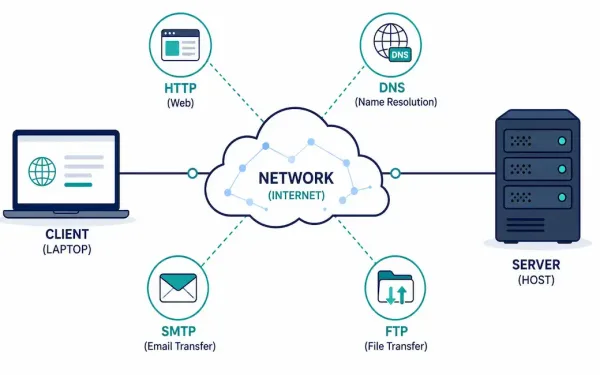
The Application Layer: Protocols, Function, and How It Fits the Network Stack
Every time you load a web page, send an email, or transfer a file, you’re using the application layer — the topmost layer of the network stack, and the only one most users ever interact with directly. Everything below it exists to support what happens here. This guide covers what the application layer actually does,...
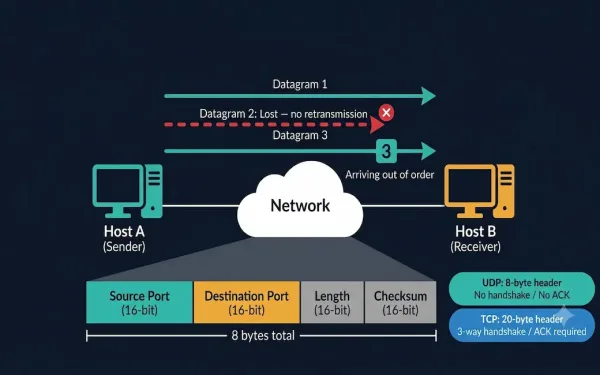
User Datagram Protocol (UDP): Complete Guide for CCNA
The User Datagram Protocol (UDP) is a lightweight Transport Layer protocol that provides fast, low-overhead data transmission between applications without establishing a connection first. Defined in RFC 768, UDP is one of the two core Transport Layer protocols alongside TCP and is directly tested on the CCNA 200-301 exam. Understanding UDP — its header structure,...
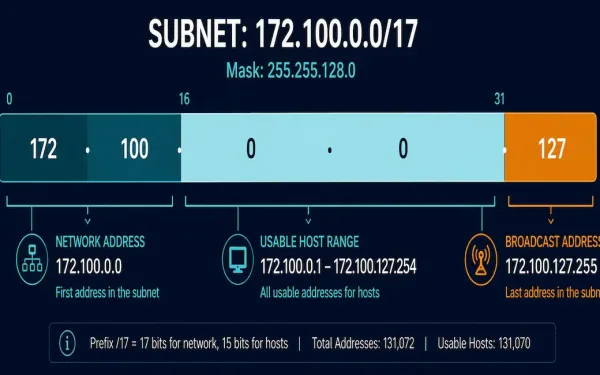
Network Prefix, Network Address, Broadcast Address, and Host Address Explained
Every IPv4 subnet has a handful of specific addresses with fixed roles: one identifies the network itself, one is reserved for broadcasting to every device on it, and the rest are available for hosts. This guide covers exactly how to calculate each one, using prefix notation and binary math, with one consistent worked example carried...

Positional Number System and Examples
In a positional number system, each symbol represents a different value depending on the position it occupies in a number, and each system has a value that relates to the number directly next to it. The total value of a positional number is the total of the resultant value of all positions. The decimal number...
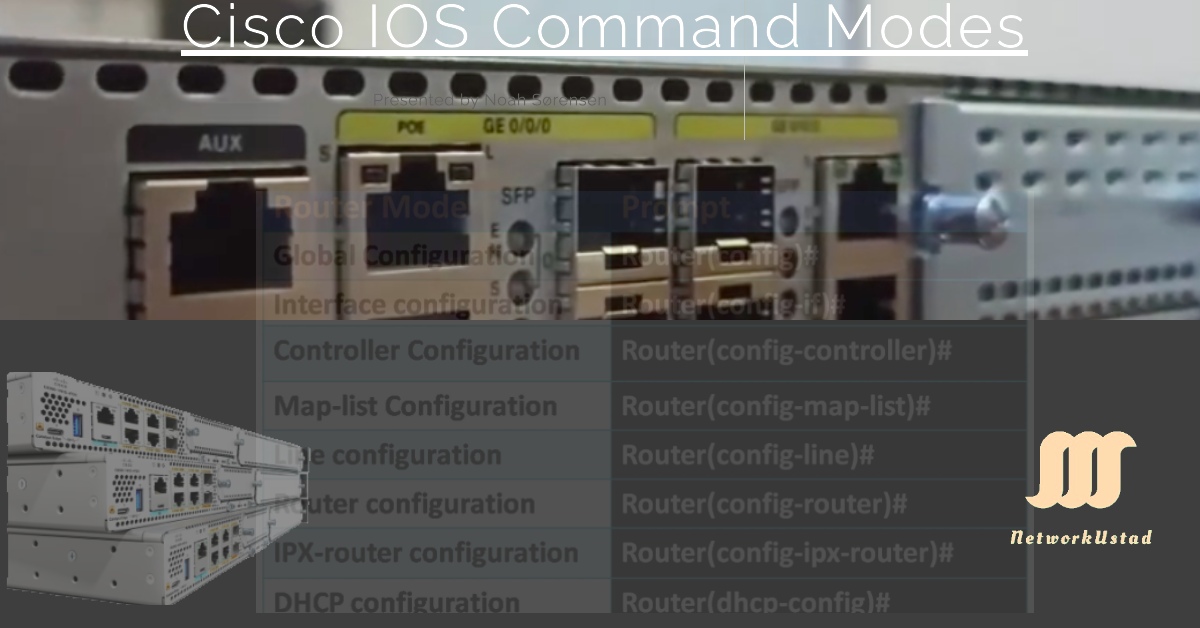
Cisco IOS Command Modes Explained: User EXEC, Privileged EXEC, and Global Configuration Modes
Cisco IOS devices use hierarchical command modes to control access and prevent accidental misconfigurations. Whether you’re managing a router, switch, or preparing for the CCNA exam, understanding these modes is fundamental: Global configuration mode contains a number of sub-configuration modes (also called specific or extended configuration modes). The table below lists common configuration modes and...
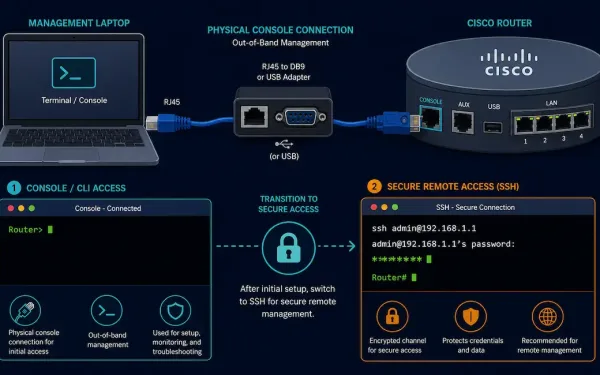
How to Connect and Access a Cisco Router
Connecting to a Cisco router for the first time is a foundational skill for anyone working toward CCNA or managing real network hardware. This guide covers the physical console connection every router needs for initial setup, the CLI basics you’ll use immediately after connecting, and how to move from insecure Telnet to properly configured SSH...
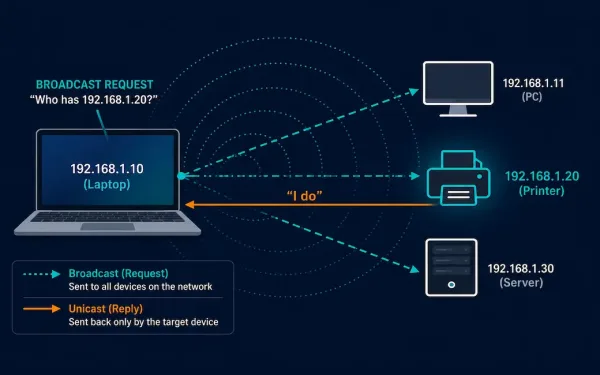
Address Resolution Protocol (ARP) Explained
Every device on a network has both an IP address and a MAC address, and something has to bridge the two. That’s the job of the Address Resolution Protocol (ARP): mapping a known IP address to the MAC address a device actually needs to build an Ethernet frame. This guide covers exactly how that resolution...
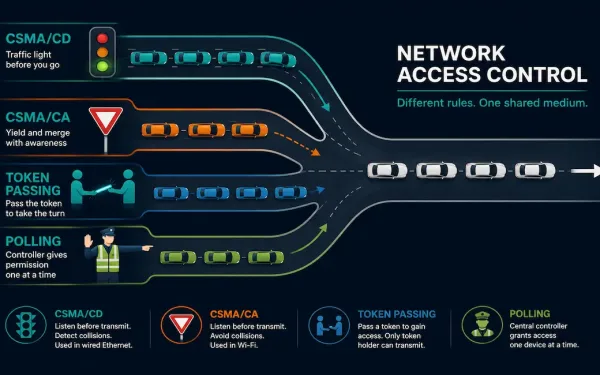
Media Access Control Methods Explained: CSMA/CD, CSMA/CA, Token Passing, and Polling
Whenever more than one device shares a physical network medium, something has to decide who gets to transmit and when. That’s the job of a Media Access Control (MAC) method: a set of rules, implemented at the data link layer, that governs how devices gain and control access to shared network media. Without one, two...