Mujtaba Khattak
Mujtaba Khattak is a network solutions architect specializing in SD-WAN, cloud infrastructure, and network optimization. He holds a BS in Artificial Intelligence from SZABIST, an MBA from Virtual University (VU), and Cisco certifications (CCNA and CCNP). As the founder of NetworkUstad.com, He produce technical guides and tutorials on networking, cybersecurity, and AI applications.
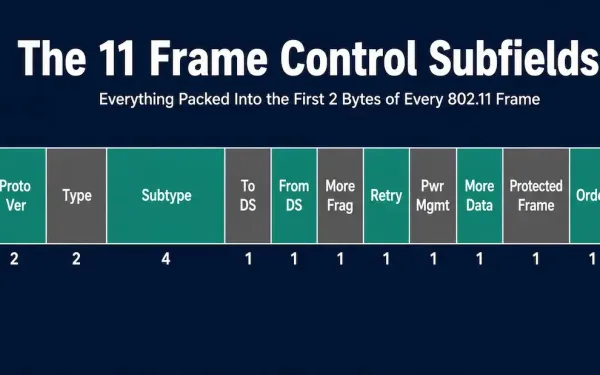
Frame Control Field Format: The 11 Subfields Explained
The Frame Control field is the first two bytes of every 802.11 frame, and it’s arguably the single most important part of the header — it’s what tells a receiving station what kind of frame it’s looking at before anything else gets parsed. This guide breaks down all eleven subfields packed into those 2 bytes...
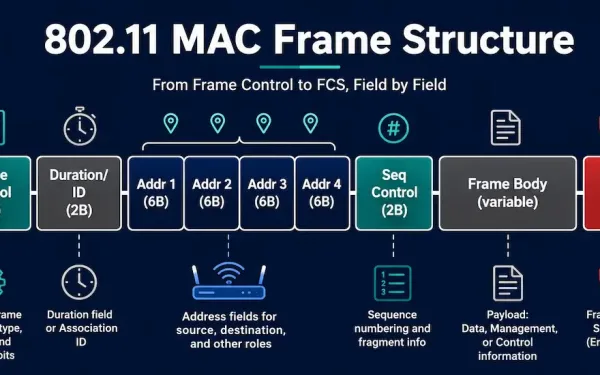
The 802.11 Wireless Frame: MAC Header Fields Explained
Every piece of data that travels over Wi-Fi is wrapped inside an 802.11 frame before it hits the air. Like any Layer 2 frame, an 802.11 frame consists of a header, a payload (frame body), and a Frame Check Sequence (FCS) for error detection. The 802.11 frame format is closely related to the Ethernet frame...
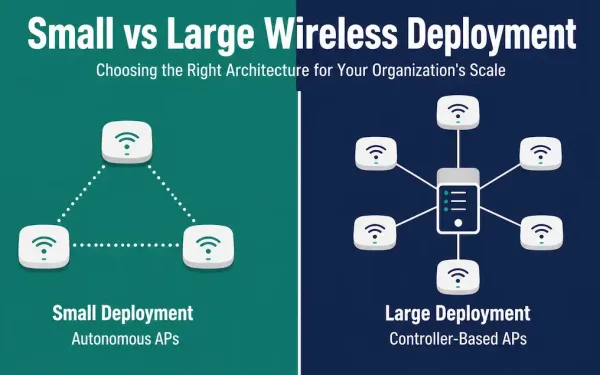
Wireless Deployment Solutions: Small vs. Large Scale, Explained for 2026
Wireless deployment strategy depends heavily on the size of the organization. A small office with a handful of users needs a very different approach than a campus or multi-site enterprise with hundreds of access points. Cisco offers distinct solutions for both ends of that spectrum, and the specific products involved have changed considerably since this...
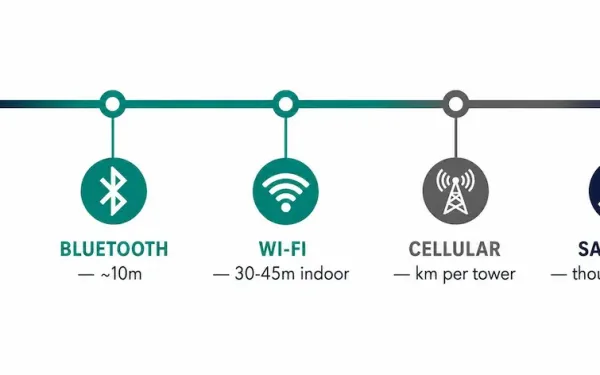
Introduction to Wireless Networking: WLAN Fundamentals
Wireless communication transmits information between devices using radio waves instead of a physical medium like copper cable or fiber. It’s one of the fastest-growing areas in networking specifically because it removes the one constraint wired networks can’t escape: a device has to stay tethered to wherever its cable ends. What a WLAN Actually Is A...
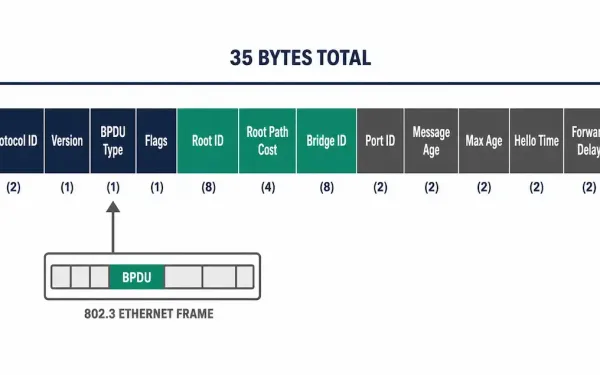
Bridge Protocol Data Unit (BPDU): Frame Format, Fields, and How Root Bridge Election Actually Works
Every root bridge election, every port role assignment, and every failover this series has covered so far runs on one underlying mechanism: switches exchanging Bridge Protocol Data Units, or BPDUs. This article breaks down the BPDU frame field by field, walks through exactly how cost increments as a BPDU propagates through a topology, and clears...
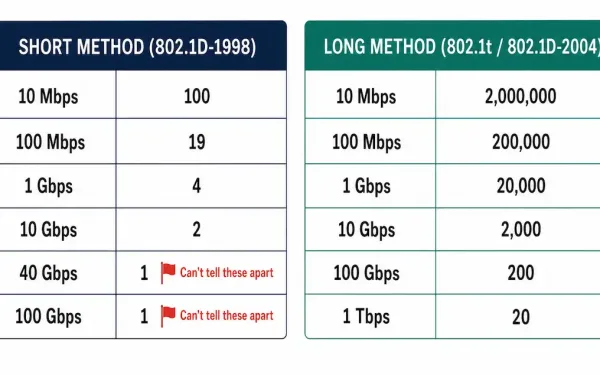
Spanning Tree Path Cost: Root Port Election Explained
When a loop occurs in the switched network, STP uses path cost to resolve which ports forward and which block. Path cost is derived from a port’s speed. If two connected ports end up with equal path cost, spanning tree falls back to the lowest port ID as the final tiebreaker. For CCNA students, understanding...
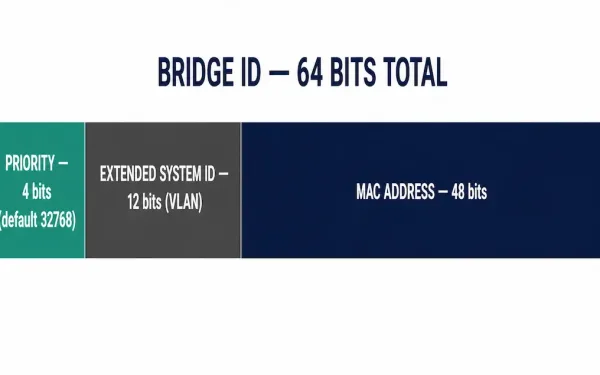
Spanning Tree Root Bridge: Election, Bridge ID, and Configuration
Every spanning-tree-enabled switched network has a single switch designated as the root bridge. It serves as the reference point every other switch in the broadcast domain measures its path against, and the spanning tree algorithm uses it to determine which redundant paths to block. The root bridge is chosen through an automatic election process every...
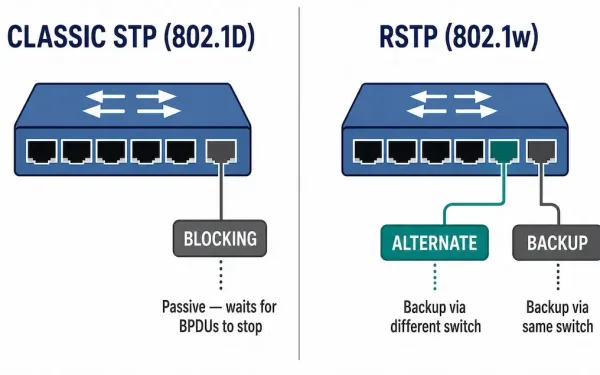
Spanning Tree Port Roles Explained: Root, Designated, Alternate, and Backup
Spanning Tree Protocol doesn’t block loops by disabling switches. It blocks loops by assigning every active port a specific role, then forwarding or blocking traffic based on that role alone. Understanding what each role does — and which roles belong to classic STP versus Rapid STP — is the difference between reading a show spanning-tree...
Network Redundancy: Layer 1/2 Loops, STP, and Failover Design
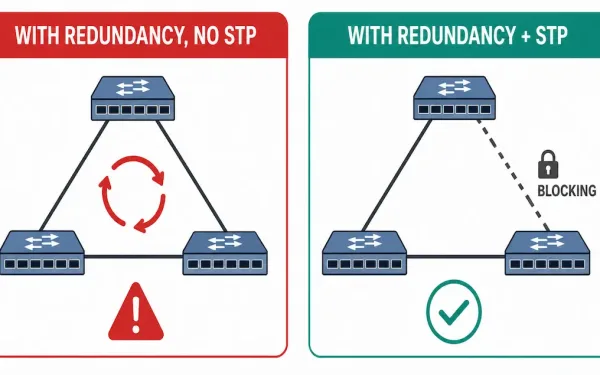
Network redundancy means building more than one path for data to travel, so a single failed link or device doesn’t take down access to network resources entirely. It’s a foundational design principle behind the three-tier hierarchical model (core, distribution, access), and it comes with a real, important trade-off: physical redundancy alone can create Layer 2...
How to Configure Port Address Translation (PAT)
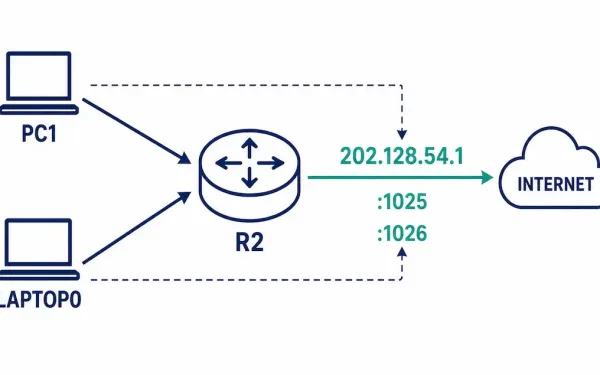
Port Address Translation (PAT), also called NAT overload, lets many internal devices share a single public address, distinguished from each other by port number rather than needing a separate address for each device. This is the guide that completes our shared NAT lab — if you’ve worked through Static NAT and Dynamic NAT already, PAT...