Mujtaba Khattak
Mujtaba Khattak is a network solutions architect specializing in SD-WAN, cloud infrastructure, and network optimization. He holds a BS in Artificial Intelligence from SZABIST, an MBA from Virtual University (VU), and Cisco certifications (CCNA and CCNP). As the founder of NetworkUstad.com, He produce technical guides and tutorials on networking, cybersecurity, and AI applications.
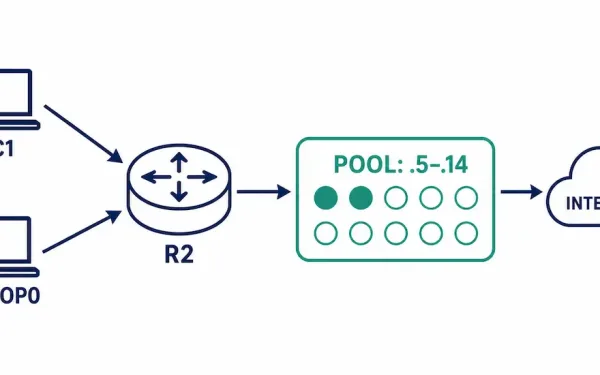
How to Configure Dynamic NAT
Dynamic NAT automatically maps inside local addresses to a pool of inside global addresses, first-come-first-served — the middle ground between static NAT’s permanent one-to-one mappings and PAT’s many-to-one port sharing approach. It’s the right choice when a known, moderate number of internal devices need outbound internet access, without needing a dedicated public address reserved for...
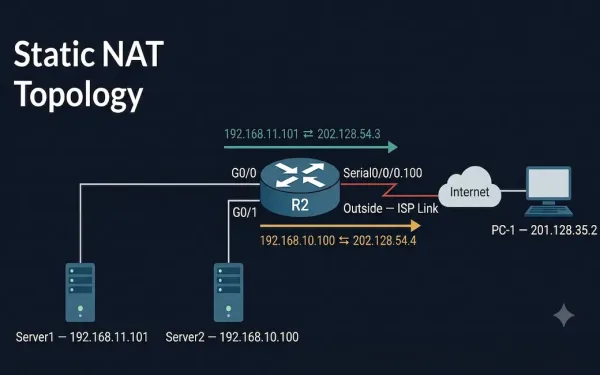
How to Configure Static NAT on Cisco Routers
Static NAT maps inside and outside addresses one-to-one. It allows external devices to establish a session with internal devices using a statically assigned public address. For example, an internal web server is mapped to a specific inside global address, letting outside clients reach it using a public IP while the server itself keeps its private...
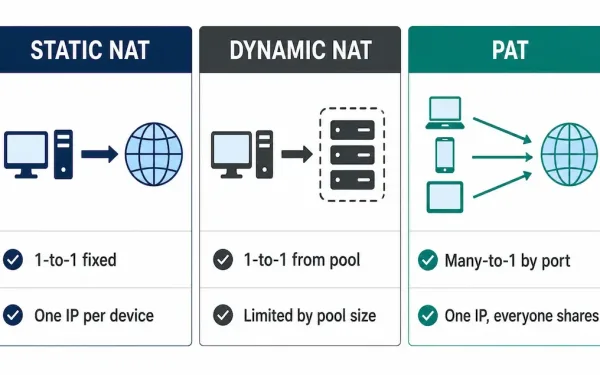
What Are the Types of NAT Translation?
There are three types of NAT: static NAT, dynamic NAT, and Port Address Translation (PAT), also called NAT overload. They all solve the same underlying problem — mapping private addresses to public ones — but they differ significantly in how permanent the mapping is and how many public addresses they actually require to function. This...
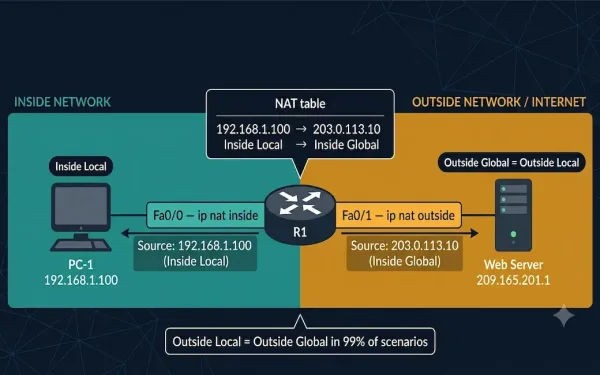
NAT Terminology Explained: CCNA 200-301 Must-Know Address Types
As discussed before, NAT translates private IP addresses into public IP addresses. In the process of translation, there are different operations involved, and understanding each of them requires understanding NAT terminology. Before understanding NAT in detail, it is important to understand the four NAT address types — inside local, inside global, outside local, and outside...
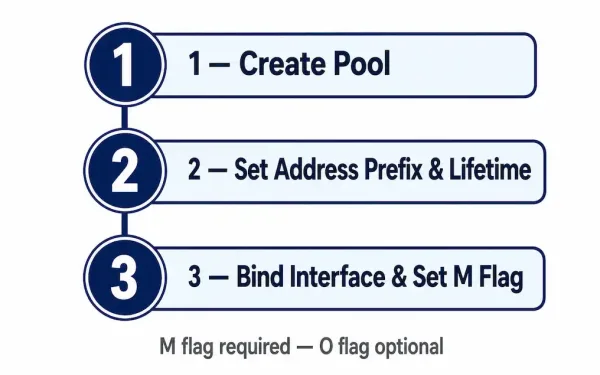
Configuring a Stateful DHCPv6 Server on a Cisco Router
Stateful DHCPv6 is the IPv6 mode that behaves the way DHCPv4 always has: the server assigns the address itself, tracks which client has which address, and hands out supplementary options alongside it — no SLAAC involved on the client side at any point. That’s the core distinction from stateless DHCPv6, and it changes almost every...
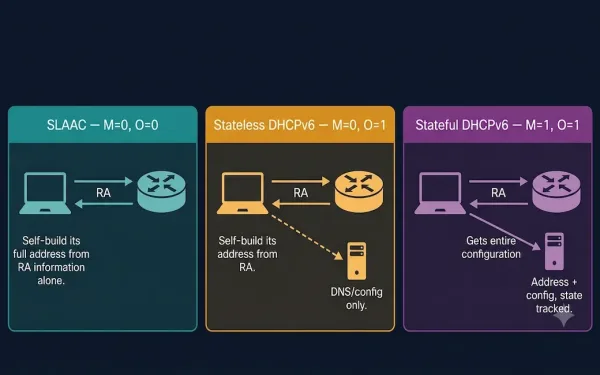
SLAAC and DHCPv6
Recall that the router sends a Router Advertisement (RA) message, and the settings within that RA message decide whether a client can obtain its IPv6 address information automatically using SLAAC, DHCPv6, or a combination of both. This guide covers both methods, the three possible RA flag combinations, and how to configure and verify each on...
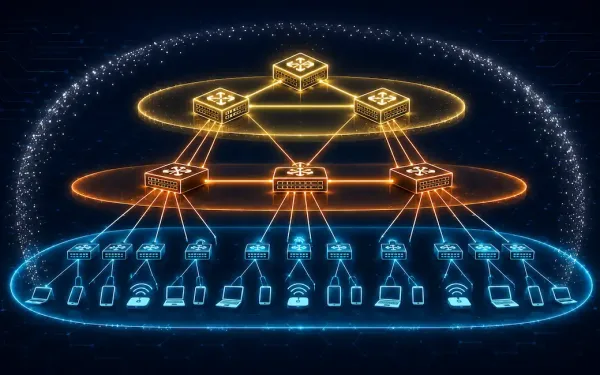
Cisco Borderless Networks: Hierarchical Campus Design Explained
Cisco Borderless Networks is an architecture designed to enable secure, seamless connectivity for any user, device, or location, integrating wired and wireless access with unified policy and performance management. It’s built to address common enterprise IT challenges — mobility, security, and scalability — using Cisco Catalyst switches, ISR routers, and management tools like Cisco DNA...
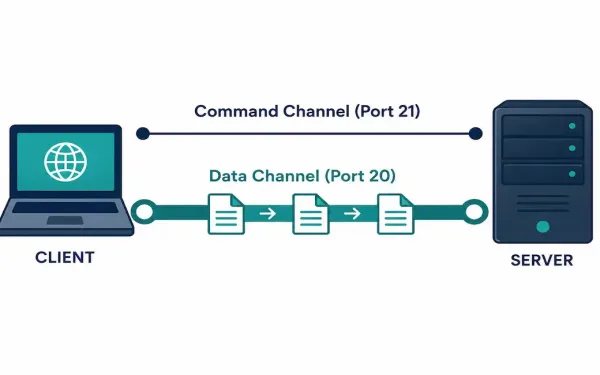
File Transfer Protocol (FTP): How It Works and How to Secure It
File Transfer Protocol is one of the oldest application layer protocols still in active use today. Its original specification, RFC 114, dates back to 1971 — decades before the modern web existed. It’s still worth understanding in depth, both because it shows up regularly in CCNA and CCNP material and because plenty of real infrastructure...
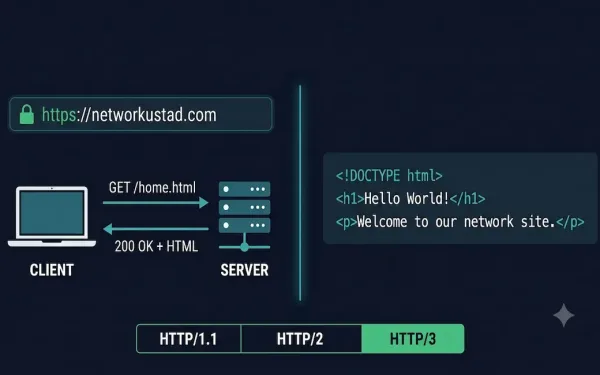
HTTP and HTML Explained: How the Web Communicates
HTTP and HTML are the two foundational technologies behind every web page you visit. They work together but do completely different jobs. HTTP (HyperText Transfer Protocol) is the application-layer protocol that governs how data is requested and delivered between a web server and a client. HTML (HyperText Markup Language) is the markup language that structures...
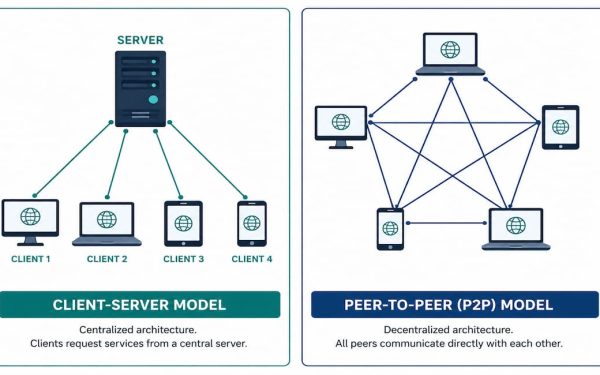
Client-Server vs. Peer-to-Peer: Network Models Explained
Almost every network interaction you have falls into one of two models: client-server, where a dedicated device provides a service to others, or peer-to-peer, where devices share resources directly with each other, no dedicated server required. Understanding both — and knowing which one a given application actually uses — matters for everything from troubleshooting to...